
Occasions and ordering · 30 September 2026 · 4 min read
Planning your Eid outfit: a simple timeline from fabric to finished outfit
When to buy fabric, when to ask for a stitching quote, which design details to decide first and what to have ready, so you leave plenty of time before Eid.
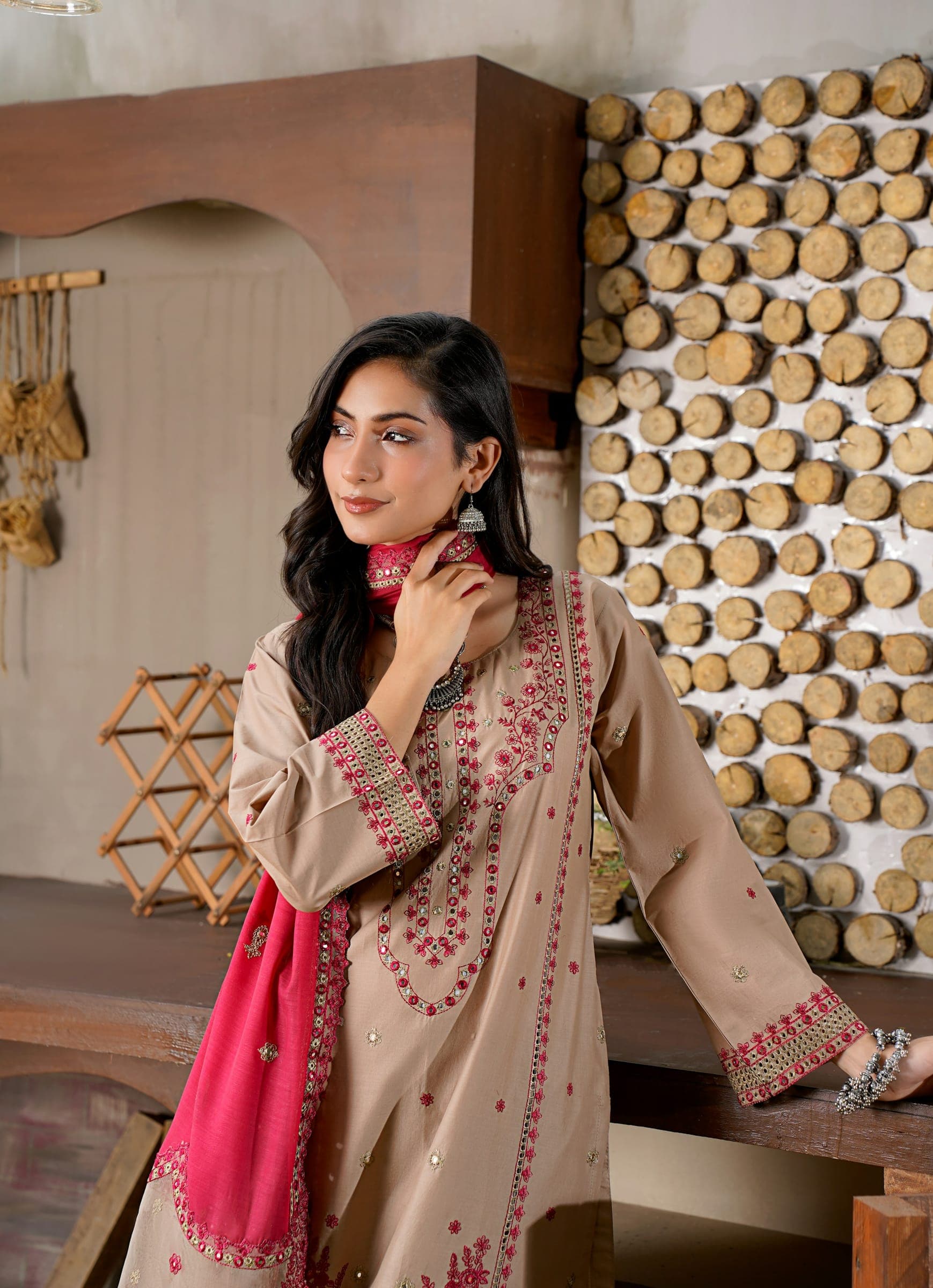 Inspiration
Work backwards from Eid
Eid al-Fitr and Eid al-Adha follow the Islamic lunar calendar, so they move about eleven days earlier each year, and the exact day depends on the moon sighting. Plan for the earliest likely date, not the latest, and count backwards from it.
The weeks before Eid are the busiest time of year for anyone who stitches South Asian clothes, and everyone’s outfits arrive in the same rush. The single most useful thing you can do is start early. We cut and stitch every outfit in Pakistan and ship it to you, and we do not publish fixed lead times: production time and shipping costs are confirmed in your written quote before you commit. We cannot guarantee delivery dates, so leave plenty of time before Eid. Our Eid page has outfit ideas to get you started.
Stage one: choose and buy the fabric
Pakistani brands usually release their Eid collections in the weeks leading up to Ramadan or Eid, and popular designs can sell out quickly online and in shops. Buy when you see something you love rather than waiting for the last drop.
Because Eid moves through the seasons, check which one it falls in this year. A lawn suit is perfect for a warm Eid, but when it falls in the colder months, karandi, cotton silk or khaddar with a shawl will be far more comfortable. Our winter fabrics guide compares them.
When the pack arrives, open it and check every piece: kameez, trousers, dupatta and any embroidered neckline or border panels. Photograph each piece in daylight. If you are buying fabric by the metre, check our fabric quantity guide first so you are not short.
Stage two: decide the design and get a quote
Make your design decisions before you ask for a quote, so it covers the whole outfit and nothing has to be added later. With Fabric + Stitching we supply the agreed fabric and make the outfit; with Stitching Only you supply suitable fabric, such as an unstitched suit, and we cut, stitch and finish it. Tell us your Eid date on the form. If time is tight, a simpler design with less embroidery is generally quicker to make, and we can suggest options when we quote. The main choices are:
- Neckline: see our neckline guide.
- Sleeves: length and shape, from our sleeve guide.
- Kameez length and trousers: see the length guide and trouser styles.
- Lining: needed for most chiffon, organza and net, and for pale lawn.
- Dupatta finish: lace, gota, tassels or a simple hem, from our dupatta ideas.
- Embellishment: if you want a little embroidery, lace or gota at the neckline, sleeves, hem or dupatta, include it in the same request so it is stitched as part of the outfit.
Stage three: measurements, posting and trying on
Add your measurements to the quote form, in centimetres or inches, using the size guide, or measure a kameez that fits you well. If your size has changed since your last outfit, or you are between sizes, say so; design details and measurements are agreed in writing before cutting.
With Fabric + Stitching there is no fabric to post. Stitching Only involves two shipping stages: you send your fabric to us in Pakistan, and we ship the finished outfit to you. Before you post anything, we confirm with you that the fabric is suitable, how much is needed and how to send it; when you do post it, use a tracked service.
Try the outfit on as soon as it arrives, with the shoes you plan to wear, and check it against what was agreed. This is why starting early matters: both making and shipping take time, and delivery dates cannot be guaranteed. Our how it works page walks through the whole process.
What to have ready
Before you fill in the stitching quote form, gather these so nothing holds your outfit up.
- For Stitching Only, the complete fabric pack, checked and photographed; with Fabric + Stitching we supply the agreed fabric.
- Measurements, or a well-fitting kameez to measure from.
- Design notes and reference photos for the neckline, sleeves and trousers.
- Your date: Eid itself, and any earlier gathering such as chaand raat or an Eid party.
- Shoes you will wear, so trouser and kameez lengths are right.
- An inner or slip if the fabric is sheer, or ask us to line it.
Common questions
When should I order my Eid outfit for stitching?
As early as you can, ideally as soon as you know what you want. The weeks before Eid are the busiest time of year for stitching. Production time and shipping costs are confirmed in your written quote, and delivery dates cannot be guaranteed, so leave plenty of time. With Stitching Only, wait until we have confirmed the fabric and how to send it before you post anything.
Can I add a little embroidery to my Eid outfit?
Yes, as part of the stitching. Describe the neckline, sleeve, hem or dupatta detail in the same request and it is planned with the outfit and included in one quote, with the timing confirmed in writing.
What if Eid falls earlier than I expected?
Plan for the earliest likely date, because Eid depends on the moon sighting and can arrive a day earlier than some calendars suggest. Tell us your date at the quote stage, but remember that delivery dates cannot be guaranteed, so build in plenty of time.
