02
Colour and how much embroidery for Eid
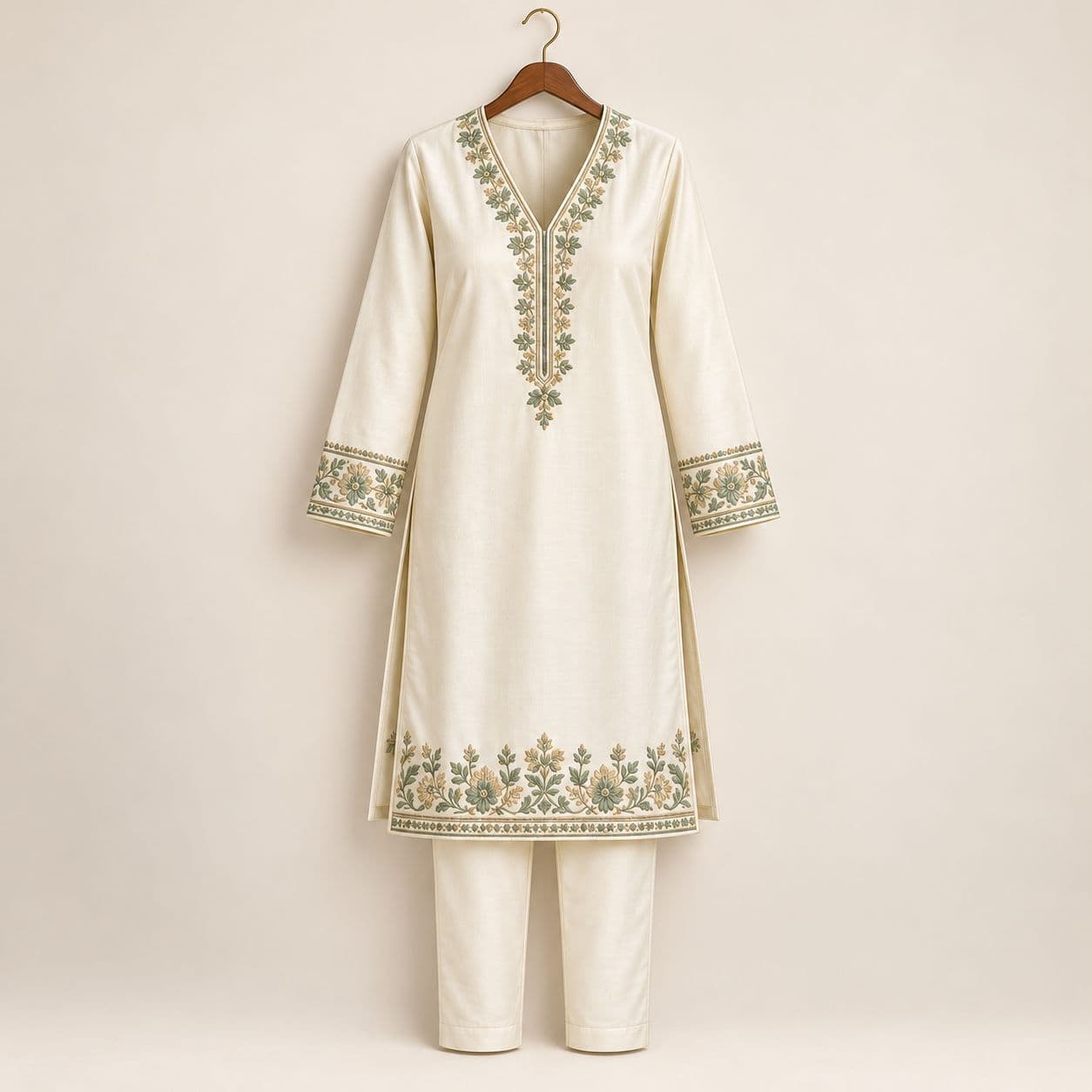
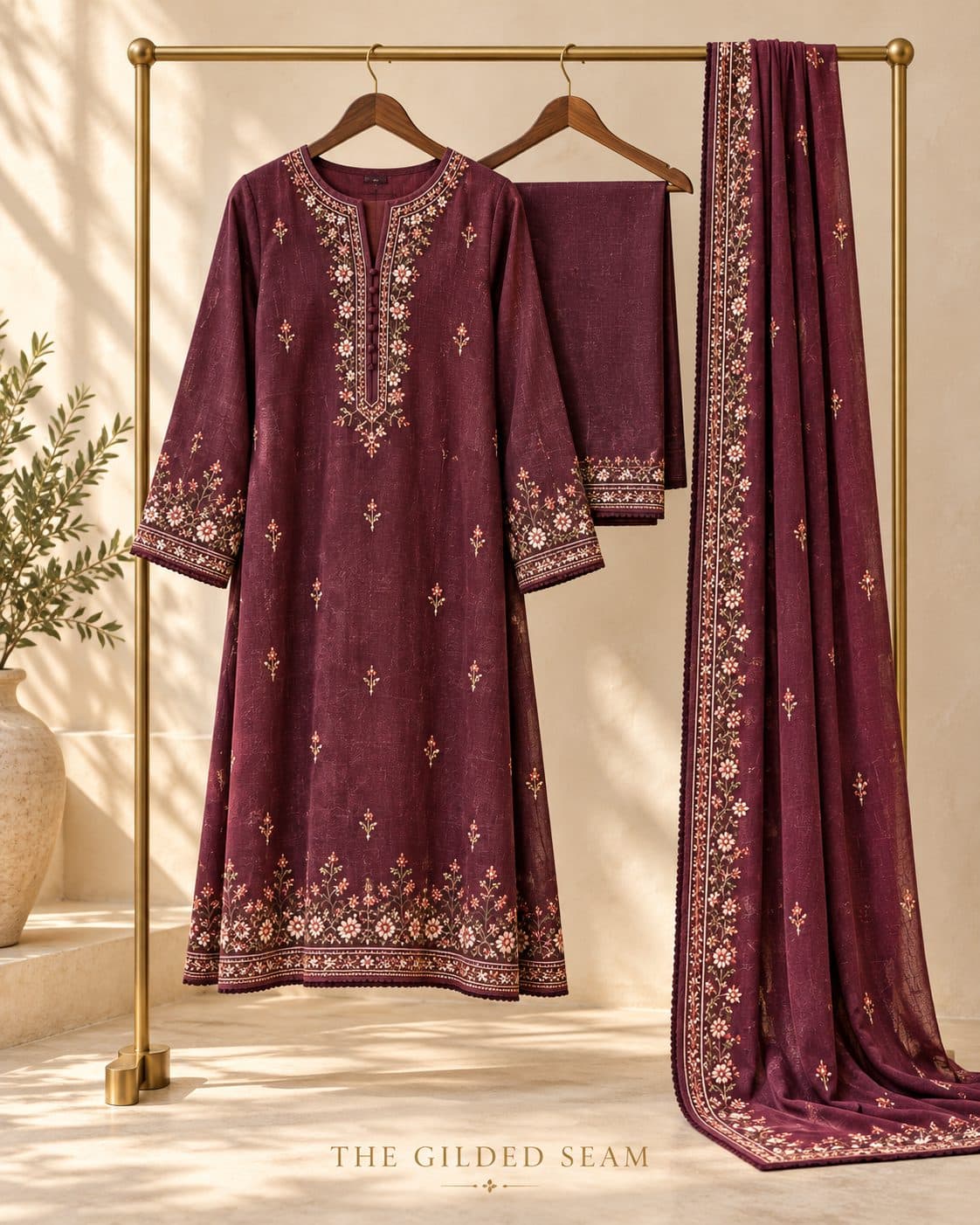
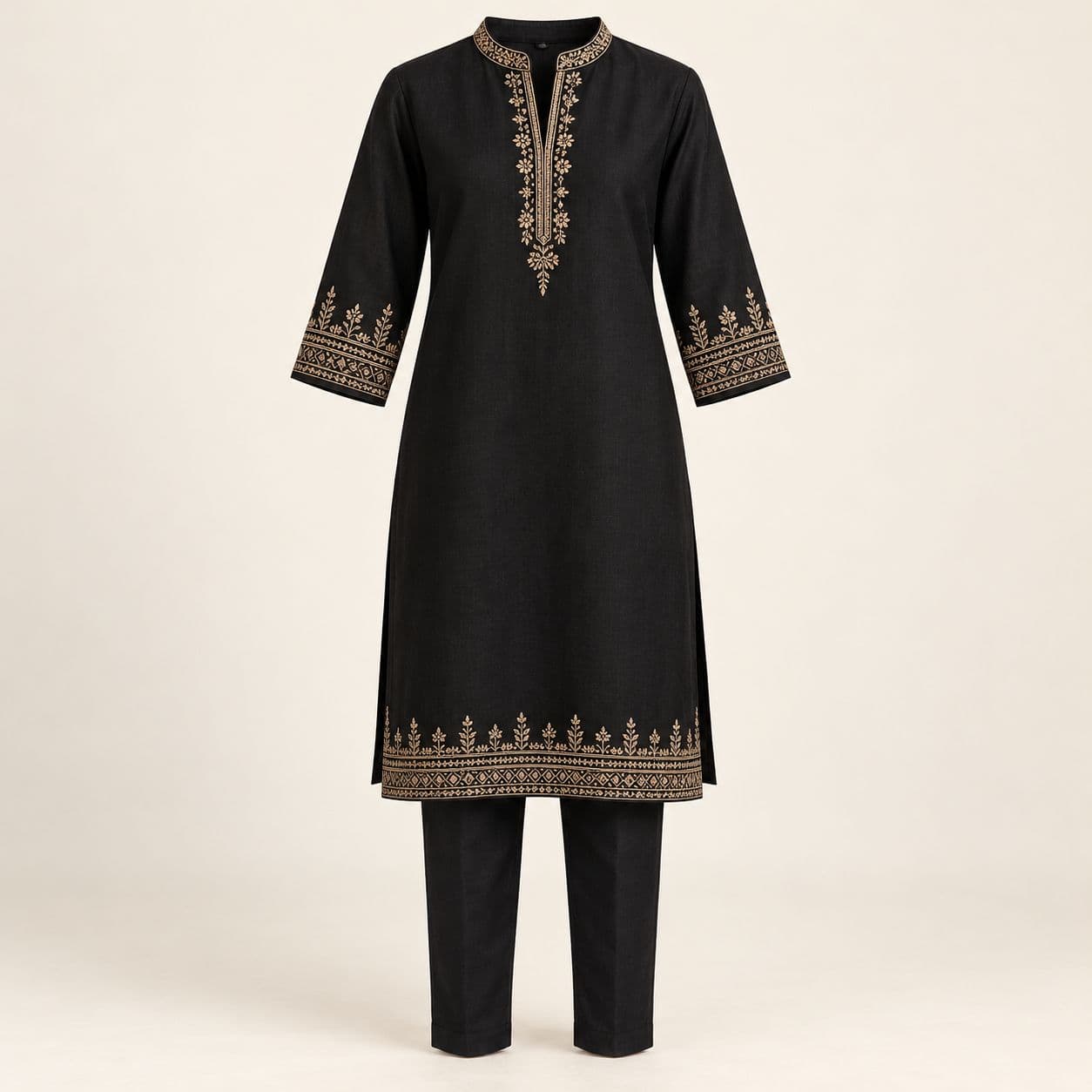
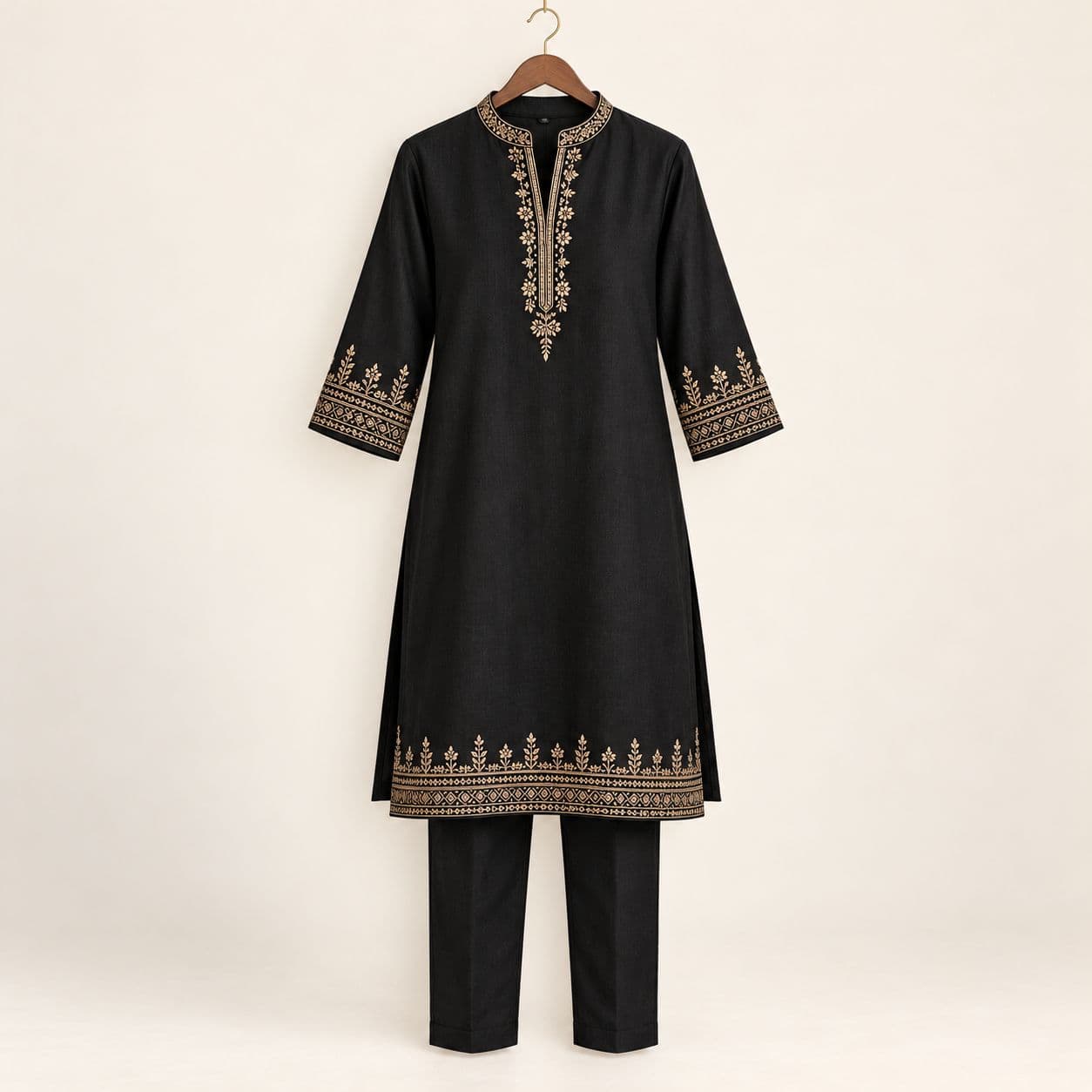
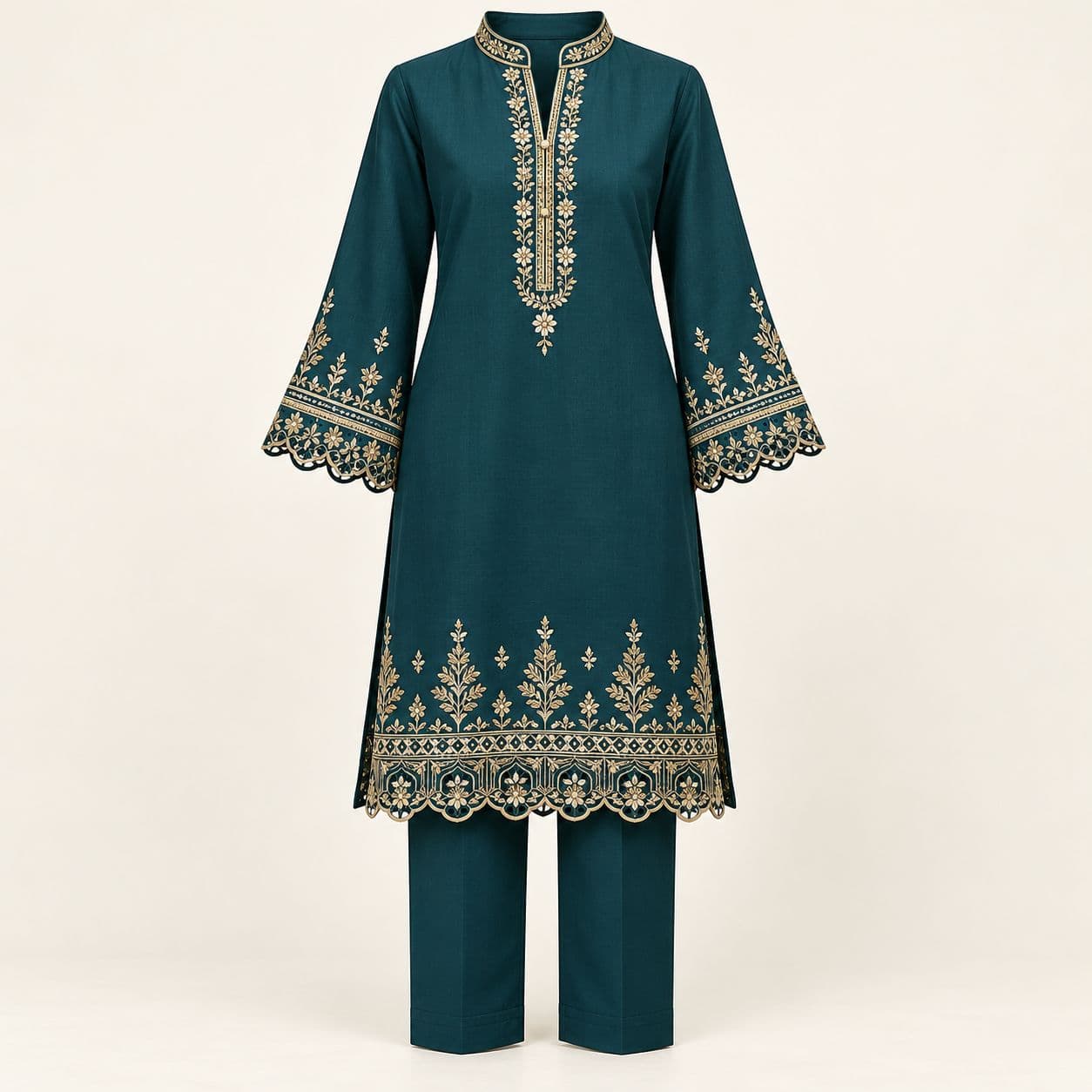
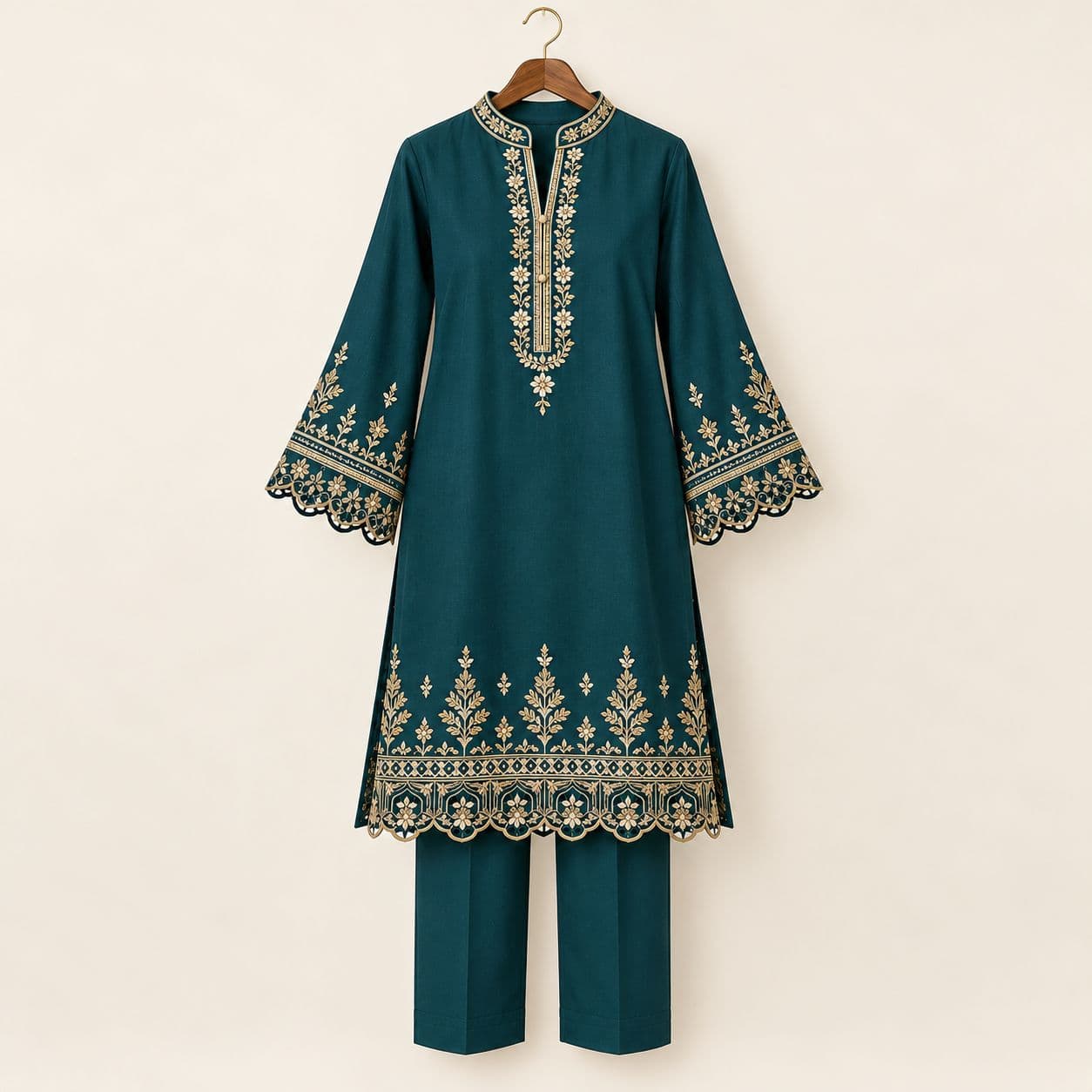
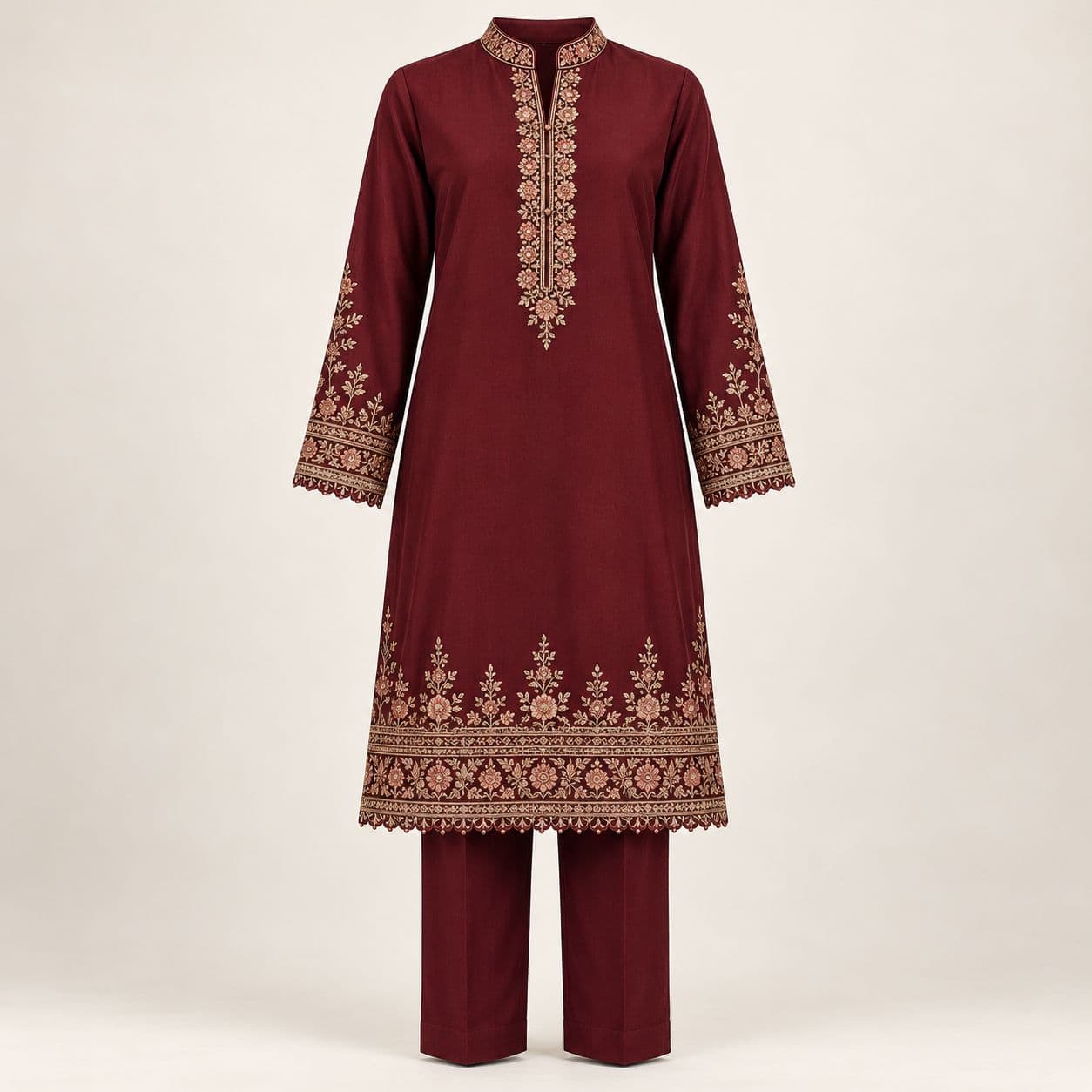
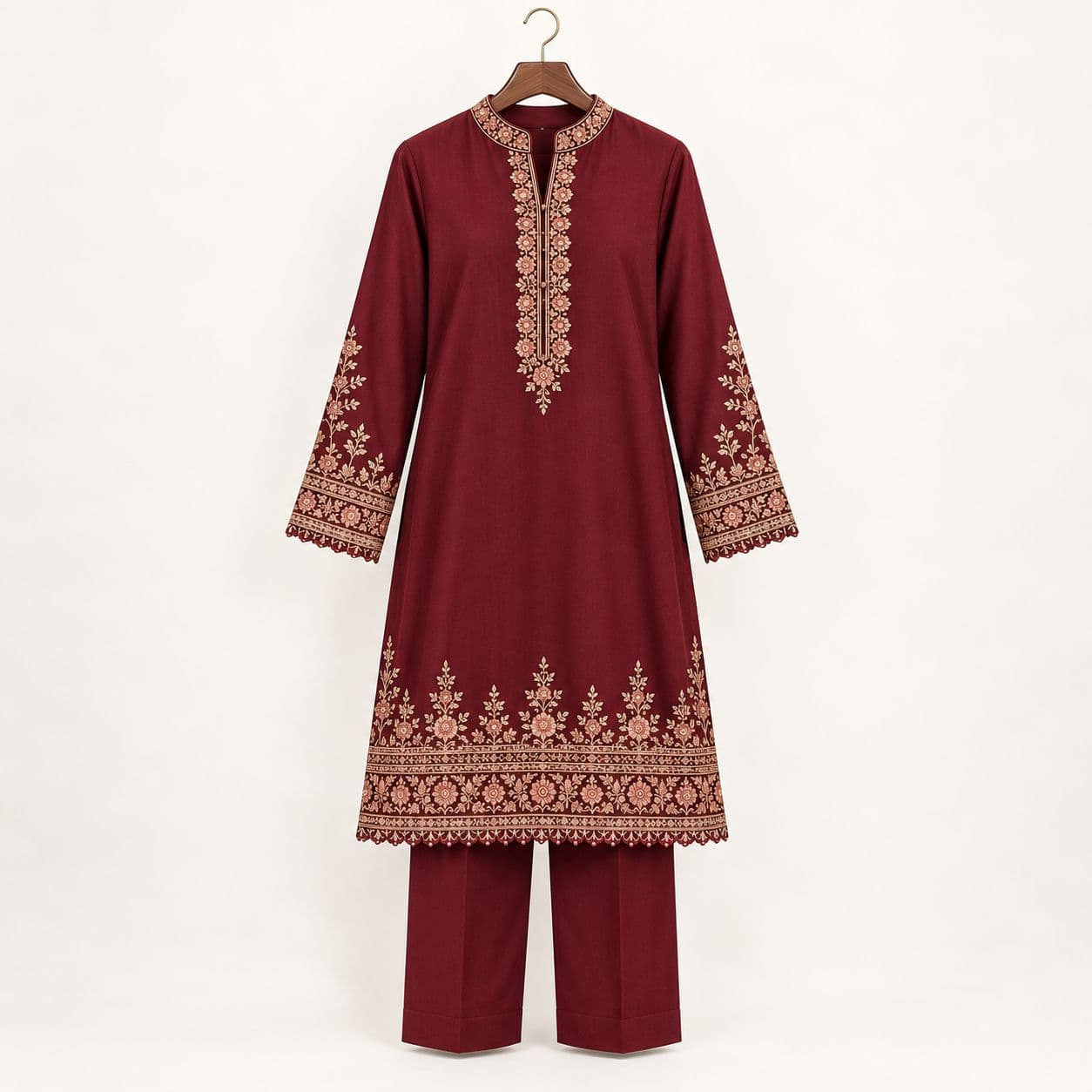
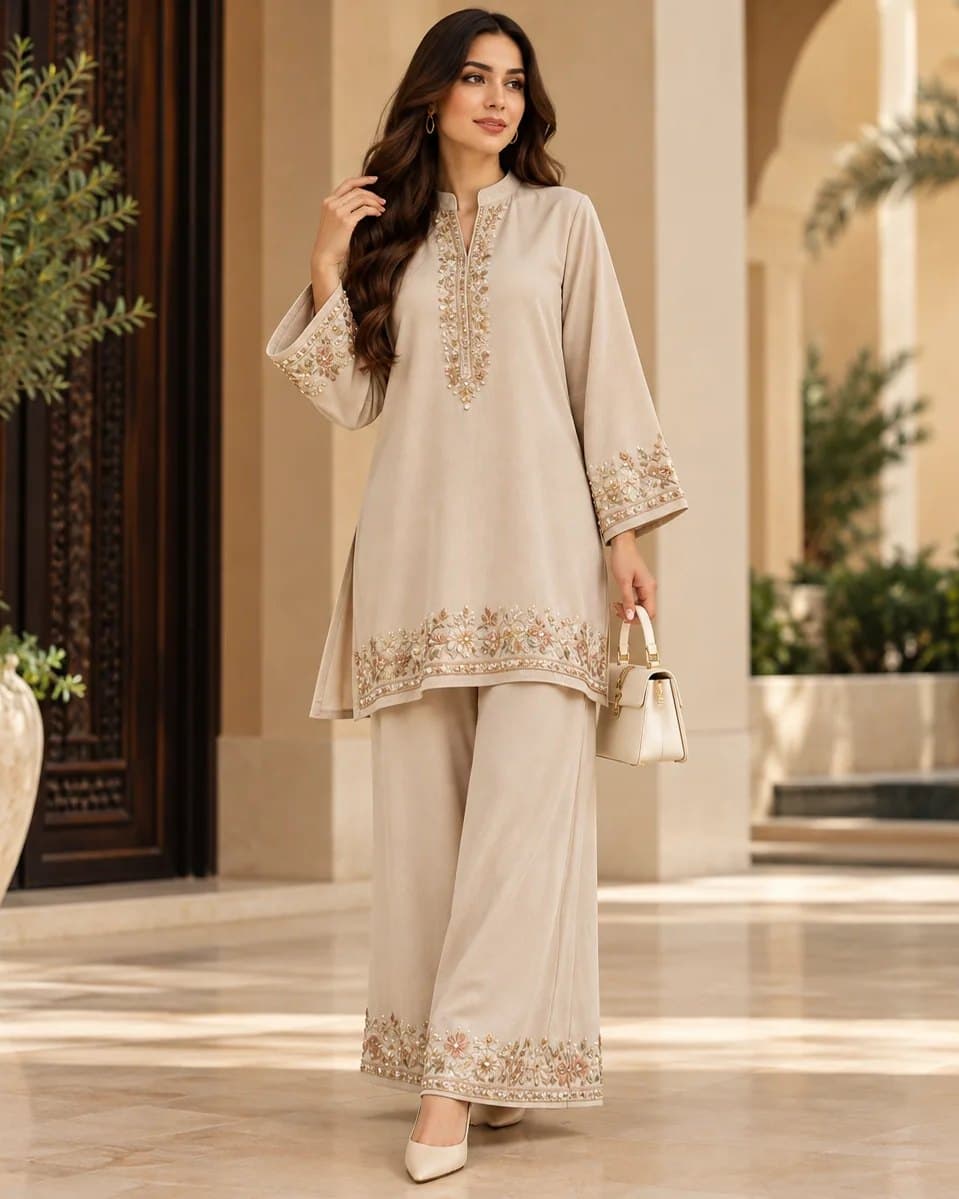
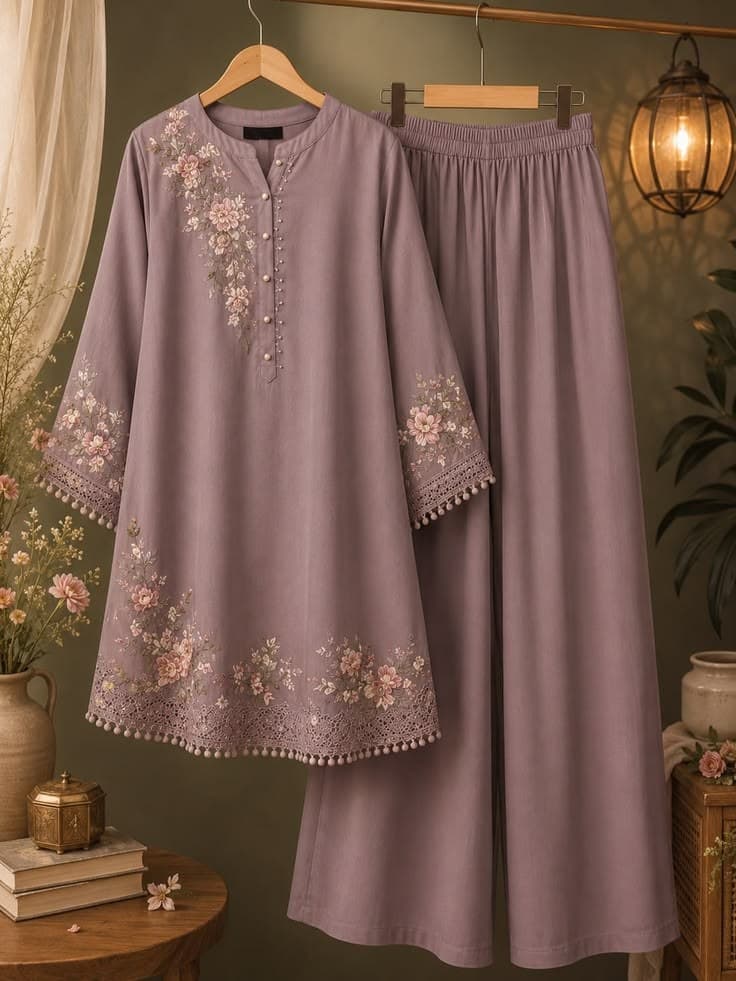
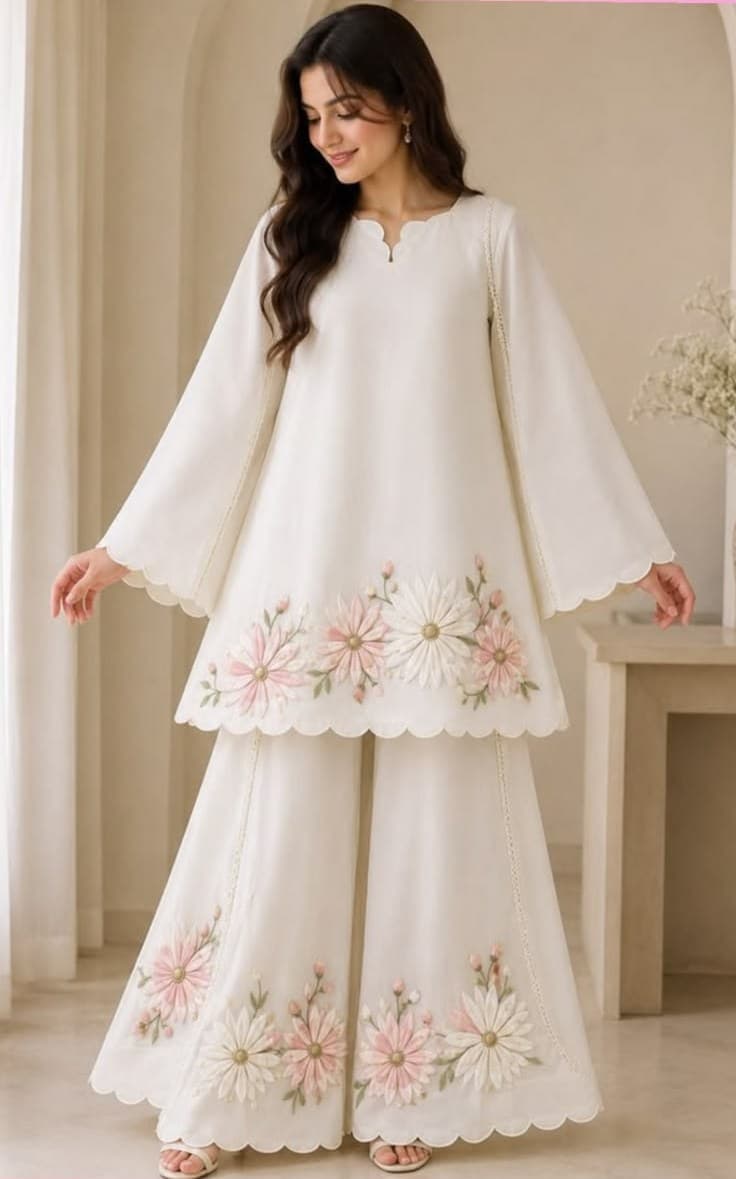
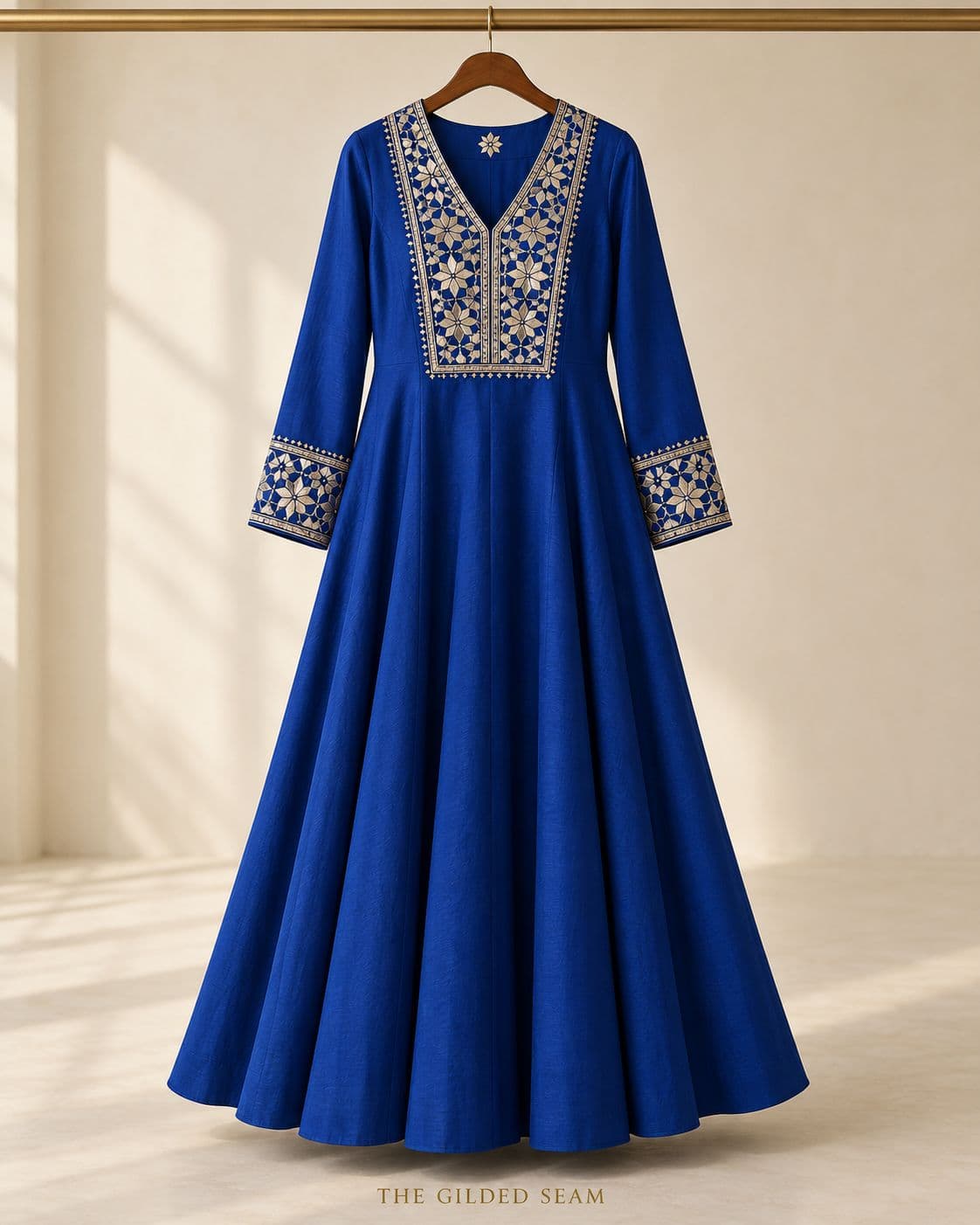
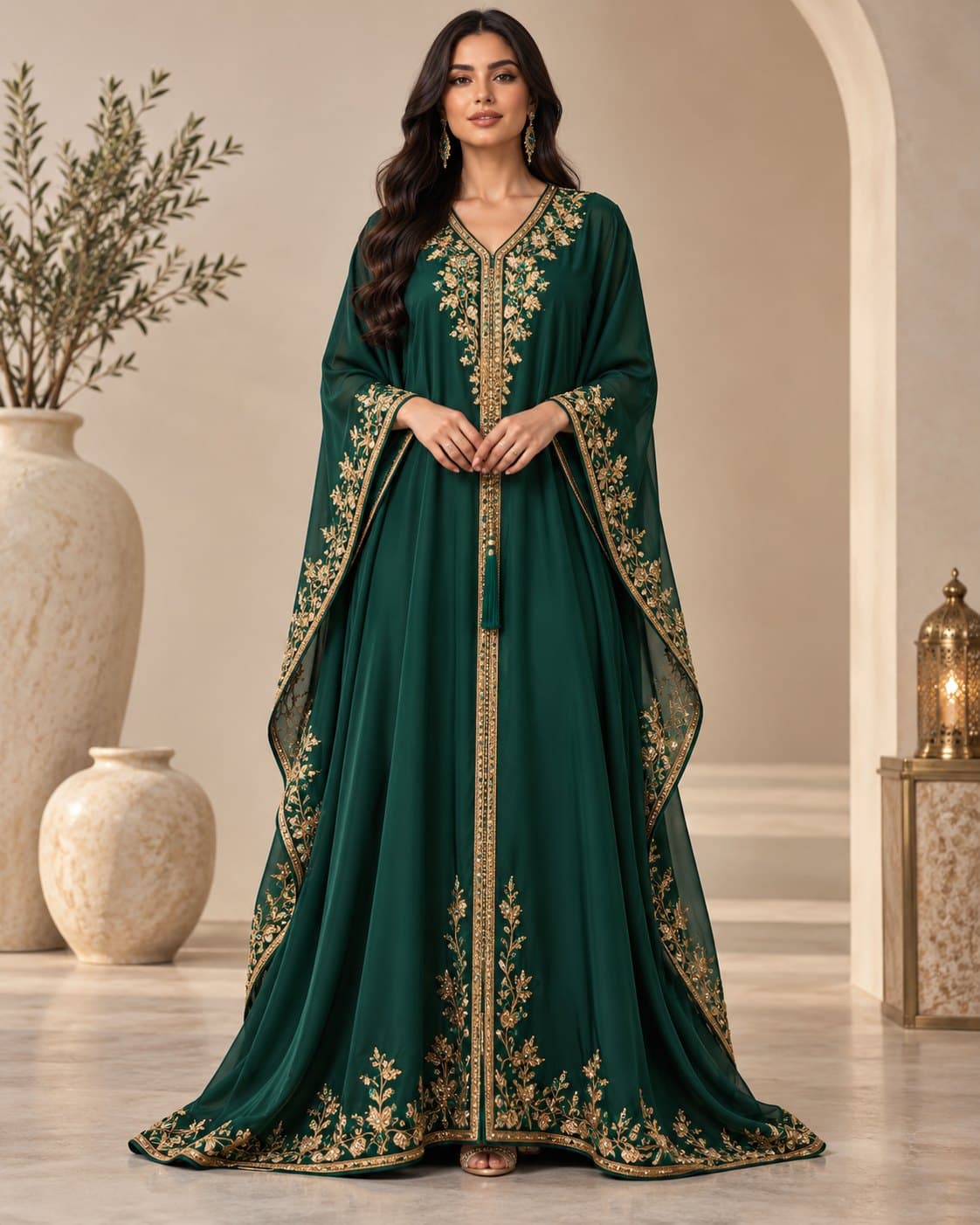
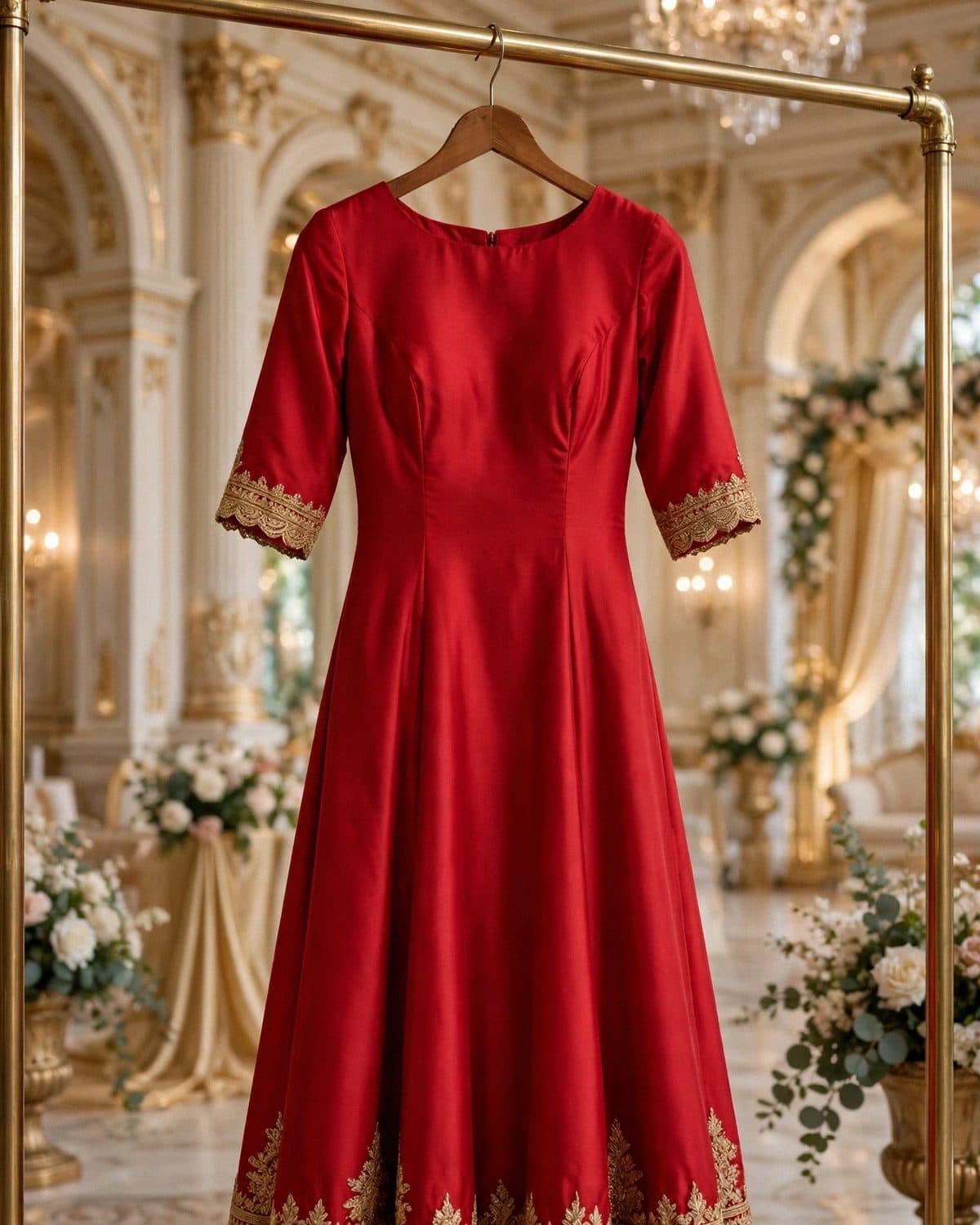
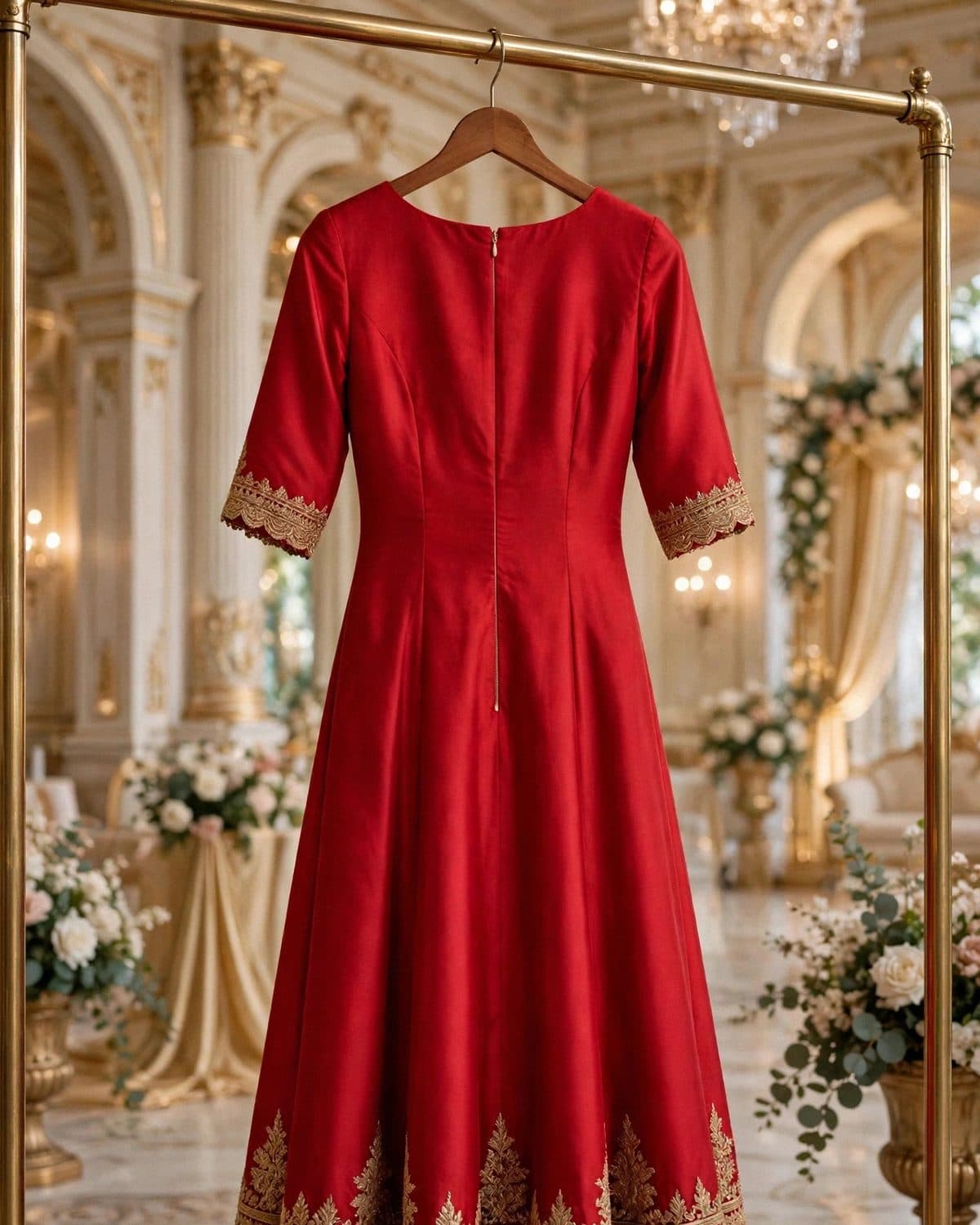
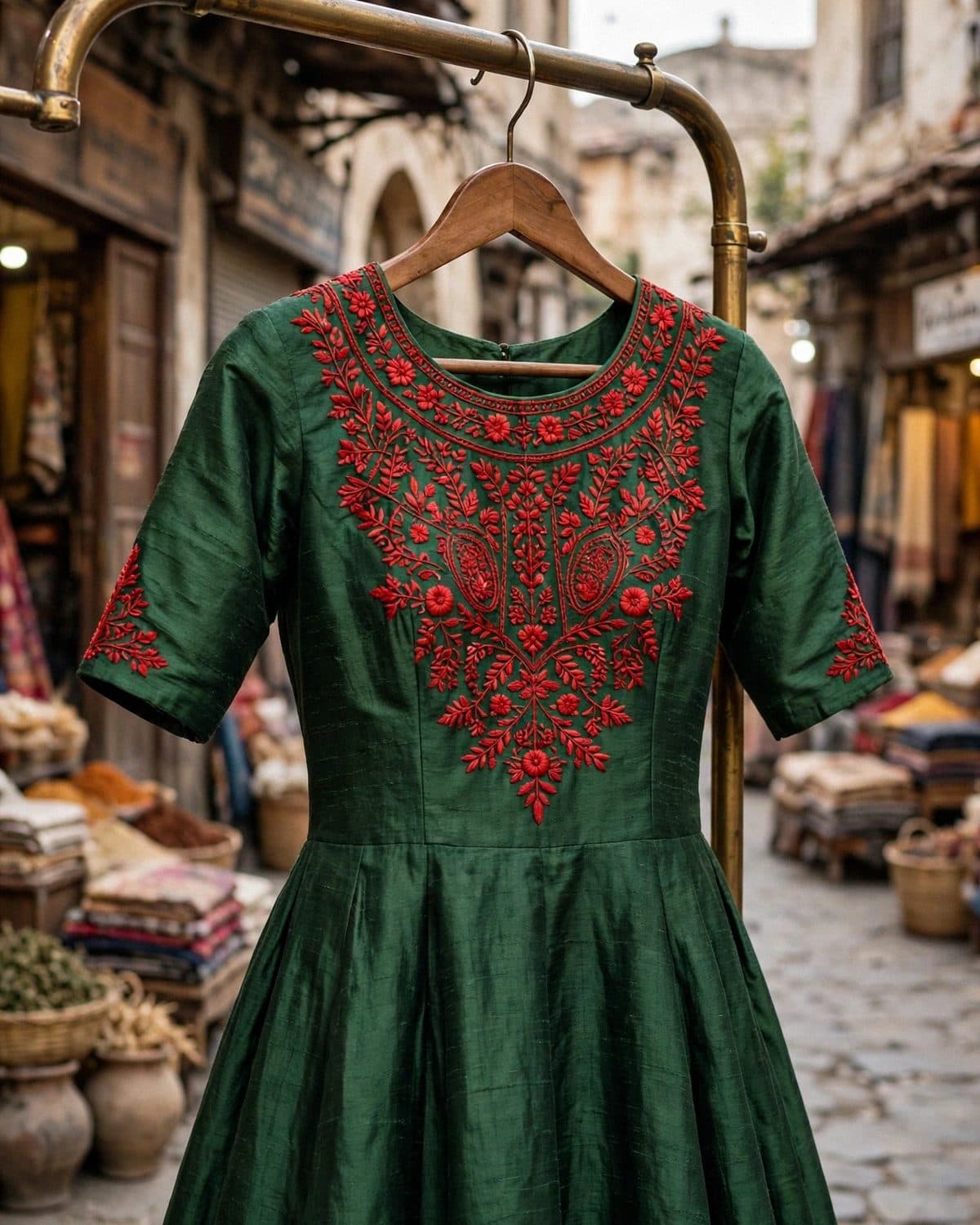
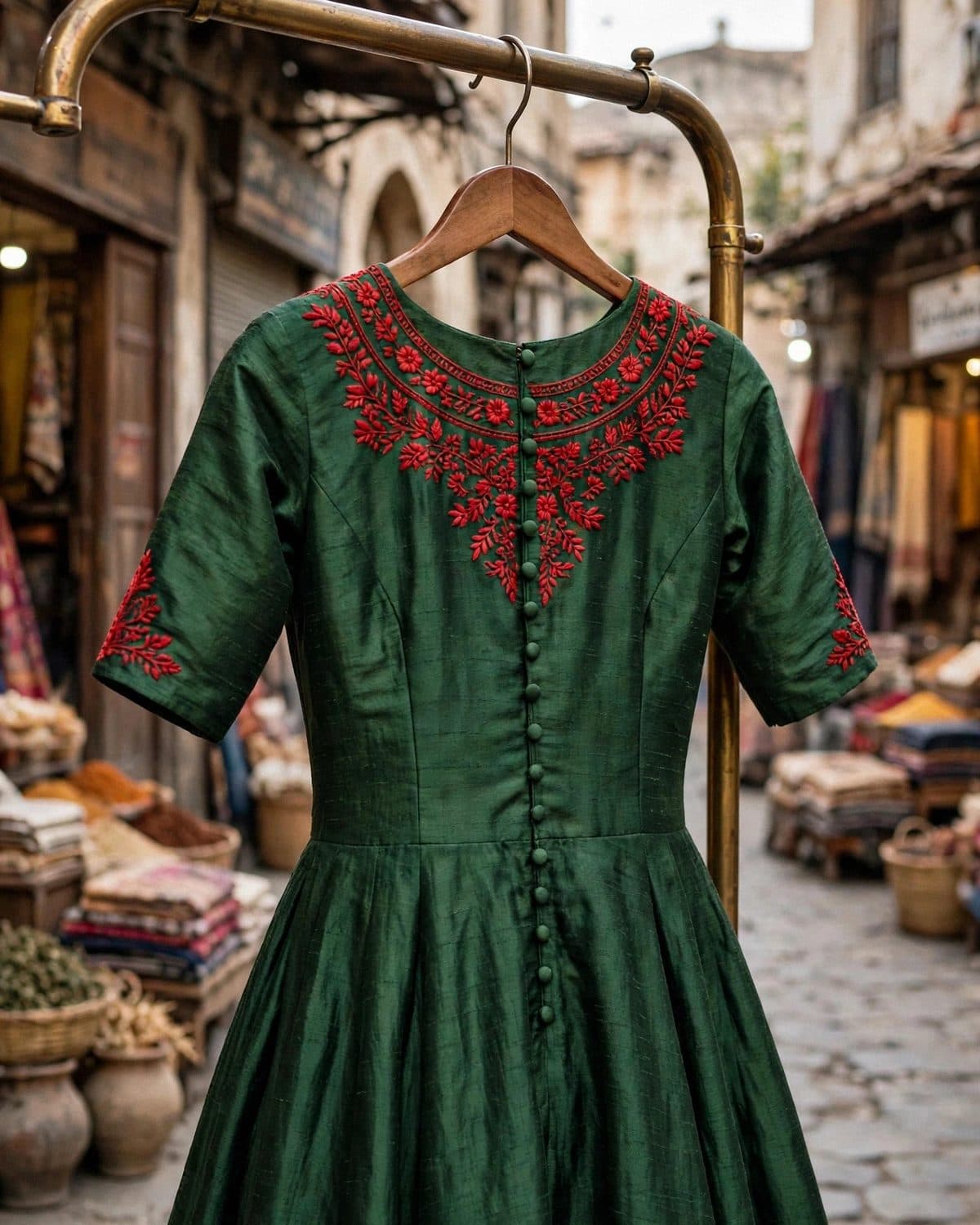
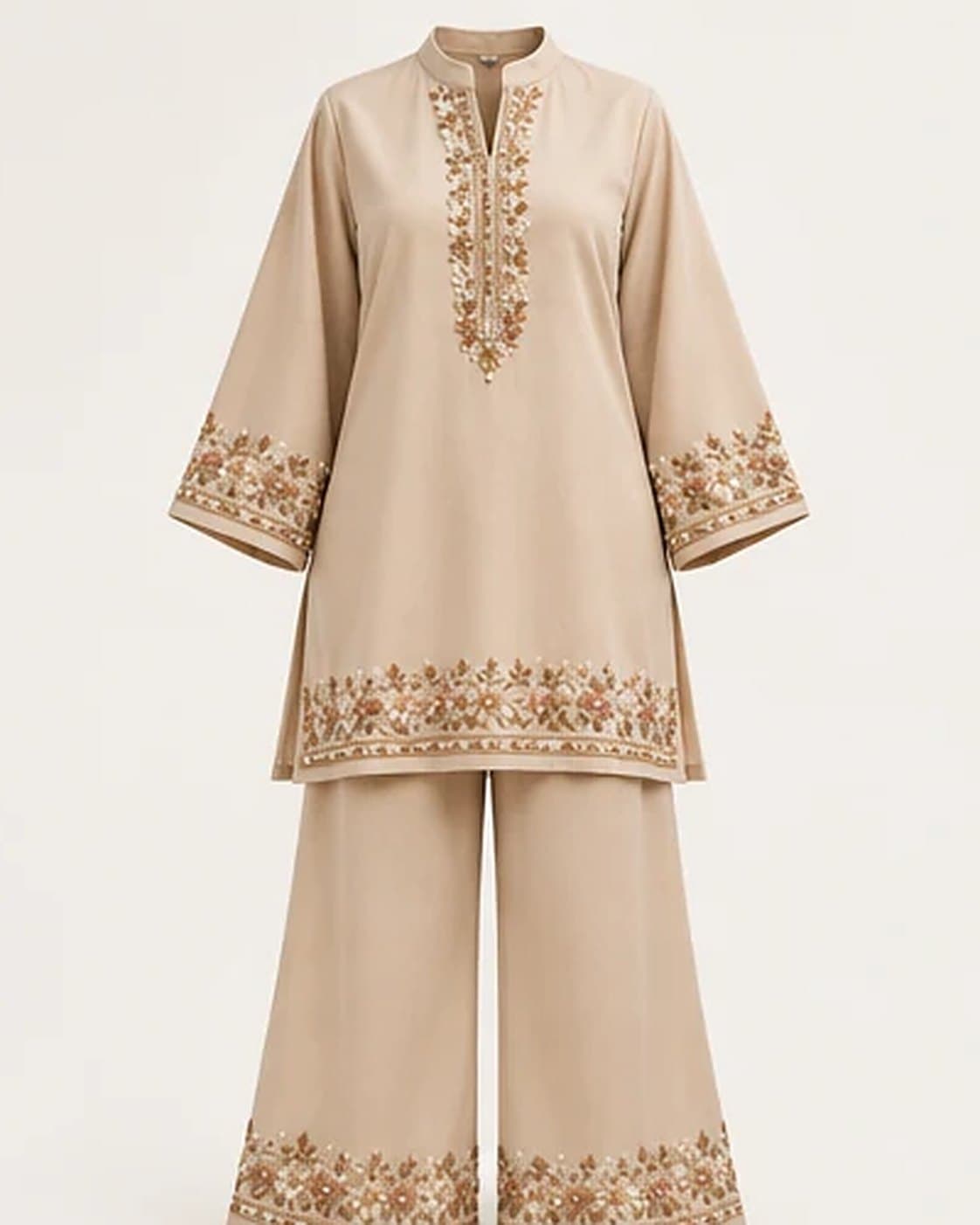
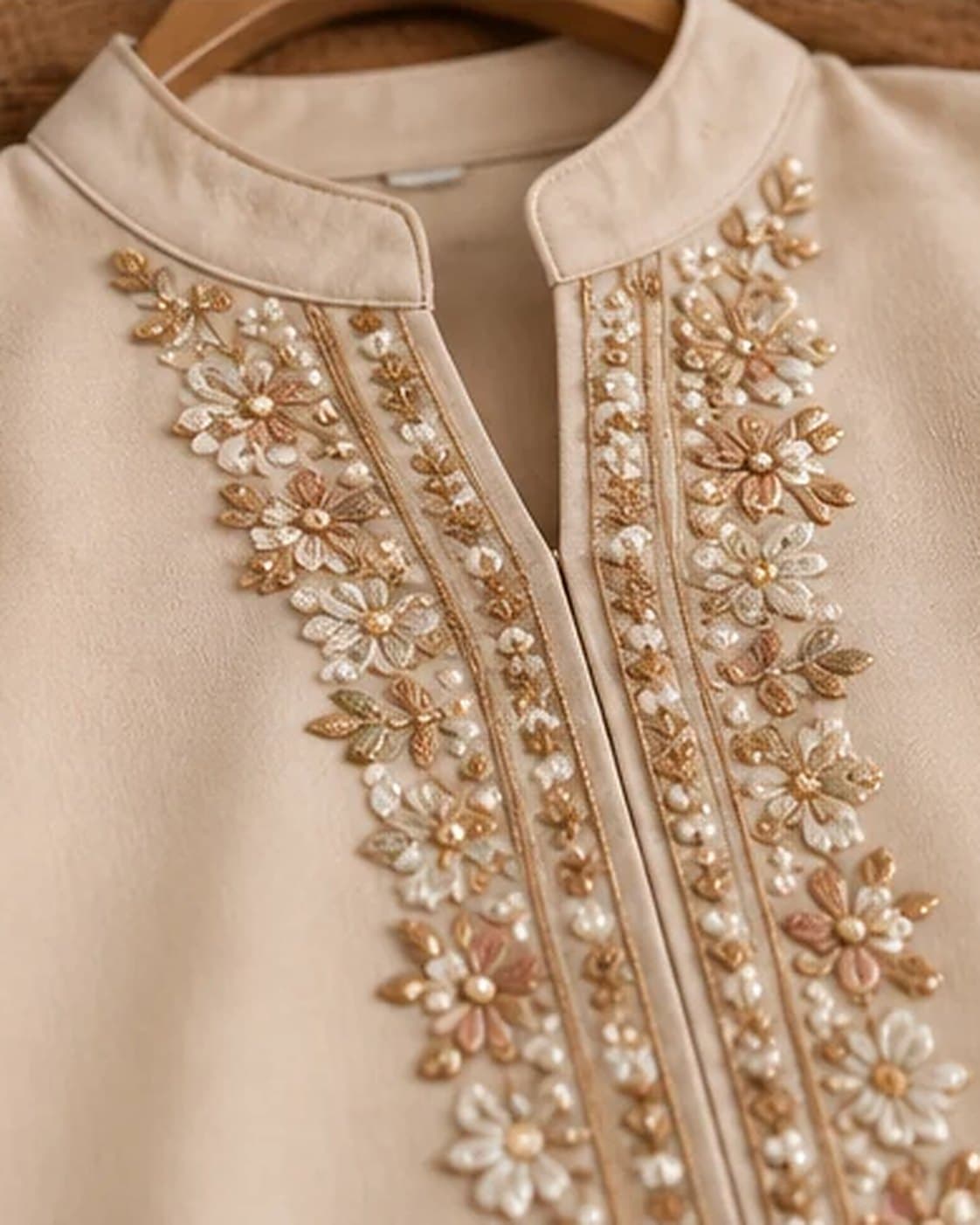
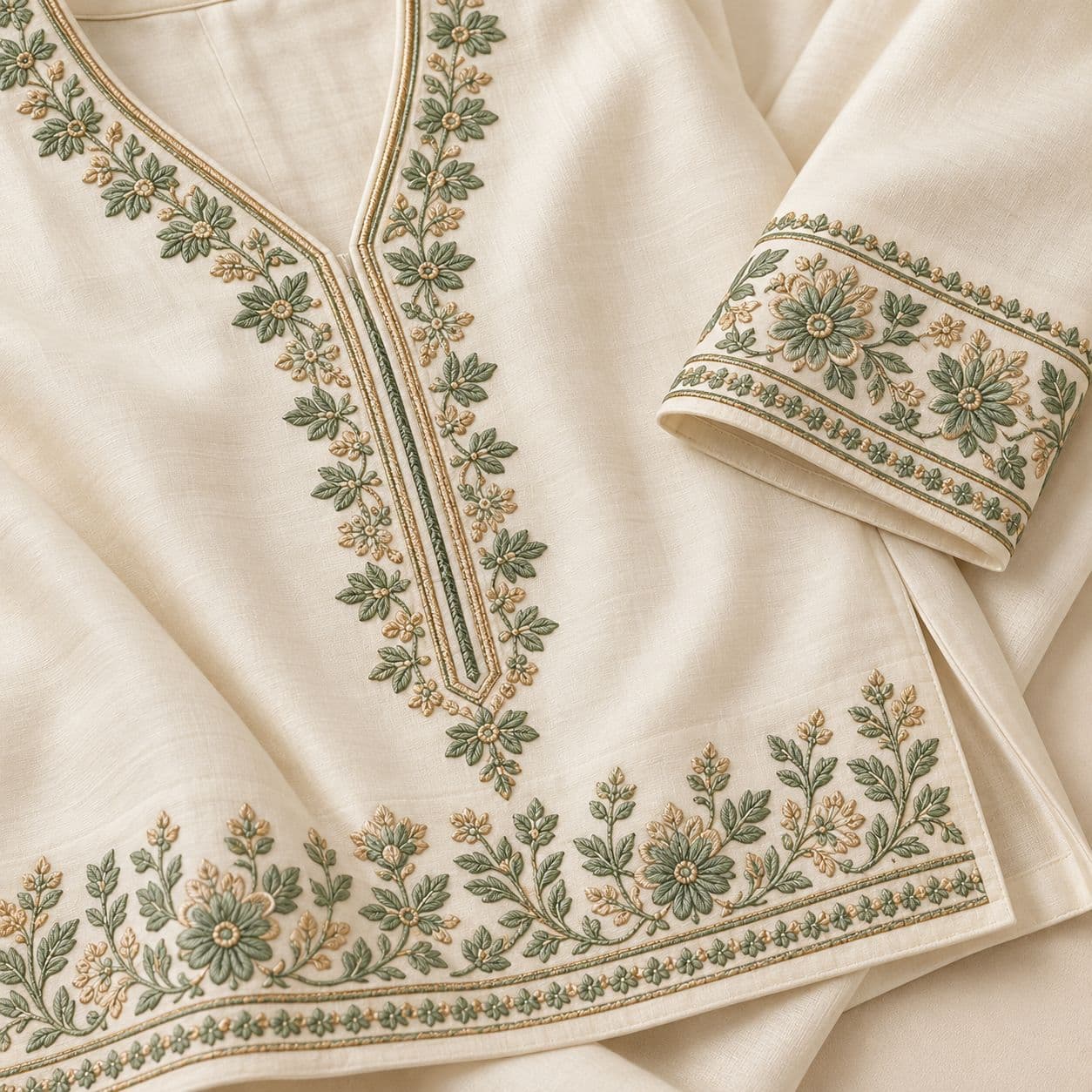
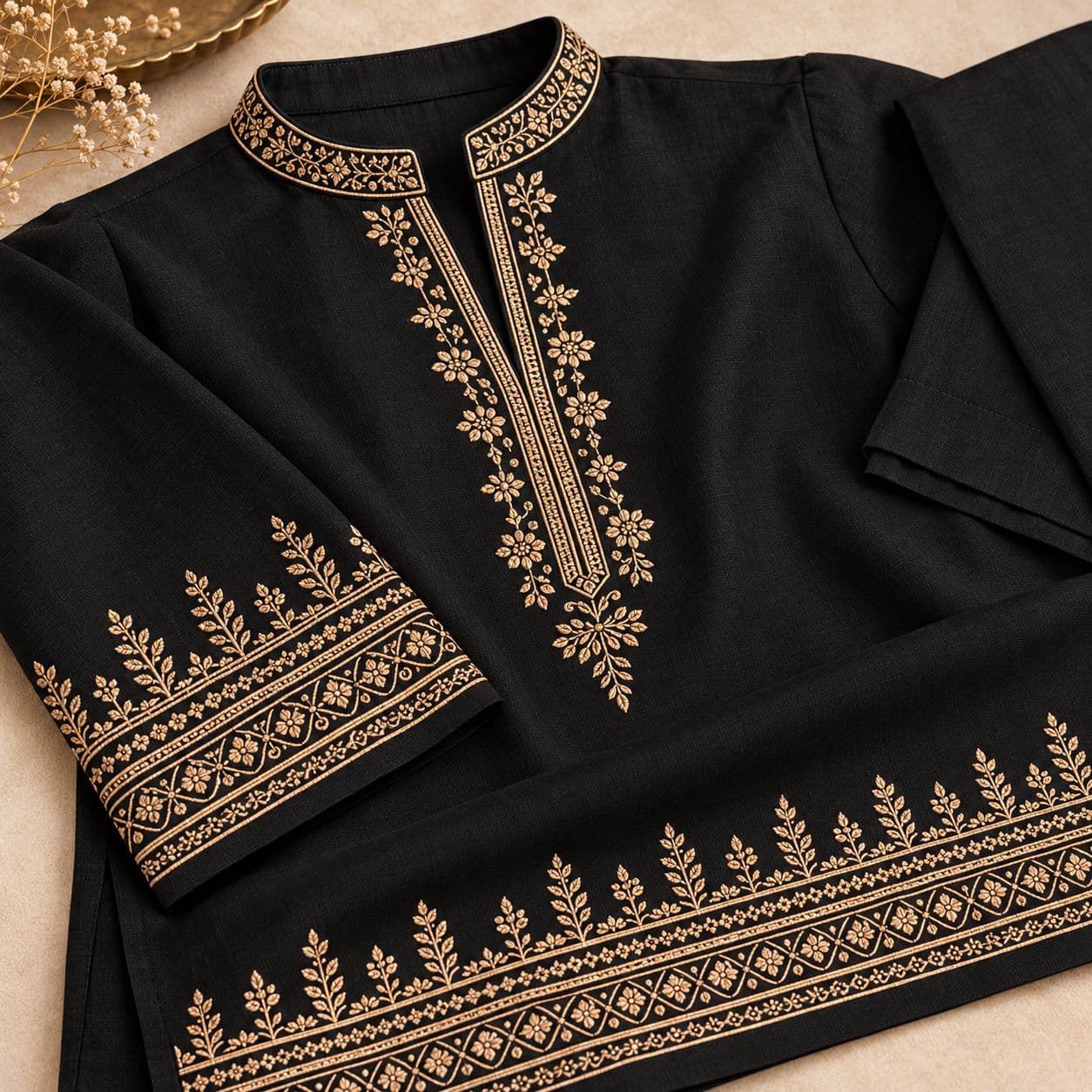
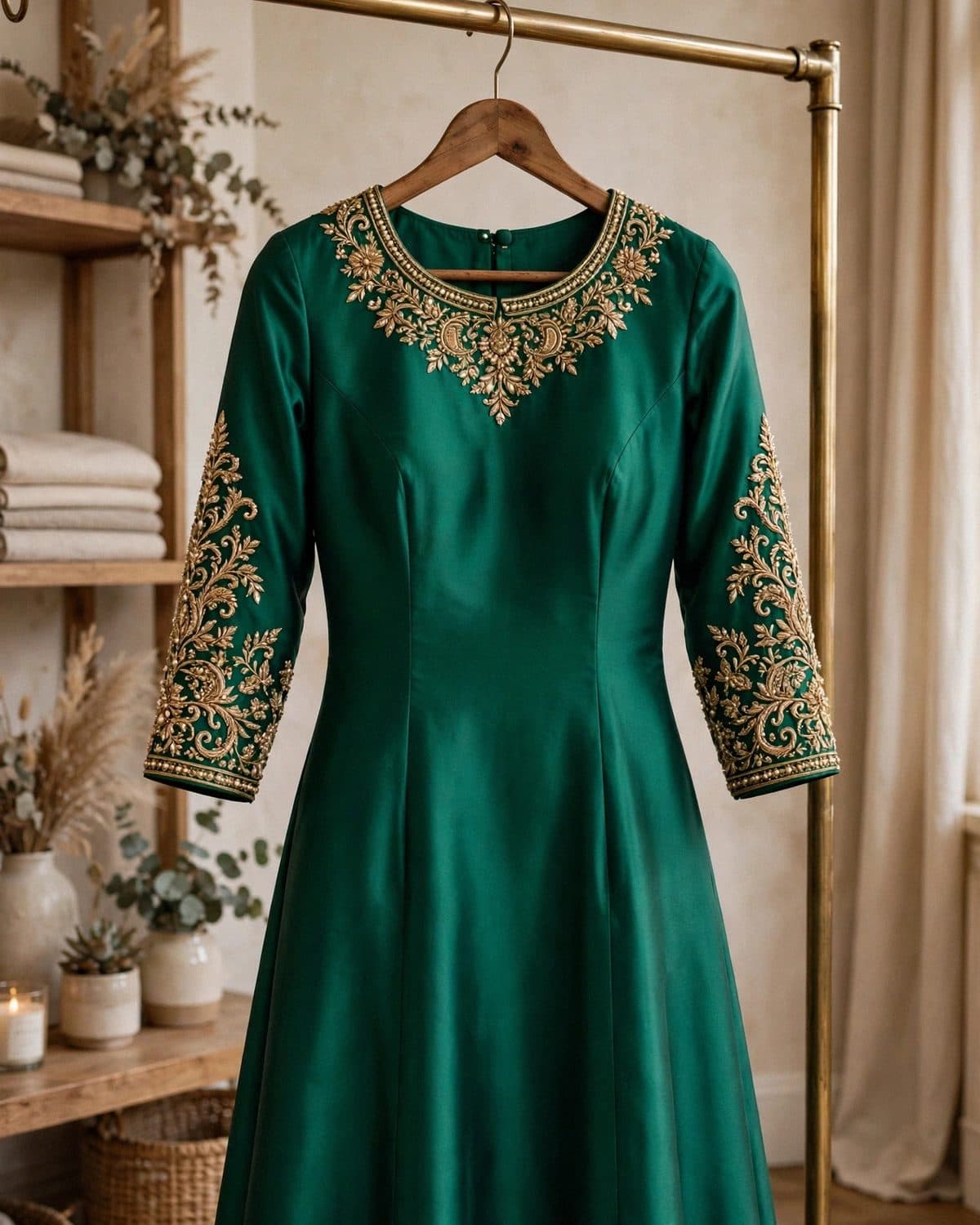
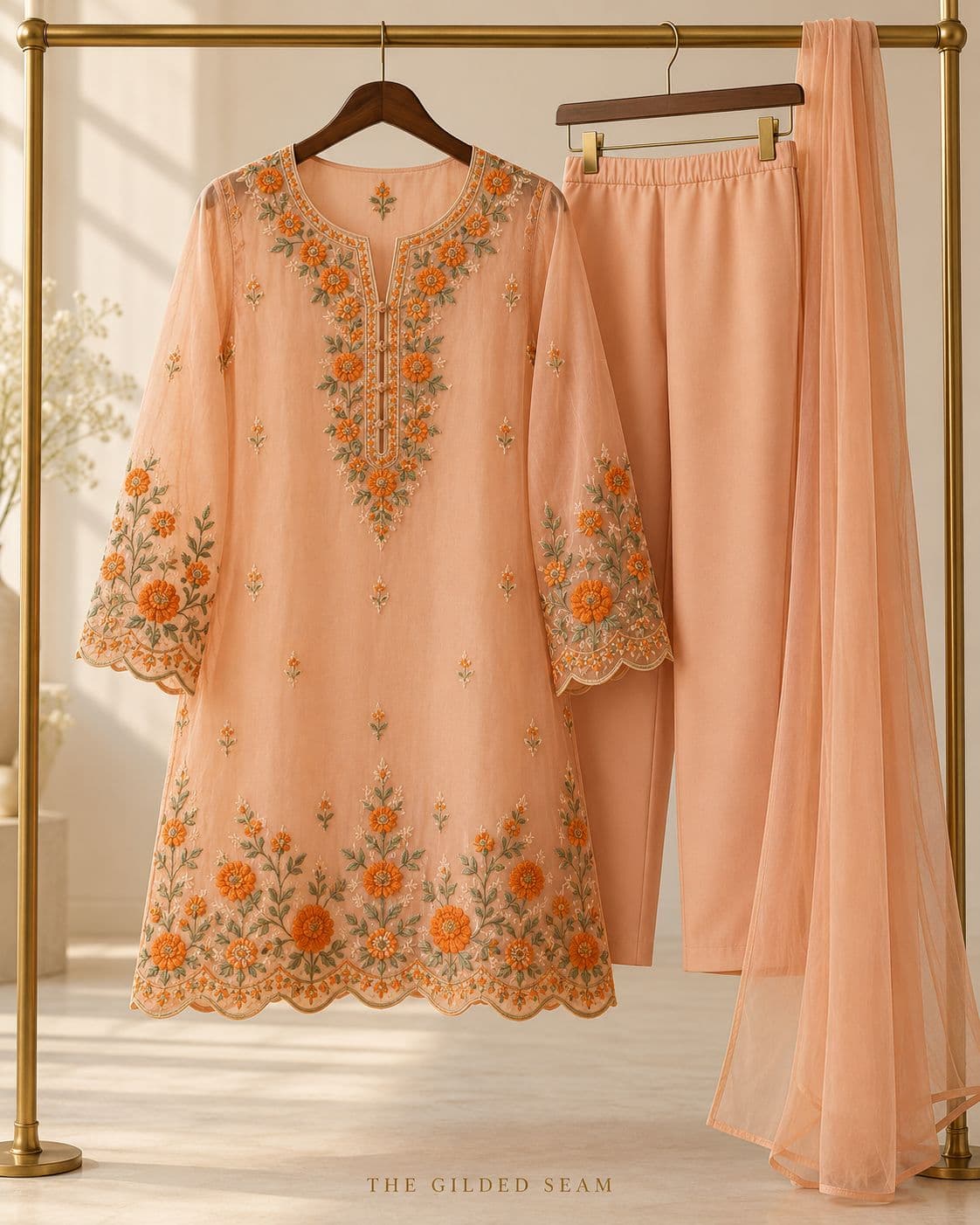
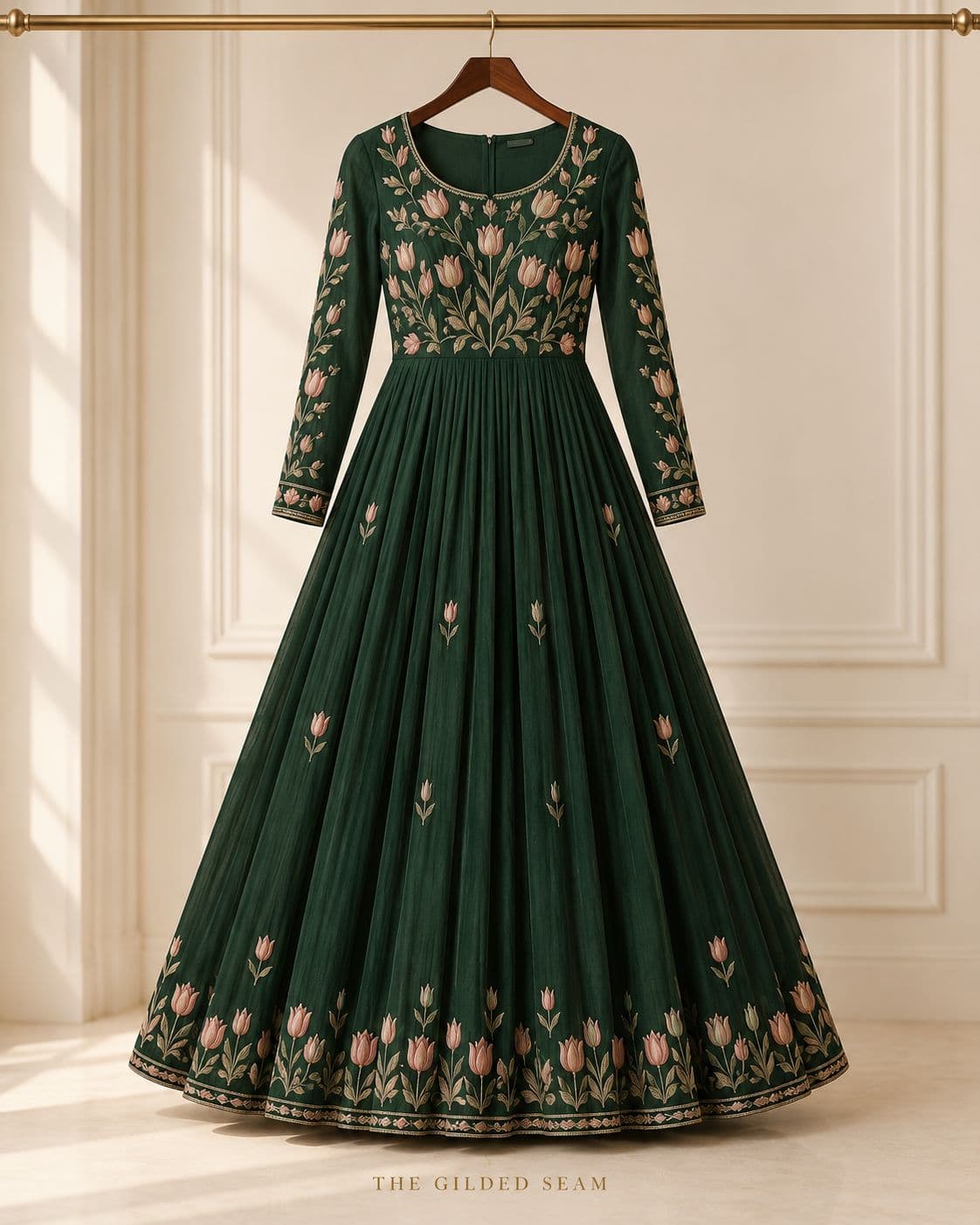
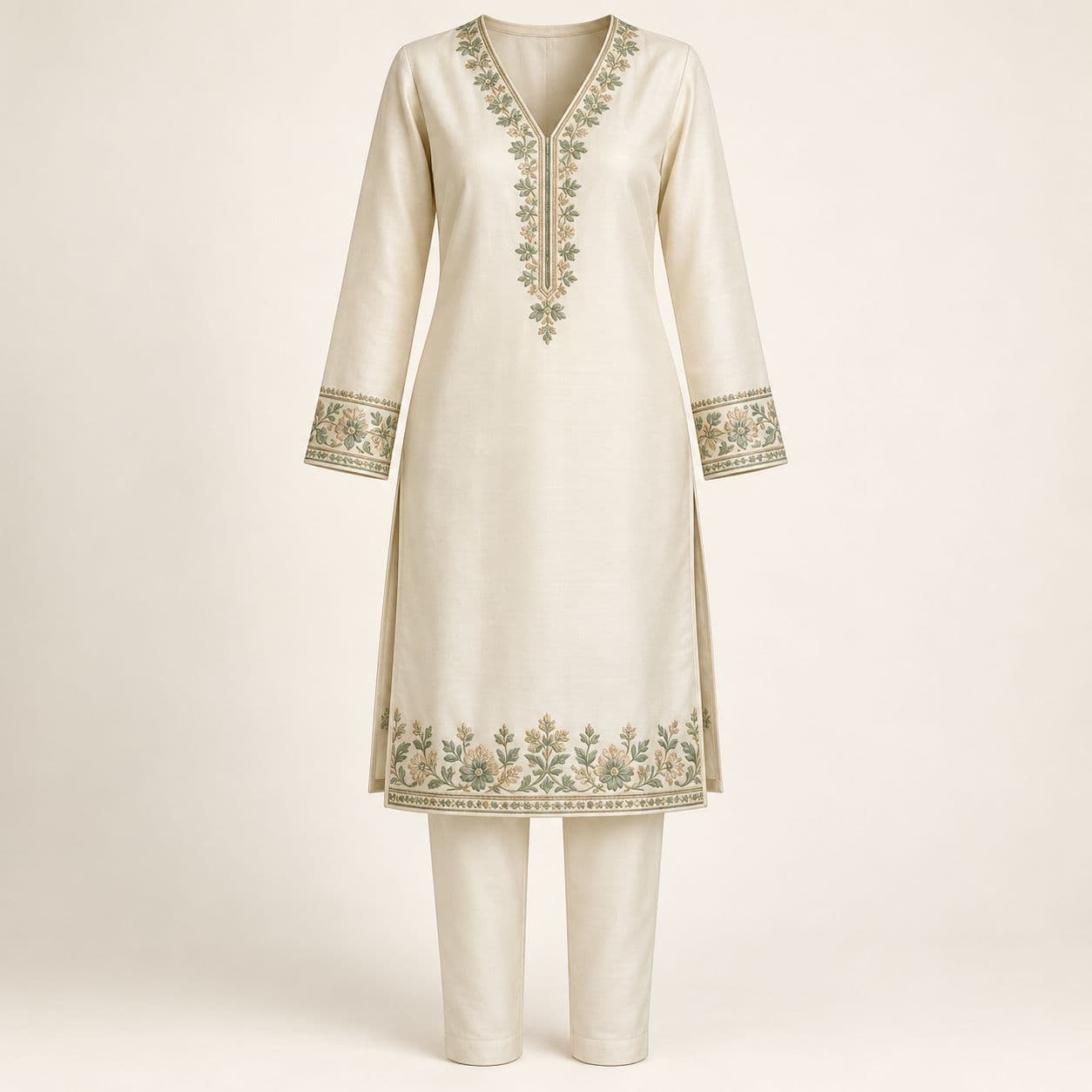
Pale colours suit Eid morning in daylight: Ivory Sage with its sage and soft gold flowers, Ivory Daisy with pink and white daisies, Peach Marigold and the mauve set. Deeper colours hold up under evening lights, so keep emerald, royal blue, teal, maroon, scarlet, bottle green or the jet black and gold of Midnight Gold for the dawat. You can ask for another base or thread colour on any of them, and we confirm in your quote whether it can be done. Colours on a screen can look slightly different from the finished piece.
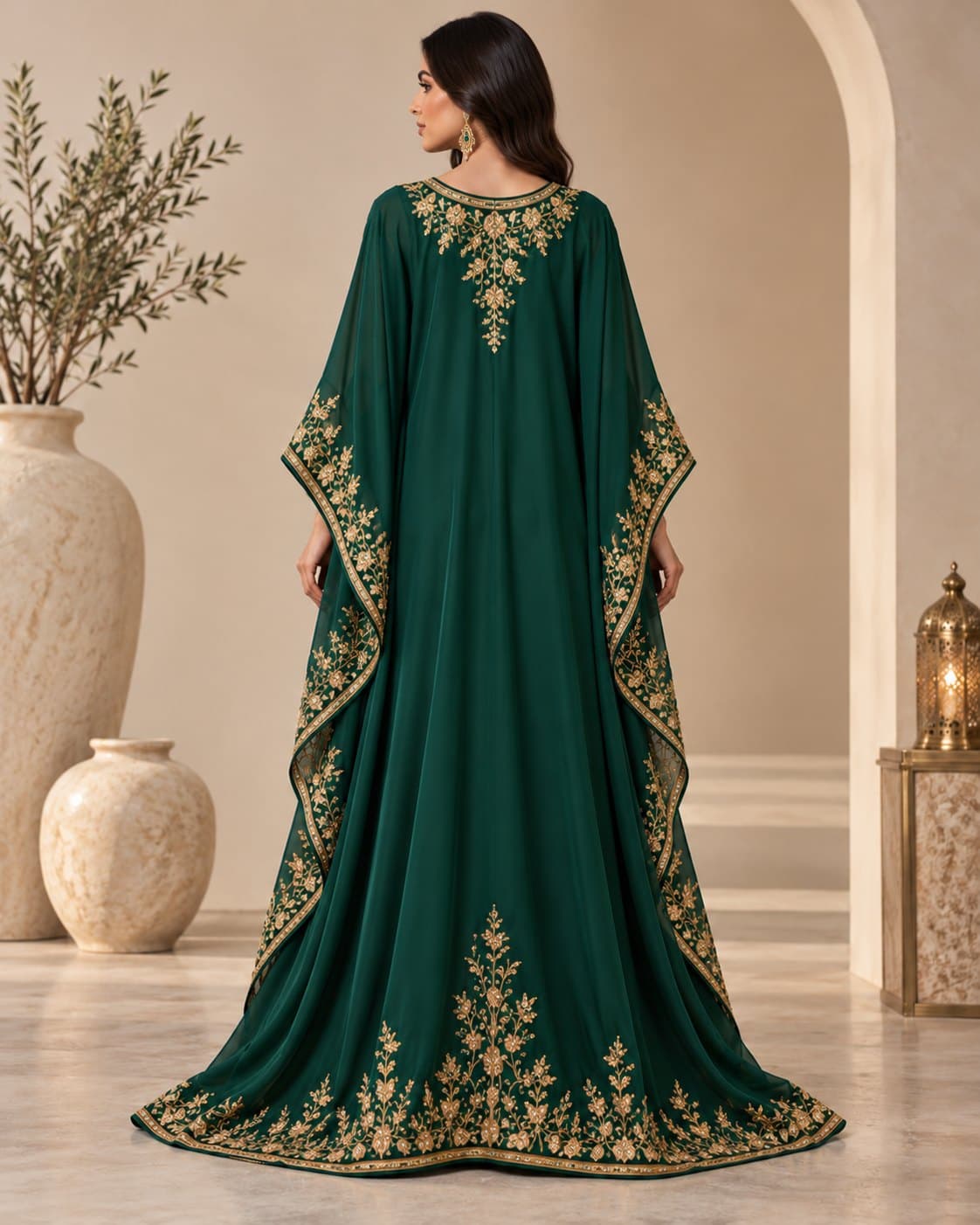
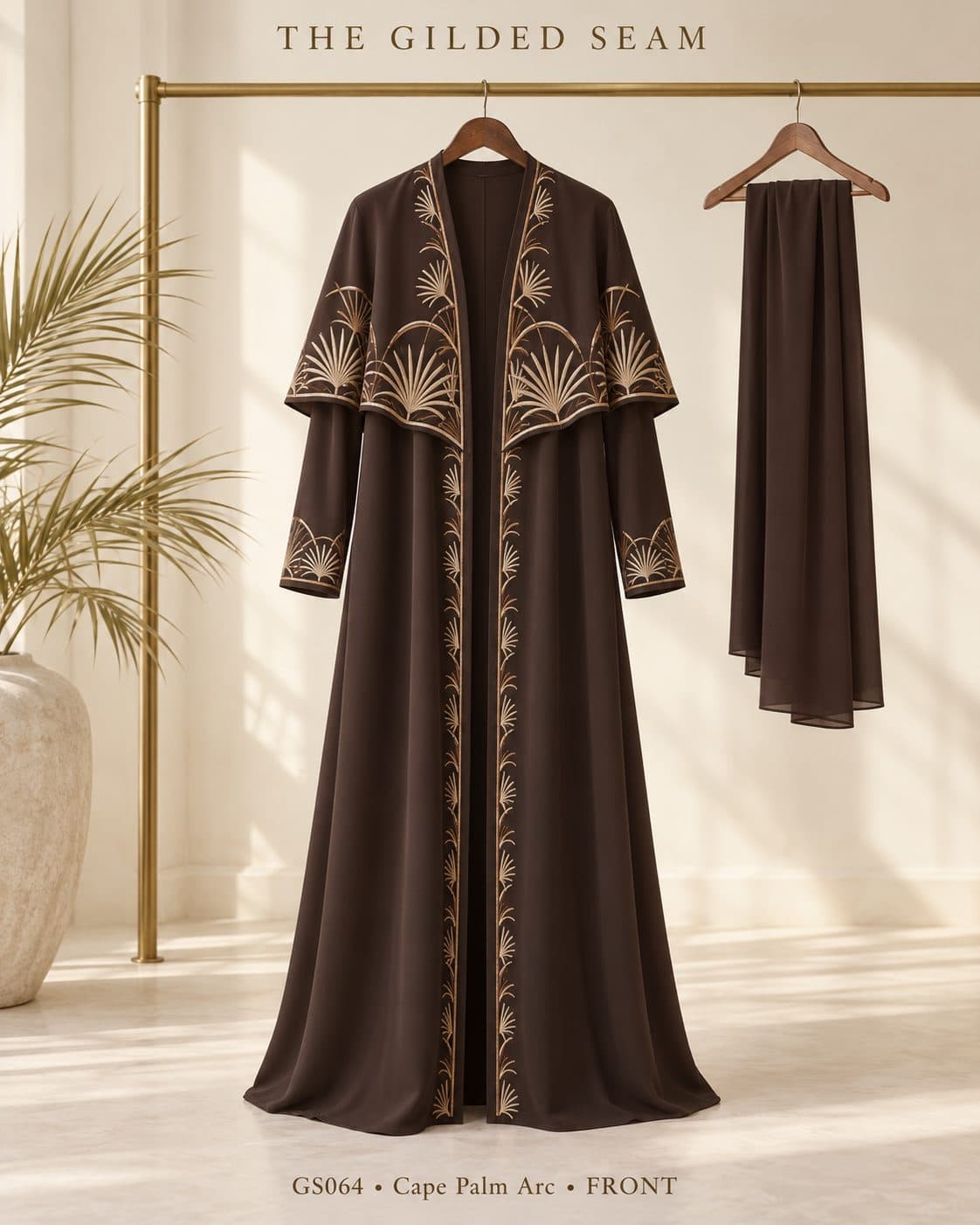
The order form has three embroidery levels: delicate (neckline or sleeves), detailed (neckline, sleeves and hem) and statement, the bolder level for Eid and parties. Thirteen of these designs are drawn at detailed; the cape kaftan is the statement one. Your quote says how the work is done (by hand, by machine, or with zari, beadwork or sequins), depending on the fabric and the design.
Eid outfits in the UK and the Gulf: dressing for the weather
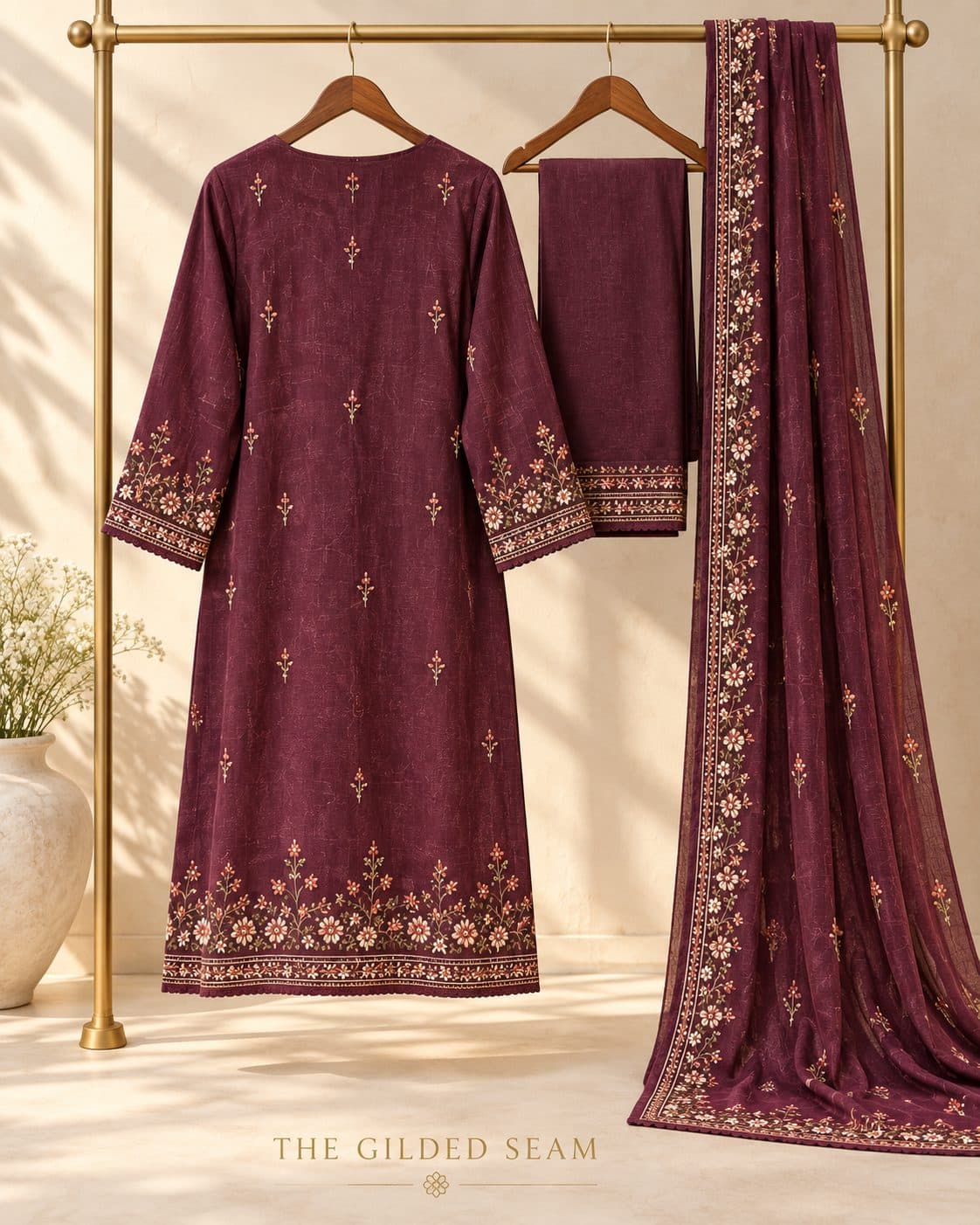
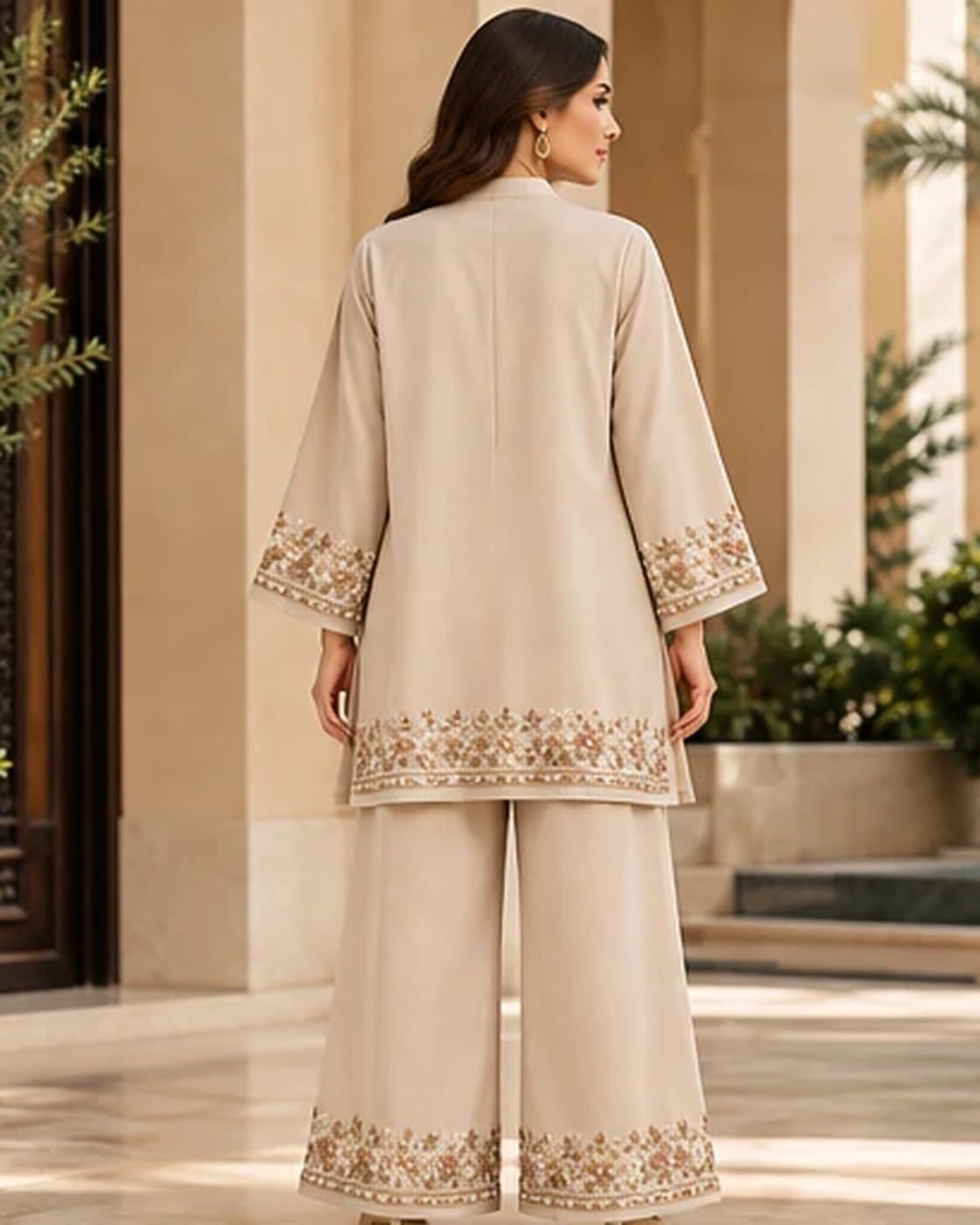
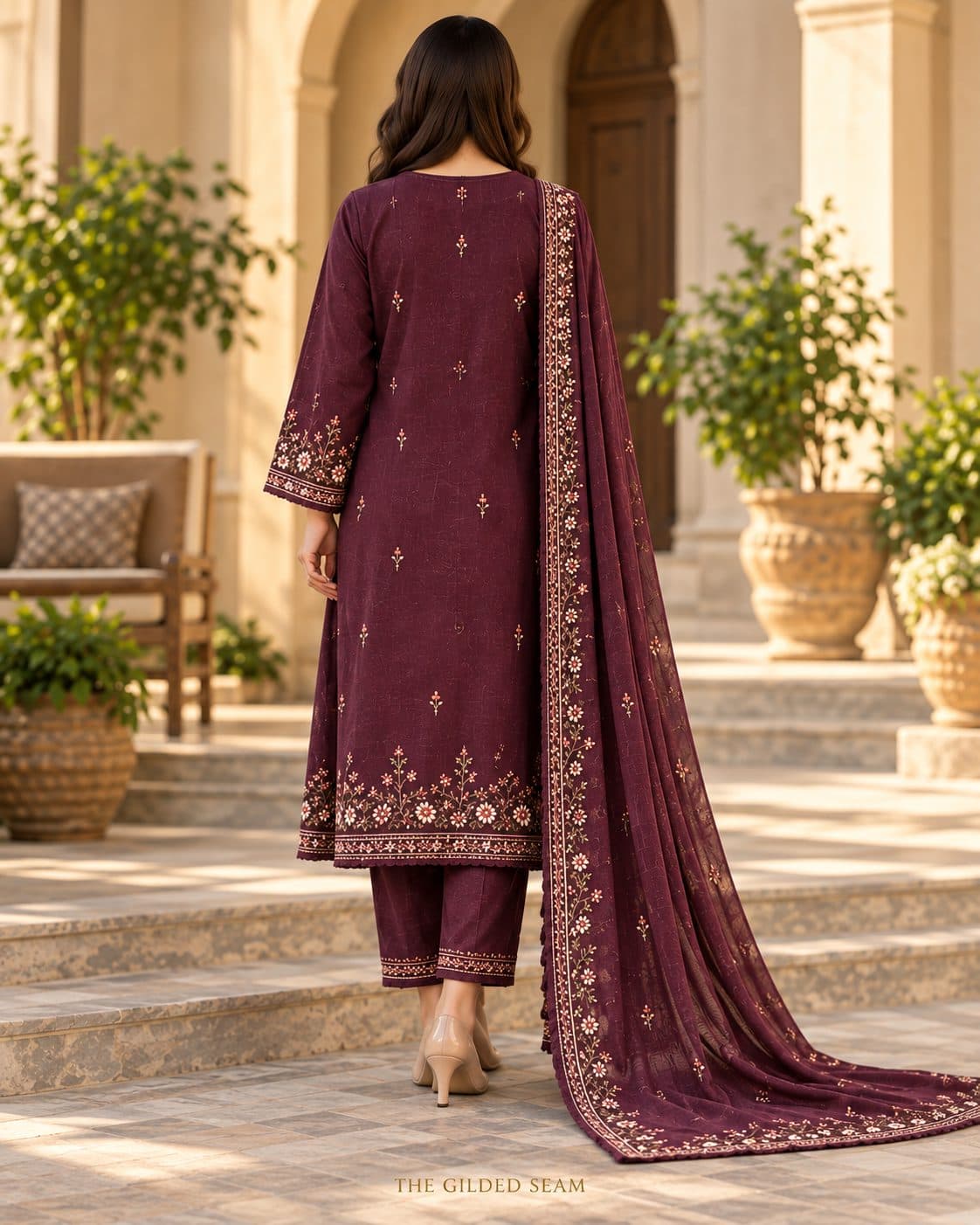
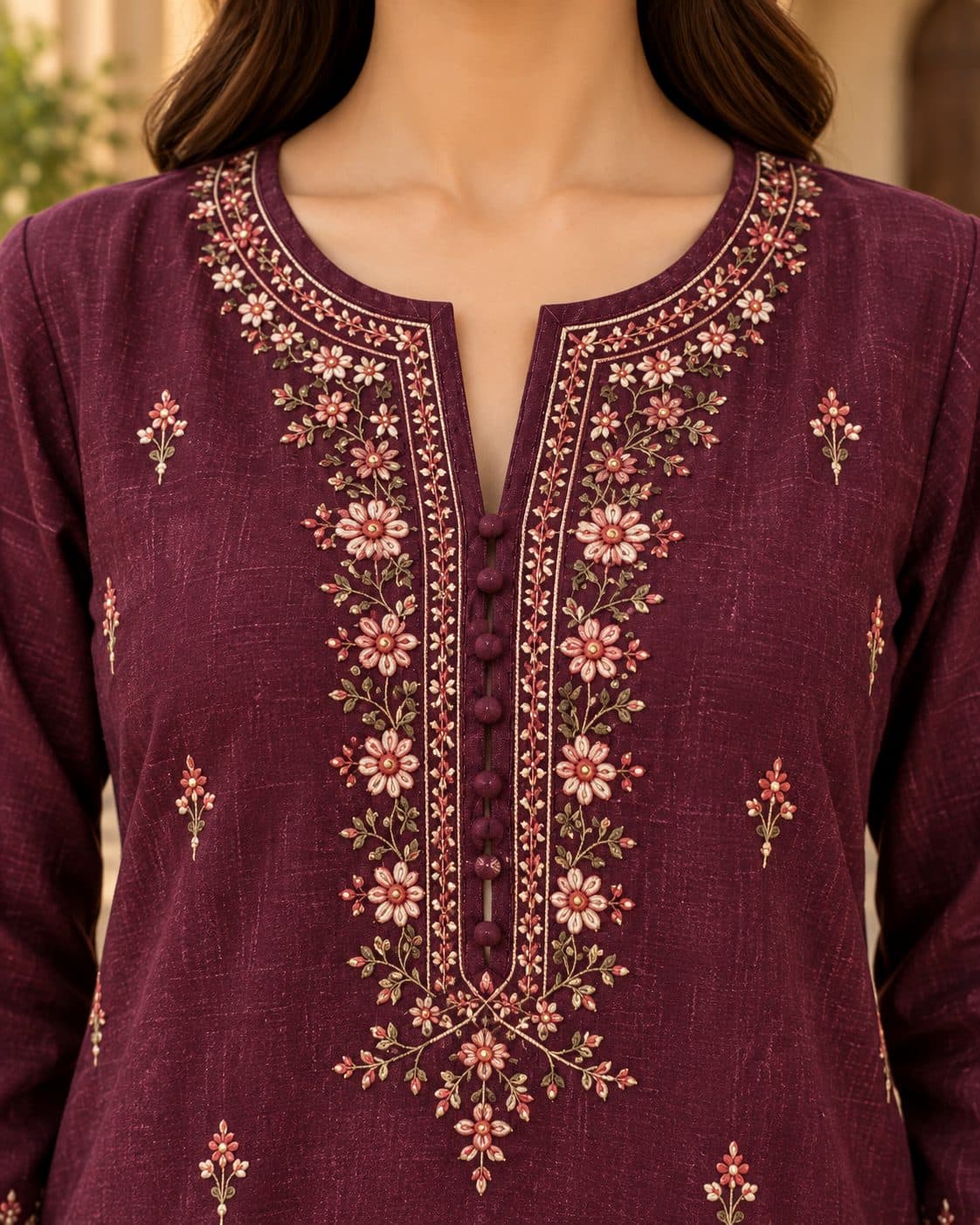
An early March Eid in the UK and much of the US can mean a cold, wet walk to prayer. Ivory Sage, Midnight Gold and Maroon Heritage have full sleeves as drawn, and the three-quarter sleeves on Teal Heritage can be lengthened. The plum suit is karandi, a textured winter weave that keeps you warm without bulk, and a lining can be added. In the warm Gulf, ask for a lighter fabric: on every design but the karandi suit, the fabric is agreed in your quote.
Eid in Australia and New Zealand
South of the equator the seasons run the other way. An early March Eid al-Fitr comes just as the Australian summer ends, so the paler designs and a lighter fabric suit the morning, while Eid al-Adha in mid-May falls in late autumn, when the full sleeves of Ivory Sage or Midnight Gold make more sense. Ordering from Australia follows the same steps; see our Australia page.
 £71Regular £89· 20% offDesign previewSale20% OFF