Unstitched suits · 30 September 2026 · 4 min read
Recreating the look from a brand’s catalogue photo
How to get an unstitched suit stitched like the catalogue photo: what the photo shows and hides, what the pack may not include, and how to brief your tailor clearly.
 Inspiration
What the catalogue photo is showing you
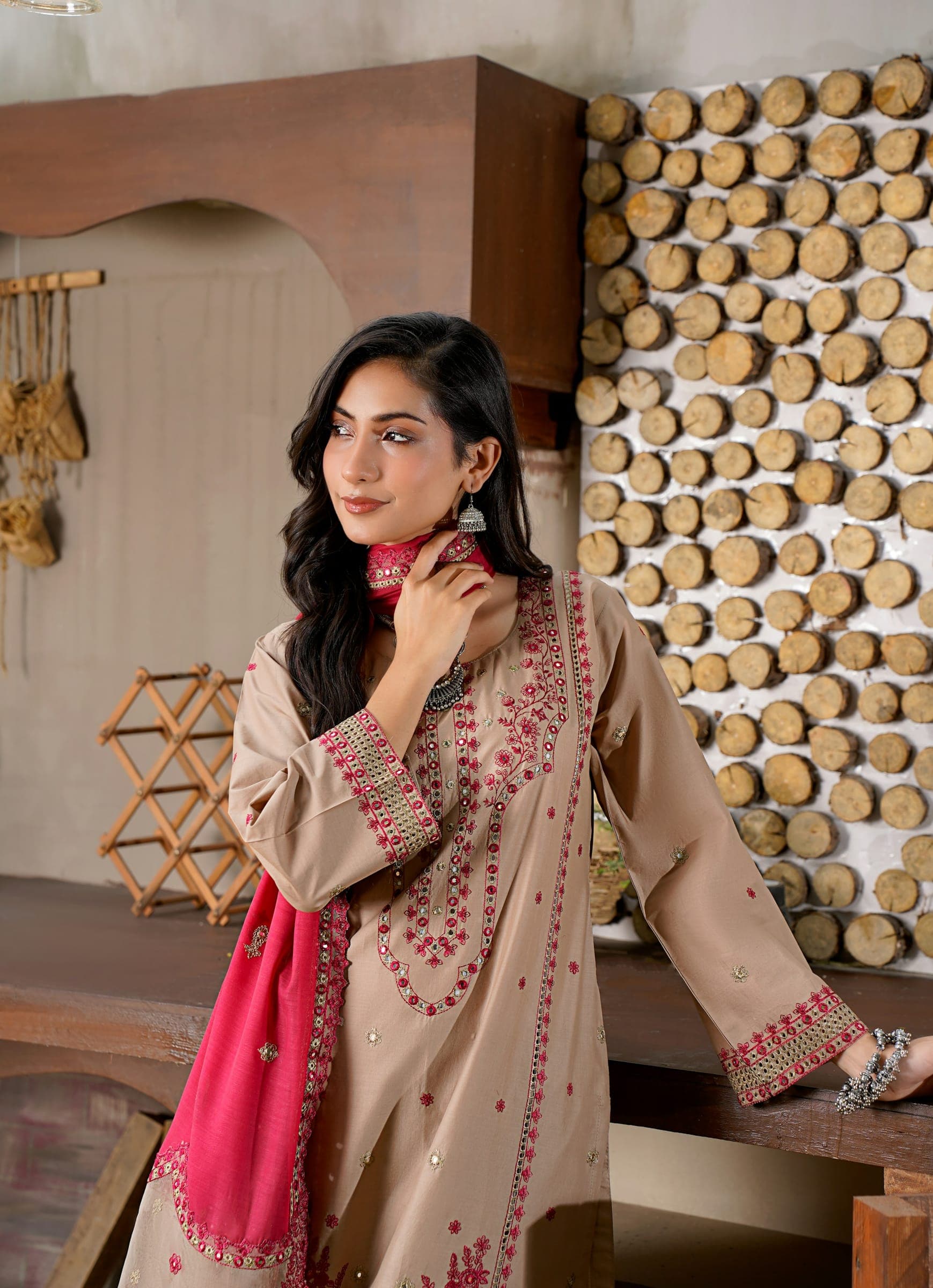
Brands photograph each unstitched design as a finished outfit, and that photo is often the reason you bought the suit. It is worth remembering what it is: one stitched version, made for a shoot, on a model of a particular height and size, styled, pinned and lit to look its best. It shows the brand’s idea of the design, not a guarantee of what the pack will make.
Most of the time you can get very close. The gaps usually come from three places: extra materials used in the shoot, fabric quantity, and the difference between the model and you.
Reading the photo
Before you brief anyone, look at the photo in detail and note down what you see.
- Silhouette: straight, A-line, flared or a shaped panel design.
- Fit: loose and flowing or close to the body, which tells you how much ease the design uses.
- Length: where the kameez ends on the model, relative to her knee, and the side slit height.
- Neckline: shape and depth, and whether it uses the patch from the pack.
- Sleeves: length and shape, and where the sleeve border sits.
- Trousers: style, width and where the trouser border or lace is.
- Extras: lace, piping, tassels, buttons, a lining under sheer sleeves or a contrast facing.
- The dupatta: how it is draped and finished.
- The back: look for a back view or a second photo, since the back neck, fastenings and ties often only show there.
Where your version may differ
Materials not in the pack. Lace, tassels, buttons, piping and lining are often added for the shoot. Compare the photo with the piece list on the label; anything not listed will need buying or sourcing.
Fabric quantity. Very long or flared catalogue designs can use more fabric than the pack contains, especially for a taller or larger wearer. Our guide to what to do if your suit is short of fabric has the options, and our guide to kalidar and anarkali cuts explains why flare uses so much.
Your proportions and preferences. A calf-length kameez on a tall model may need adjusting for you, and you may want a higher neckline or lined sleeves for modesty or comfort. Our modest dressing guide covers those choices.
Colour. Studio lighting and editing change colour. Judge the real fabric in daylight, and choose lining and trims against it, not the photo.
How to brief it
Send the catalogue photo together with daylight photos of every piece in your pack and the label, on the stitching quote form. Then say clearly what you want kept and what you want changed, for example: “as the photo, but knee length, three-quarter sleeves and a lining in the body”. Our guide to briefing a tailor with screenshots has more tips.
Be clear about your priorities. If the neckline is the reason you bought the suit, say so, and it can be protected even if something else has to give, such as the kameez length or the fullness of the sleeves. Knowing what matters most to you makes the trade-offs easy when the fabric runs tight.
If you are unsure what is possible, choose “advise me”. We compare the photo with your pieces and measurements and tell you what the fabric allows before anything is cut. The unstitched suit stitching page explains how pre-worked pieces are placed.
Common questions
Can my unstitched suit be stitched exactly like the catalogue picture?
Often very close, but not always exactly. The pack may not include lace, trims or lining used in the shoot, and a long or flared design can need more fabric than the pack has; photos of your pieces show what is possible.
Why does my suit look a different colour from the catalogue?
Studio lighting and photo editing change how colours appear, and screens differ too. Judge the colour from the fabric in daylight, and choose lining and trims against the real fabric rather than the photo.
Do I need to buy the lace and trims shown in the catalogue?
Only if you want them and they are not in the pack. Check the piece list against the photo; anything missing can be bought separately, or you can ask about adding lace or similar trims when you request your quote.