Fabrics and care · 30 September 2026 · 4 min read
Storing dupattas and embroidered suits: folds, moths and damp
How to store dupattas and embroidered suits: folding and rolling, protecting zari and embroidery, and keeping moths and damp away in UK and European homes.
 Inspiration
Before anything goes away
Clean first. Perfume, deodorant, food and body oils can set into fabric over time and attract moths, so wash or dry clean a suit before storing it for a season, following its care label. Make sure it is completely dry, too: putting away anything even slightly damp is the fastest route to mildew.
This guide covers outfits you have already had stitched. For uncut fabric waiting to be made up, see our guide to storing unstitched suits. The advice here is general, so follow any storage or care instructions that came with a garment.
Dupattas: roll, hang or fold with care
Dupattas are long, fine and often the most delicate part of a suit, so they crease and snag more easily than the kameez or trousers.
- Roll chiffon and georgette: rolling around a cardboard tube or a rolled towel avoids hard creases.
- Hang lighter dupattas over a padded hanger or a scarf hanger, draped rather than knotted.
- Fold embroidered dupattas with acid-free tissue between the layers, so the embroidery does not rub or imprint on the fabric.
- Change the folds every few months; a crease left for a whole year can weaken fine fabric along the line.
- Keep edges tidy: tassels and lace can tangle, so wrap them in tissue or a soft cloth.
Embroidered and embellished suits
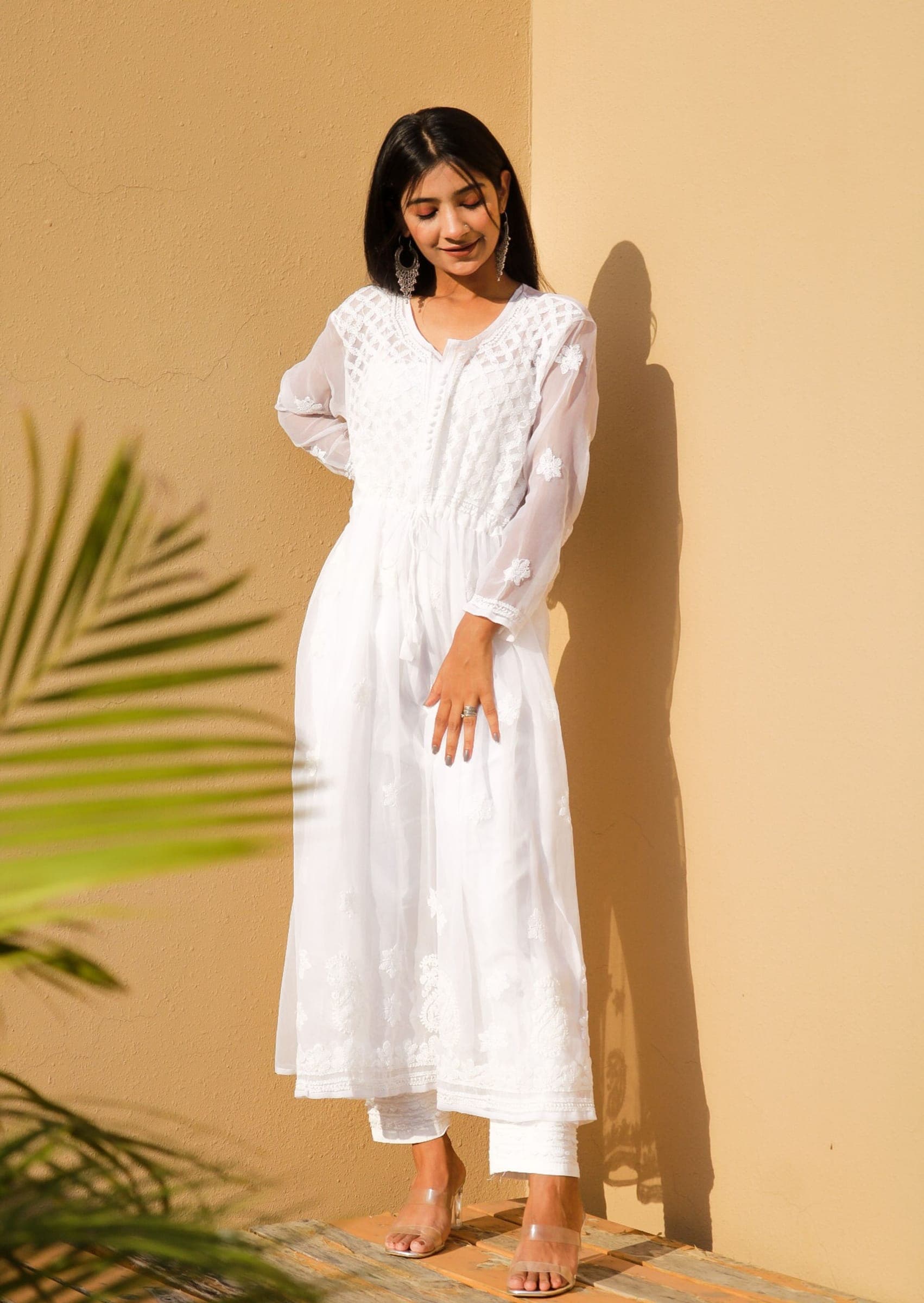
Embroidery adds weight in some places and not others, and metallic threads react to air, moisture and chemicals. That is why embroidered pieces need a little more care in storage than plain ones. For suits you wear often, a well-spaced wardrobe and padded hangers are usually all you need; the points below matter most for pieces stored for a season.
- Fold heavy pieces flat: a heavily embroidered kameez can stretch at the shoulders if it hangs for months.
- Use tissue: lay acid-free tissue over embroidery and in the folds.
- Wrap zari: metallic thread can tarnish, so wrap zari and gota pieces in soft cotton or muslin, away from rubber bands and perfume.
- Breathable bags: cotton garment bags let air circulate; plastic traps moisture.
- Avoid wire hangers: they leave marks and distort shoulders, so use padded or wide hangers for lighter suits.
Keeping moths away
Clothes moth larvae feed on animal fibres such as wool and silk, and they are drawn to fabric carrying food or sweat, so blends are not automatically safe. Wool shawls, silk suits and fine wool wraps are most at risk.
- Store clean, as above.
- Deter: cedar blocks and lavender sachets may help deter moths, but they do not kill eggs or larvae already present.
- Disturb: moths prefer dark, undisturbed places, so take stored pieces out, shake them and air them every few months.
- Check: small holes, fine webbing or tiny cocoons mean it is time to act.
- Deal with an outbreak: clean every affected item as its care label allows, vacuum the wardrobe thoroughly, including corners and shelf edges, and consider a moth trap to see whether the problem has gone.
Damp and light
Many UK and European homes have damp corners, especially against external walls and in lofts, garages and basements. Keep wardrobes a little away from cold walls, avoid storing clothes in lofts or garages, and consider moisture absorbers or silica gel sachets inside the wardrobe. Let it breathe, too: do not pack it so tightly that air cannot move, and open it on dry days. Mildew smells musty and can leave marks that may not wash out.
Light fades fabric too. Keep suits out of direct sun and away from bright windows, and use covered storage for strong colours. If an old suit has faded or marked, a local tailor may still be able to restyle it; our restyling guide has ideas. If it is beyond saving, or you would rather replace it, we can make a new outfit to your measurements: see custom stitching.
Common questions
Should dupattas be folded or rolled?
Rolling is usually best for chiffon and georgette dupattas, because it avoids sharp creases. Embroidered dupattas can be folded with acid-free tissue between the layers, as long as you refold them now and then.
Do cedar and lavender stop moths?
They may help deter adult moths, but they do not kill eggs or larvae already in the fabric. Storing clothes clean and checking them regularly matters more.
Is it safe to store embroidered suits in plastic?
It is better not to for long periods, because plastic can trap moisture and encourage mildew. Breathable cotton or muslin bags are a safer choice.