Fit, measuring and alterations · 30 September 2026 · 4 min read
Taking in a kameez at the sides, waist and sleeves
How a kameez is taken in at the side seams, waist and sleeves, what happens to slits, prints and zips, how much can come out, and when darts give a better shape.
 Inspiration
Usually the simplest alteration
Taking in is the most common alteration and usually the most straightforward, because it removes fabric rather than needing more. A kameez that is loose at the sides, baggy at the waist or wide in the sleeves can usually be brought closer to the body. Whether it looks right afterwards depends on where the extra room is, and what else sits in the seams.
Our ready-made suit alterations guide gives the overview. Here is what each kind of taking in involves.
At the side seams
The side seams run from underarm to hem, and they are where most kameez are taken in. The new seam can be even all the way down, or taken in more at the waist and less at the hip for shape.
- Side slits: the slit edges are refinished along the new seam line, and the slit height can stay the same or change.
- Underarm: the new side seam usually continues along the sleeve seam, so the armhole gets a little smaller too. That helps a gaping armhole, but can make a snug one tight.
- Side zips: a zip in the side seam has to be removed and set in again, which adds work.
- Prints and borders: a hem or sleeve border is cut into at the seam, and a large motif can lose part of its design. Check this with your tailor before the seam is cut.
At the waist
- Shaped side seams: taking in more at the waist than at the bust and hip creates a gentle curve.
- Waist darts: front and back darts shape the waist without touching the side seams, and suit a kameez that is loose all round the middle.
- Bust darts: added or deepened where the front stands away at the side of the bust.
- A centre back seam: if the kameez has one, it can be taken in there too.
- Fabric matters: darts suit plain and small-print fabric. On a large print or an embroidered front they interrupt the design, and the side seams are usually the better place.
Sleeves and shoulders
- Narrower sleeves: taken in along the underarm seam, all the way from armhole to hem or only in the lower part. Our guide to altering sleeve length and width covers length and shape changes too.
- Cuffs and sleeve borders: they have to be reworked if the sleeve is narrowed at the hem.
- Shoulders too wide: taking in at the sides does not move the shoulder seams. That needs the sleeve unpicked and set in again, which is more involved; see our armhole and shoulder guide.
How much can come in, and how to ask
A few centimetres round the body is usually simple. Larger amounts change the balance: slits, pockets and the neckline end up in the wrong places, and the kameez loses its proportions. If it needs to come in by more than about a size, ask whether a more thorough remake makes sense; our guide to resizing a hand-me-down suit explores that.
The clearest way to show what is needed is to pin it. Put the kameez on inside out and pin the side seams where they feel right, with a helper if you can, then take it to a local tailor who can check the pins on you, look at the inside seams, and tell you what can be done and what it will cost before anything is unpicked. Altering existing garments is not one of our services, but if the kameez cannot be taken in well, or you would rather have one that fits from the start, we can make a new outfit to your measurements: see custom stitching or start a quote.
Common questions
Can a kameez be taken in at the sides?
Yes, taking in at the side seams is the most common kameez alteration and usually the simplest. The side slits are restitched and the new seam often continues along the underarm of the sleeve.
Will taking in make the armholes tighter?
Often a little, because the side seam is usually taken in up through the underarm and along the sleeve. That helps a gaping armhole but can make a snug one feel tight, so mention it if your armholes already fit closely.
Can taking in fix shoulders that are too wide?
No, taking in at the sides does not move the shoulder seams. Wide shoulders need the sleeves unpicked and set in again, which is a bigger job and depends on the fabric and any embroidery near the shoulder.
Designs to start from
Make one of these your own
4 designs shown
 £96Regular £120· 20% offDesign previewSale20% OFFView product
two-piece · party
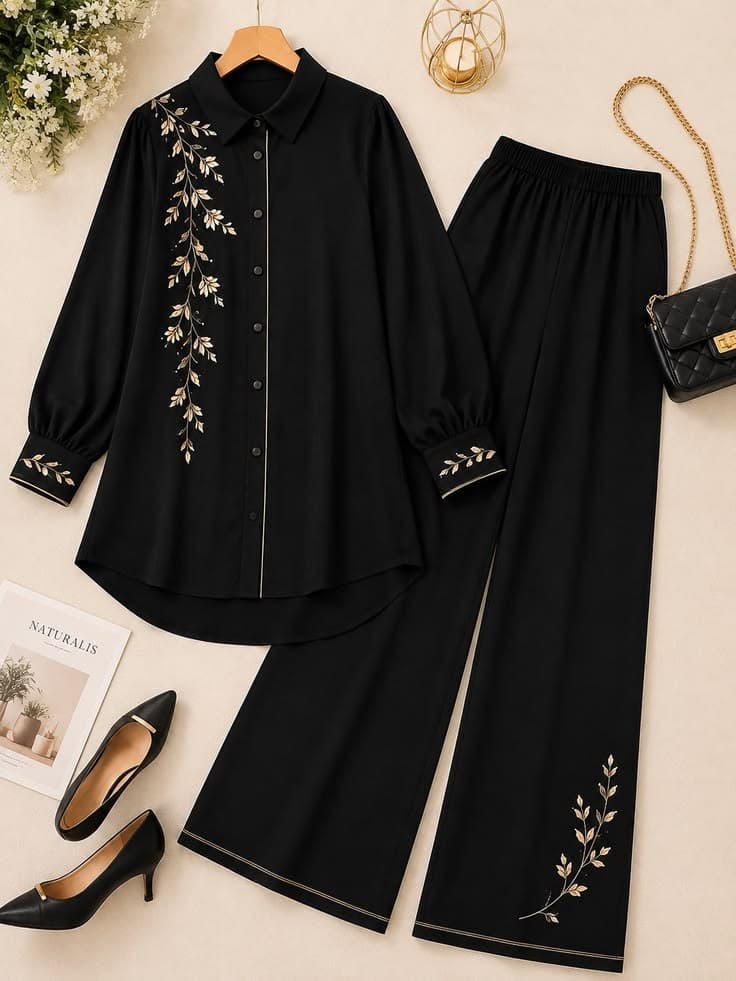
Black Gold Vine Co-ord Set
A black shirt with a gold leaf vine down the front and on the cuffs, with fine gold piping, over wide trousers with a matching vine at the hem.
- Black
- Embroidered
- Co-ord set
- Made to measure
 £76Regular £95· 20% offDesign previewSale20% OFFView product
frocks · everyday
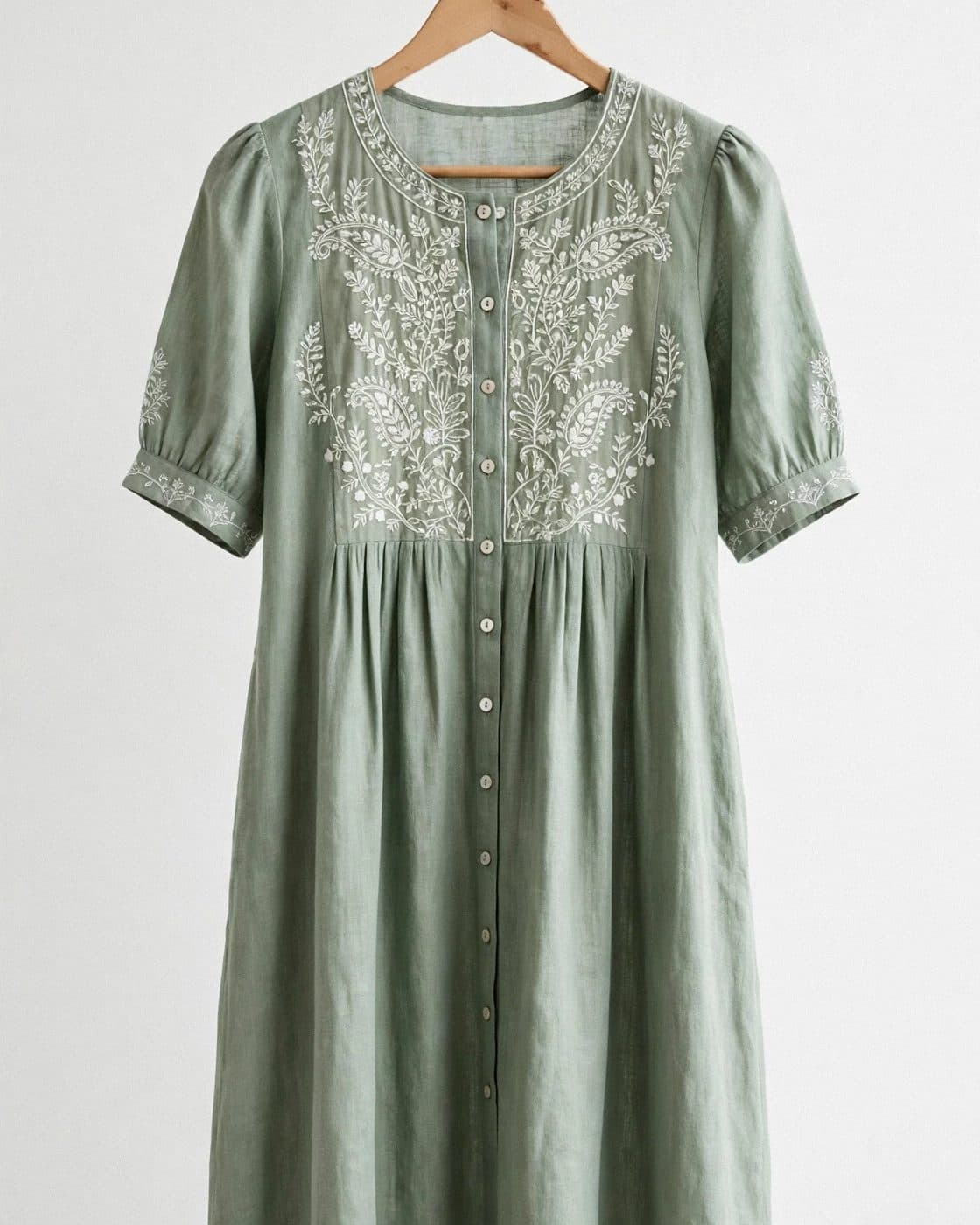
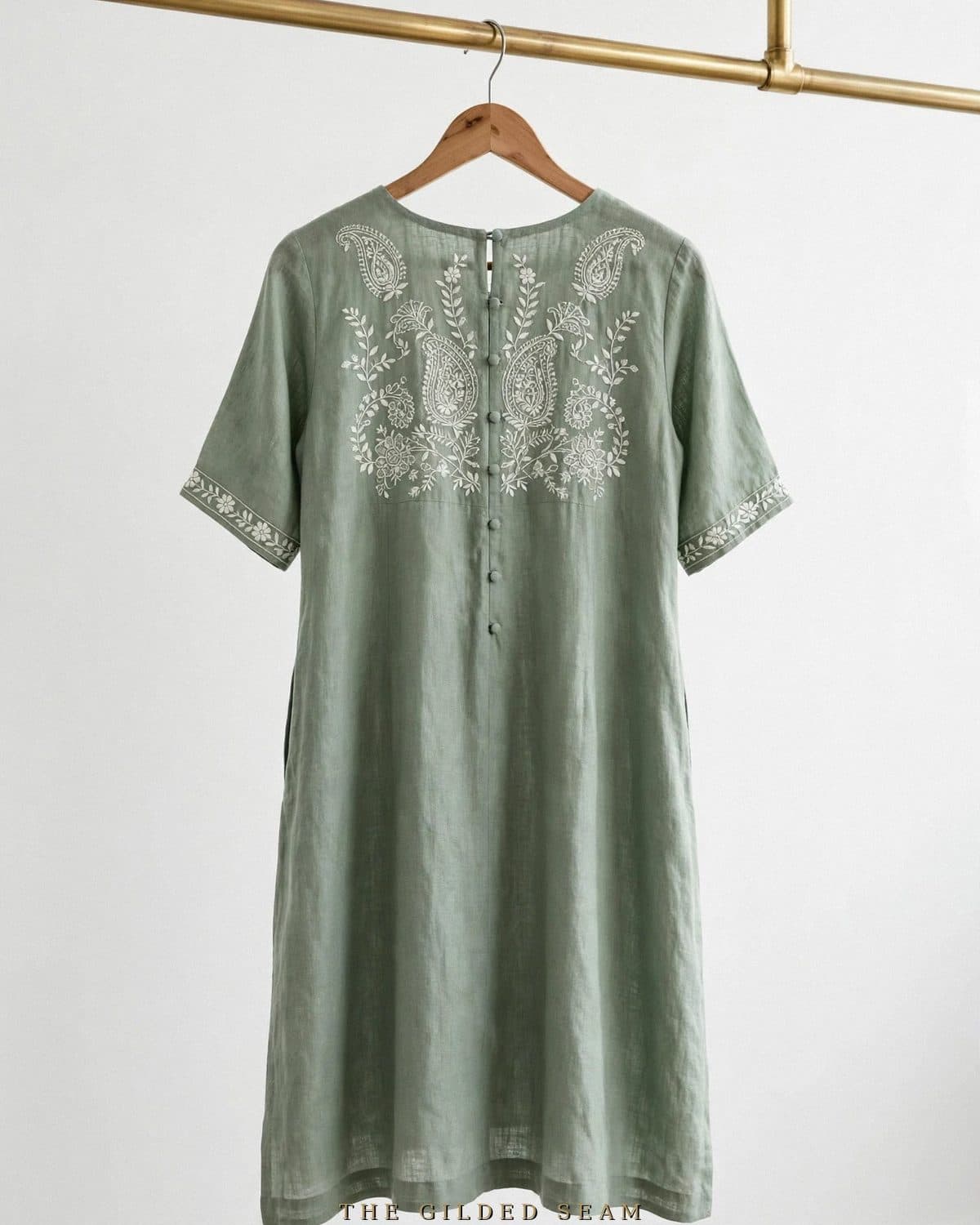
Sage Chikankari Frock
A sage green day frock with white chikankari across the yoke and sleeve hems, a button front and an easy, relaxed shape to the knee.
- Frock
- Chikankari
- Button front
- Everyday
- Made to measure
 £100Regular £125· 20% offDesign previewSale20% OFFView product
frocks · eid
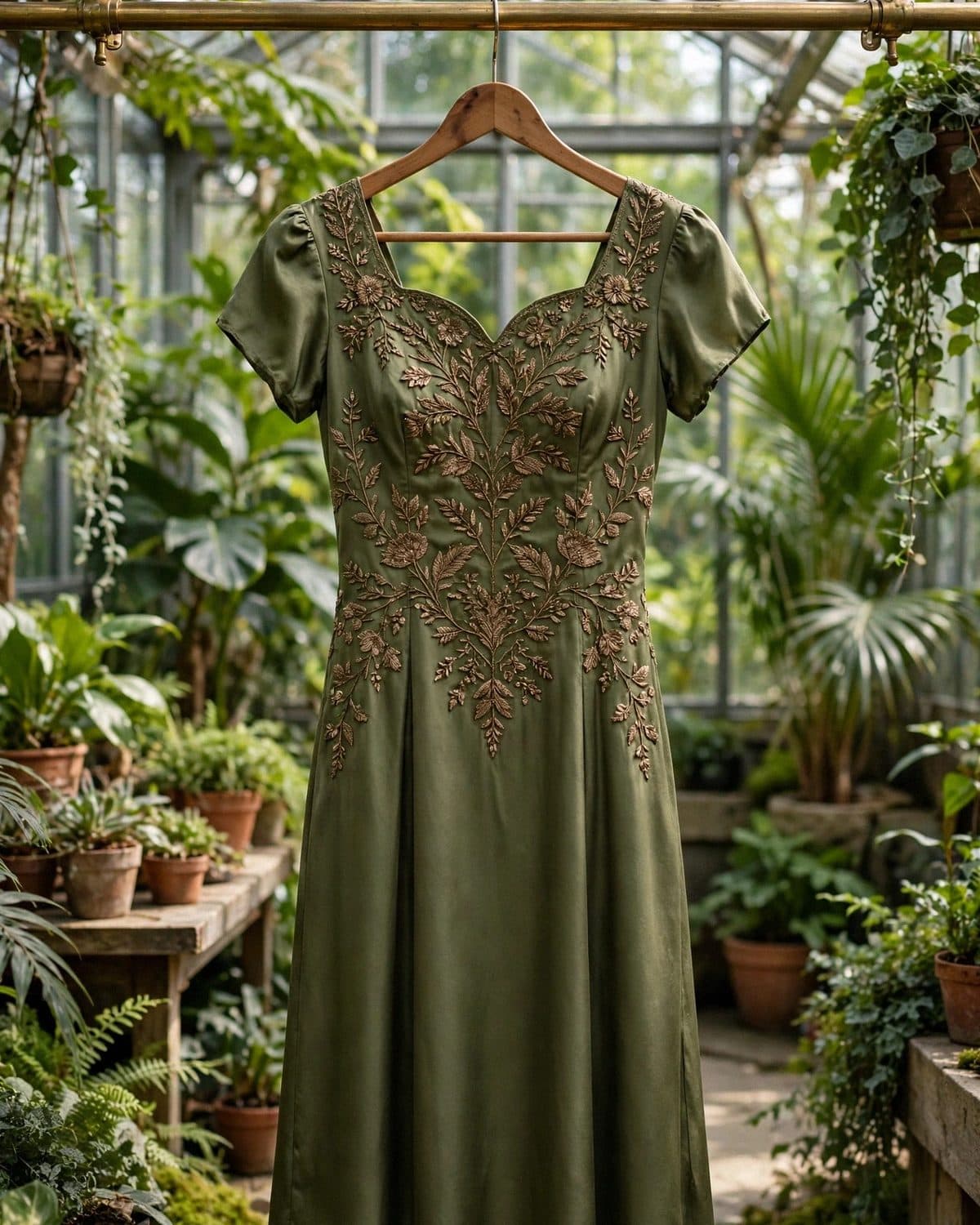
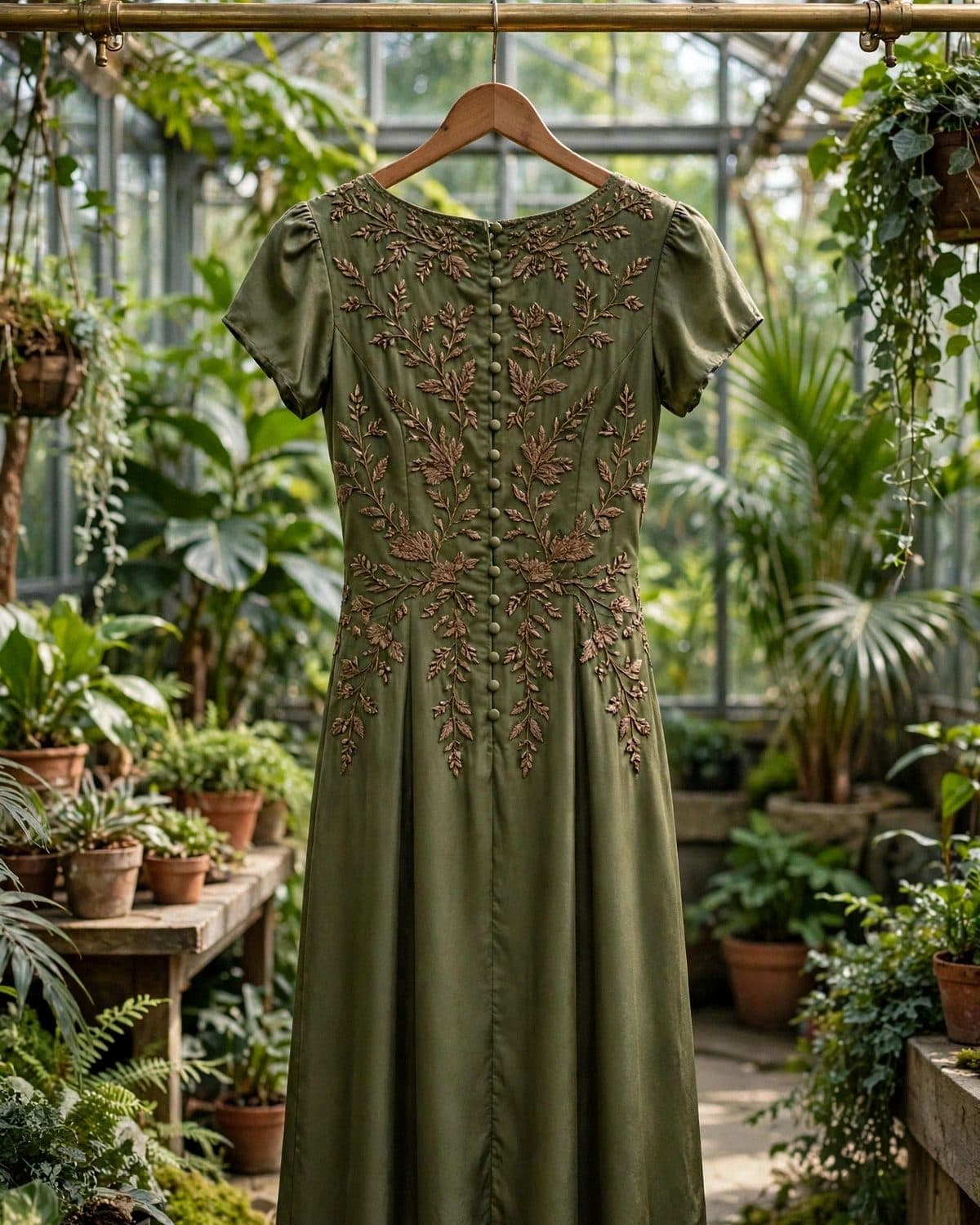
Olive Bronze Frock
An olive green frock worked all over the bodice and down the front with bronze threadwork, with a sweetheart neckline and short puff sleeves.
- Frock
- Bronze threadwork
- Puff sleeves
- Midi
- Made to measure
 £100Regular £125· 20% offDesign previewSale20% OFFView product
frocks · party
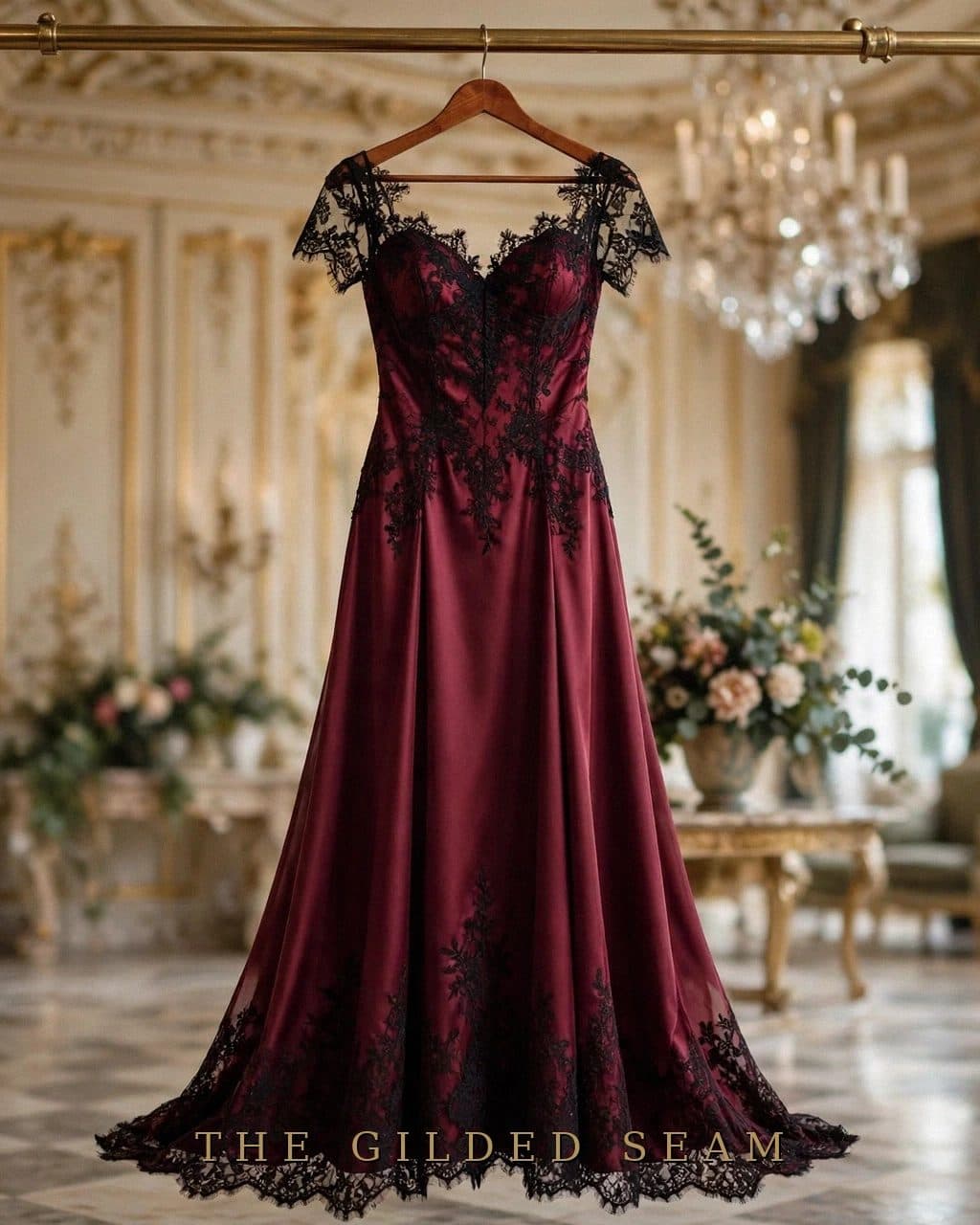
Burgundy Black Lace Frock
A burgundy satin gown with a black lace bodice and cap sleeves, falling to the floor with a scalloped black lace hem.
- Frock
- Lace
- Satin
- Floor length
- Made to measure
More guides
- How long should your kameez be? Choosing the right length for your height
- Altering a ready-made Pakistani suit in the UK: what can and can’t be changed
- Common measuring mistakes, and how to avoid them
- Measuring yourself without help: a practical method
- Using a kameez that fits as your template
- Ease explained: how loose should a kameez be?