Styles and design · 5 October 2026 · 3 min read
What is pintex? Pintucks on kameez and trousers
What is pintex? The tailoring word for pintucks: fine stitched folds on a yoke, sleeve or trouser hem. The fabric they need, the cloth they use and how to order.
 Inspiration
Pintex means pintucks
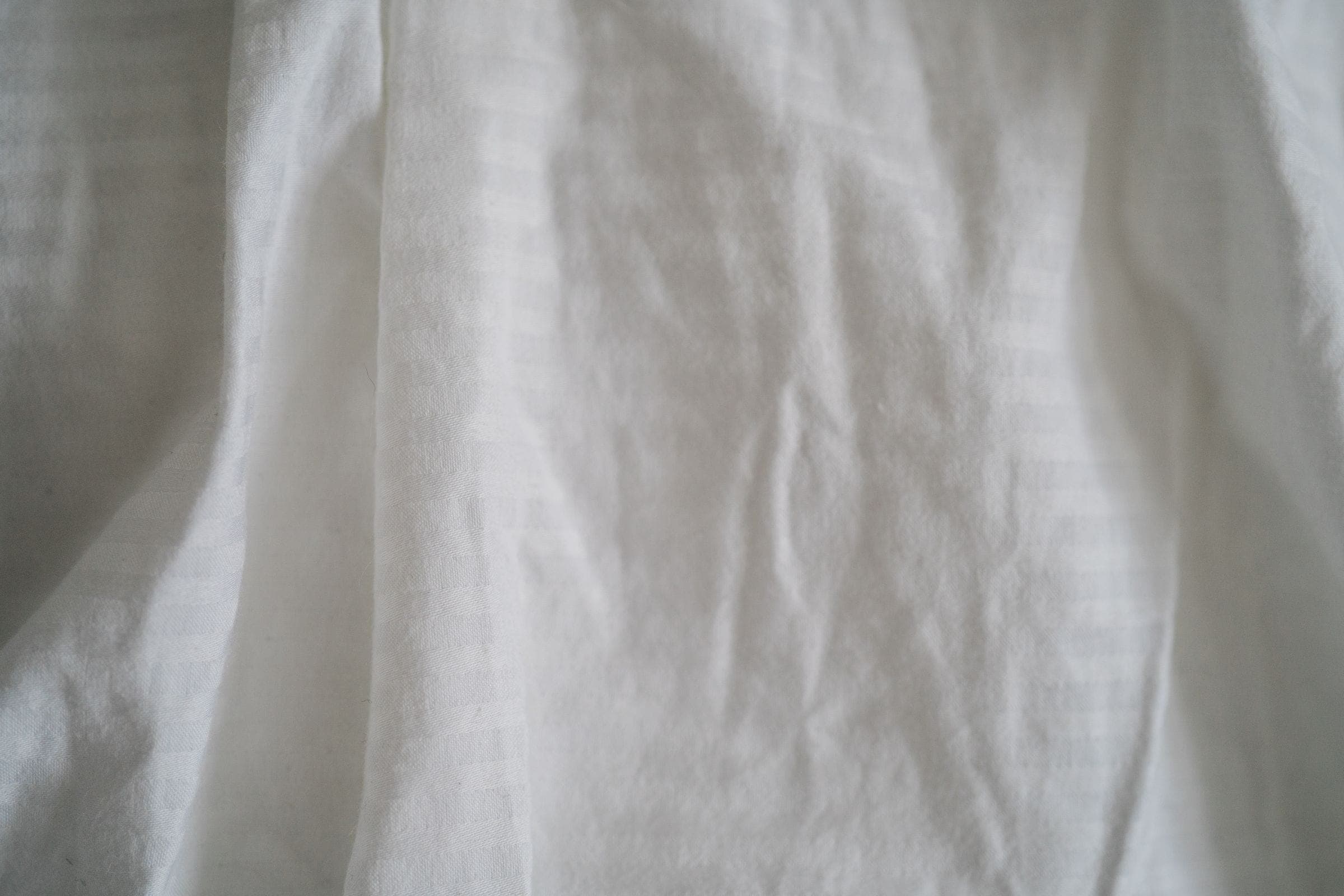
Pintex is the word used in Pakistani and Indian tailoring for pintucks: very narrow folds of fabric, each one stitched down along its length, set in neat parallel rows. Every tuck stands up from the surface by only a millimetre or two, about the width of a pin, which is where the English name comes from.
The effect is texture without any added trim. The lines are made from the garment’s own cloth, so they suit plain fabrics that need a little interest and people who like detail but not sparkle.
Where pintucks are placed
- The front yoke: rows running down from the shoulder or on either side of a placket, the most familiar use on a kurta. Our yokes and panels guide shows how a yoke is set into a kameez.
- Sleeves: a cluster above the cuff, or a few rows running the length of the sleeve.
- Cuffs and bands: fine horizontal tucks across a sleeve band.
- Trouser hems: a few horizontal rows above the hem of straight trousers or at the paincha of a shalwar, a classic finish that also adds a little weight so the hem hangs well.
- The back yoke or the daman: less common, and effective on a plain kameez.
Why they use up cloth
Each tuck is a fold, and a fold takes fabric from the width. A tuck that stands 2 mm high swallows about 4 mm of cloth. Twenty of them across a yoke take about 8 cm, which is why the panel is tucked first and cut to shape afterwards.
On fabric bought by the metre that is rarely a problem. In an unstitched suit, where the shirt piece is a fixed length, dense pintucks on the front and both sleeves can be the difference between having enough and running short. Mention them at the enquiry stage so that the quantity is checked with the tucks counted in.
Fabrics that hold a tuck
Pintucks need a fabric that presses to a sharp crease and stays there. Crisp, fine, stable cottons are ideal: lawn, cambric, poplin and fine linen. Voile works if it is not too soft.
Slippery fabrics such as chiffon and georgette can be tucked, but the lines wander easily and the result is softer. Thick khaddar and karandi make bulky ridges instead of fine lines. Prints are a matter of taste: tucks break up a large motif, so they look cleanest on plain cloth or a very small all-over print.
Pintuck or pleat?
A pintuck is sewn shut along its whole length and is there to be looked at. A pleat is a wider fold caught only at the top, or at the top and bottom, and is there to release fullness so that the garment has room to move. Between the two sits the released tuck, stitched part of the way and then let go, which decorates and shapes at once.
How to state what you want
“Pintex on the front” can mean four tucks or forty, so give the details below. A photo of a garment with the spacing you like settles most of them. Add it to the notes when you send your design for a quote; what is possible on your fabric is confirmed in writing, and the Send Your Design page explains how the brief is agreed.
- How many tucks, and whether they sit in one block or in groups.
- The gap between them: touching, a few millimetres apart or widely spaced.
- The direction: vertical, horizontal or on the diagonal.
- Where they start and stop, for example from the shoulder seam to the bust line.
- Thread colour, if you want anything other than a match.
Common questions
Do pintucks make a kameez tighter?
Not when they are planned. The panel is tucked before it is cut to your measurements, so the finished width is the one you asked for. They do make that area slightly firmer, because the cloth is layered.
How do you iron pintucks?
Press along the tucks, not across them, with the tucks all lying in the same direction. Ironing from the wrong side over a towel keeps the ridges crisp without flattening them.
Can pintucks be added to a kurta I already have?
Not in any practical way. Tucks take width out of the cloth, so they have to be made before the garment is cut. They belong in the design of a new piece.