Styles and design · 8 October 2026 · 4 min read
Where should a large motif sit on a kameez front?
Motif placement on a kameez: centre a large print on the front line and keep its heaviest part off the bust point. Mirroring sleeves and marking the motif you want.
 Inspiration
Centre it, then keep it off the bust
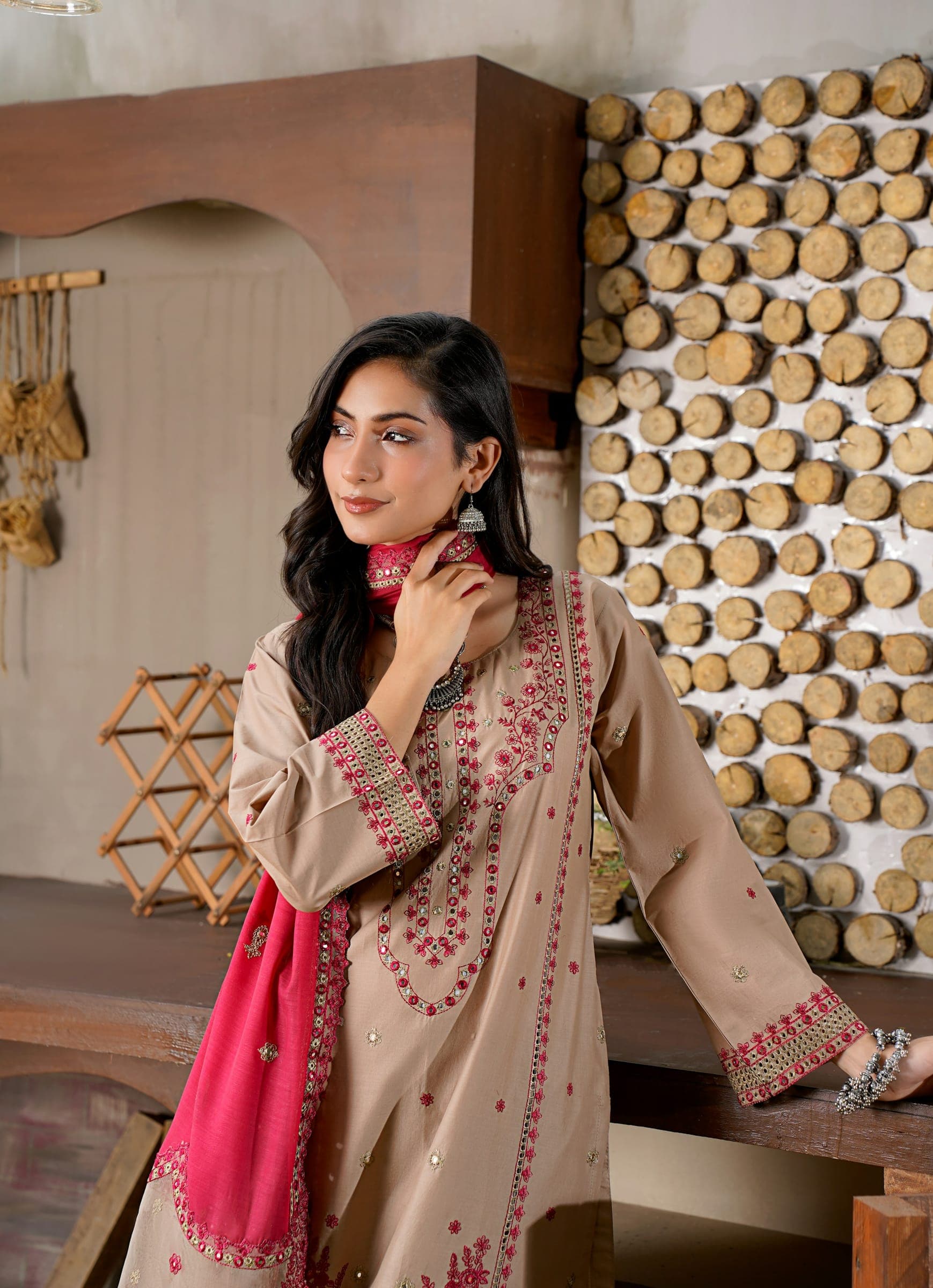
Put the middle of the largest motif on the centre-front line, and place its densest part either above the bust, at yoke level, or below it, around the waist or lower. Avoid centring a big flower or medallion over one bust point. That is the whole rule for large prints; the rest is detail.
Small all-over prints do not need this thought, because nobody can tell where one repeat ends. Once a single motif is the size of a hand or bigger, its position becomes part of the design.
Why the centre line matters
The centre-front line runs straight down from the middle of the neckline. A large motif a few centimetres off it looks like a cutting mistake rather than a choice. If the neckline has a slit, decide whether the slit should split the motif neatly in two or whether the motif should sit just below where the slit ends. Both can look good; what looks odd is a slit that clips one edge of it.
A round neck with a slit or a V-neck cuts into the top of the front, so a motif placed high may lose its upper part to the neckline. Check where the neck will reach before you choose a high position.
High, low or between
A motif sitting over one bust point stretches across the curve, which distorts its shape and draws the eye straight there. These positions work better:
- High: just under the neckline, across the yoke area. It frames the face and leaves the body plainer.
- Low: from the waist down towards the hip or hem. It draws the eye down and makes the torso look longer.
- Between the busts: a symmetrical motif centred on the front line, narrow enough not to spread over either bust point.
- On an A-line kameez the lower front flares, so a low motif spreads wider and looks larger than it did on the flat fabric.
Back, sleeves and side seams
The back is usually centred the same way, or left to the general repeat if it is hidden by a dupatta. Sleeves look best mirrored: the same motif at the same height on both arms and, if the print faces one way, turned so each faces forward or both face the same direction. Mirroring uses more cloth, so check you have enough with our guide on how much fabric a three-piece suit needs.
A motif wider than your front will be cut at the side seams or armholes. That is normal, but matching it across a seam is not always possible with the fabric available. Your height also matters: a motif that sits at the waist on one person lands on the hip of a shorter one, which is why your measurements are checked against the print before cutting.
Marking the motif you want
With Stitching Only, you can show us exactly which motif should be at the centre. Lay the fabric flat in daylight and push a safety pin through the centre of the chosen motif, or tack a loose thread through it. Avoid pens and chalk that may not wash out, and add a second pin with a note to show which way is up.
Then photograph the whole length with the pins visible and send the photo with your Stitching Only quote. If words are easier, our guide to briefing a tailor with photos shows how to point out details. We confirm in the written quote whether the layout of your fabric allows the position you want.
Common questions
Can a different motif be chosen for the back?
Yes. Mark it the same way with a pin and a note saying it is for the back, and mention it in your quote request so the layout allows for both.
What if the motif is wider than my kameez front?
It will be trimmed at the side seams or armholes. If you would rather see it whole, choose a narrower motif for the centre and let the large one sit on the back or lower down.
Does this apply to embroidered motifs too?
The same principles apply, but embroidery is already fixed on the fabric, so the cut has to be planned around where it was worked. A photo of the whole piece lets us see what is possible.