Styles and design · 8 October 2026 · 4 min read
Which sleeves suit fuller upper arms?
Sleeves design for heavy arms: choose elbow, three-quarter or full sleeves with room to move, in fabric that skims. Where the sleeve hem should not end.
 Inspiration
The sleeves that work
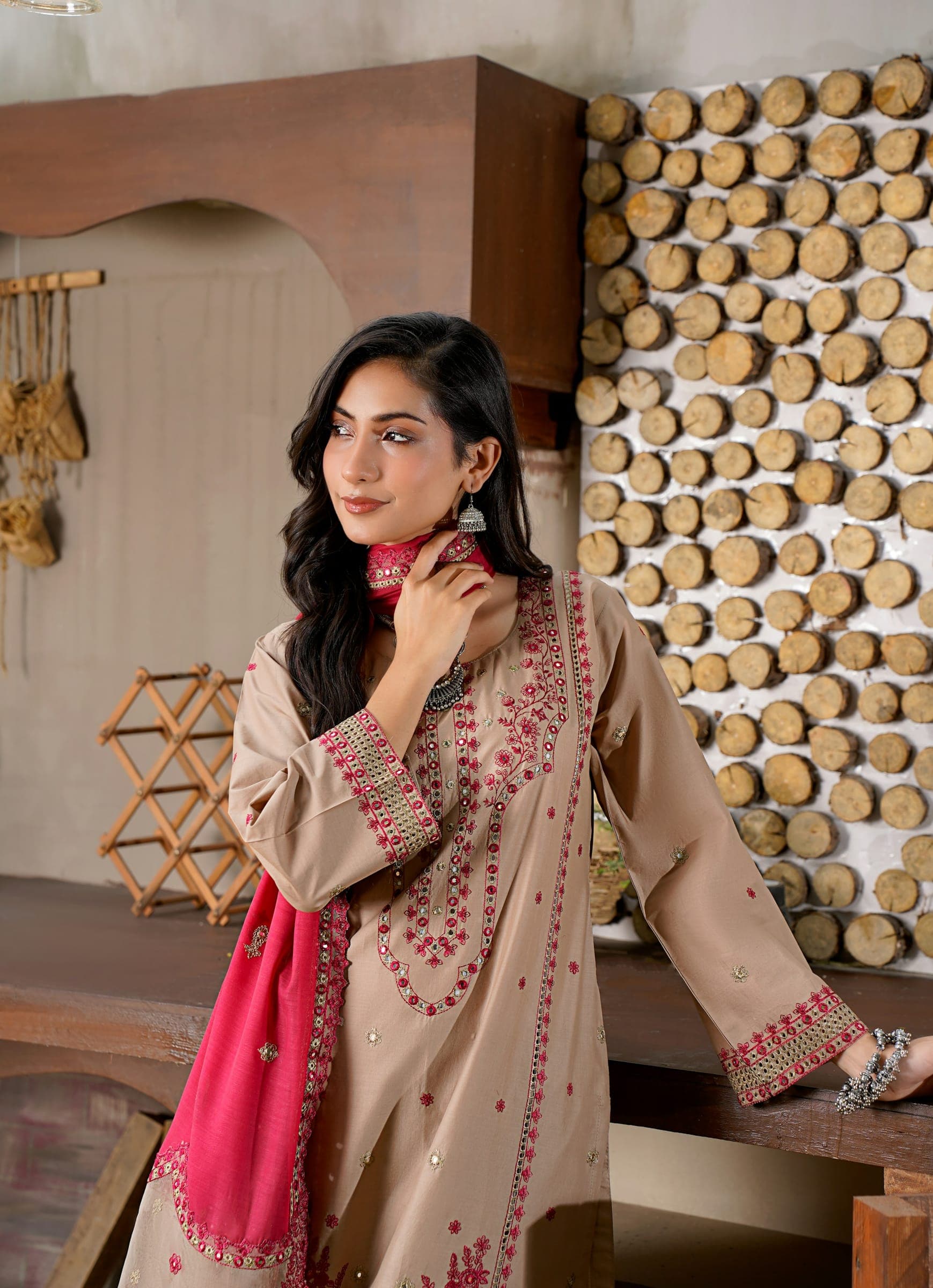
The sleeves that suit fuller upper arms are the ones that end below the widest part of the arm and skim it instead of gripping it: elbow-length, three-quarter and full sleeves, cut with enough room and made in a fabric that drapes. The ones to avoid are cap sleeves and short sleeves that stop exactly at the fullest point, and any sleeve cut so close that it pulls.
Three things do the work here: where the sleeve ends, how much room it has and what it is made of.
Where the sleeve should not end
A sleeve hem is a horizontal line, and the eye goes to wherever that line sits. On most arms the fullest point is a few centimetres below the armpit, which is exactly where a standard short sleeve finishes. Moving the hem down the arm puts the line somewhere narrower.
- [Elbow sleeves](/styles/sleeves/elbow-sleeves): end at or just above the elbow, covering the whole upper arm. Cool enough for summer.
- [Three-quarter sleeves](/styles/sleeves/three-quarter-sleeves): end on the forearm, which is slimmer than the upper arm on most people. The most reliably balanced length.
- Full sleeves: cover everything and draw the eye to the wrist, especially with a cuff or a little detail there.
- Short sleeves, if you want them: ask for them a little longer and slightly loose at the hem, so they end below the fullest point and do not cut in.
Room: skim, do not grip
A tight sleeve makes any arm look bigger, because the fabric strains and shows every curve. A sleeve with a little air in it does the opposite. Measure around the fullest part of your upper arm with the arm relaxed, and give that number as it is. For a woven fabric without stretch, a few centimetres of ease is added on top so you can bend and reach.
The armhole matters just as much. If it is too small it bites under the arm, and if it is cut very low the whole kameez lifts when you raise your arm. Our guide to armhole and shoulder problems explains what to measure. A sleeve that is comfortable at the bicep but tight at the elbow or forearm will still pull, so check those points too.
Fabric and shape
The same sleeve pattern looks different in every cloth, and a few shapes are kinder than others.
- Drapey fabrics: lawn, viscose, georgette, chiffon and crepe fall down along the arm. They are the easiest to wear.
- Stiff fabrics: organza, raw silk and crisp cotton stand away from the arm and add volume. Lovely as a deliberate statement, less so if you want the arm to recede.
- Sheer sleeves: a chiffon or net sleeve covers the arm lightly and softens its outline without adding weight or warmth.
- Flared sleeves: a bell sleeve that widens from the elbow moves the attention to the forearm and wrist.
- Straight sleeves with ease: the simplest option, and one that suits nearly everyone.
- Tight bands and elastic: a puffed sleeve gathered into a narrow band on the upper arm puts the tightest point on the fullest part. A looser band or a longer sleeve avoids it.
Details that help, and ordering
Lines that run down the arm lengthen it: a row of small buttons, pintucks, or lace set along the length of the sleeve. Bands that run around the arm, such as a wide lace or embroidered border on the bicep, widen it. Place trims at the cuff instead. A shoulder seam that sits on the shoulder bone also helps, because a dropped shoulder puts a seam across the upper arm.
On our quote form you can choose elbow, three-quarter, full-length or bell and flared sleeves, or “Advise me”. Add your upper arm measurement and say that you would like the sleeve to skim. Our custom stitching works from your measurements, and the size guide shows how to take them. When you are ready, start a quote. The sleeve style and length are confirmed in writing before cutting.
Common questions
How much room should a sleeve have around the upper arm?
Enough to pinch a little fabric on each side of the arm when it hangs relaxed, and to bend your elbow fully without the sleeve pulling. Give us your actual arm measurement and the ease is added when the sleeve is cut.
Is a sleeveless kameez a bad idea for fuller arms?
Not at all, if you like them. A slightly wider shoulder that covers the top of the arm, and an armhole cut close enough not to gape, look neat. A light shrug or a dupatta worn over the shoulders adds cover when you want it.
Do sheer sleeves need lining?
Usually not. Sheer sleeves are normally left unlined so they stay light, while the body of the kameez is lined. If you want more cover, ask for the sleeve to be lined to the elbow or all the way down.