
Styles and design · 8 October 2026 · 3 min read
Do dark colours really make you look slimmer?
Do dark colours make you look slimmer? A little, because they hide shadows and seams. Fit, one colour from shoulder to hem and fabric weight matter far more.
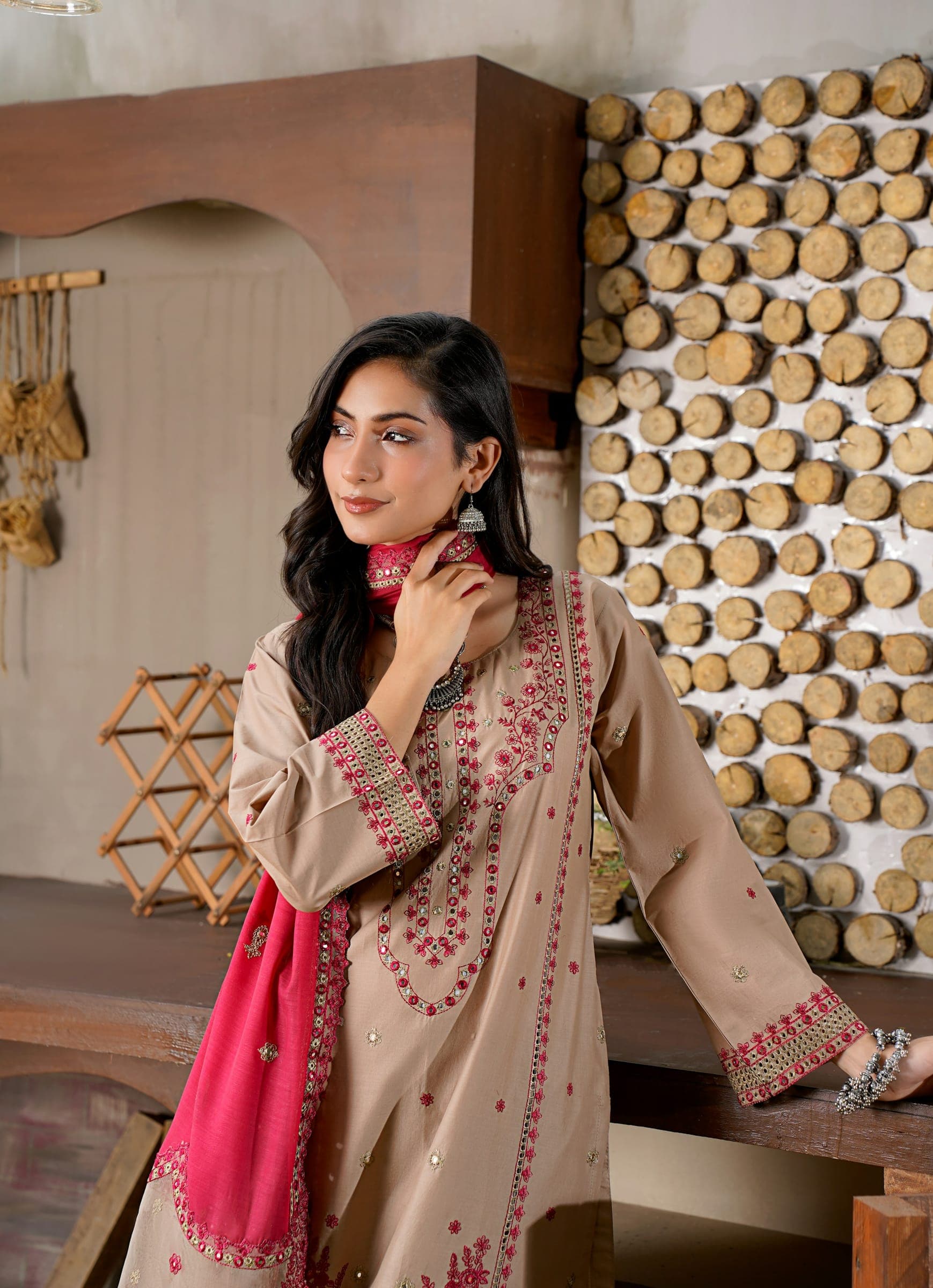 Inspiration
A little, and here is why
Dark colours do make an outline look a little cleaner, but the effect is modest. Dark, matt fabric absorbs light, so it hides the small shadows, folds and seams that show the shape of a body underneath. The eye reads one smooth silhouette instead of a landscape of highlights. Fit, an unbroken line of colour and the weight of the fabric do considerably more.
Nobody has to want to look slimmer, and no colour is off limits for any body. This article is for anyone who would like a longer, smoother line on a particular day and wants to know which choices actually make a difference.
Light, shadow and why black works
We judge shape mostly from shading: the bright side of a curve and the darker side turning away. A pale fabric shows those changes clearly. Black, navy, charcoal, bottle green and deep plum show them faintly, so contours flatten into a single shape. That is also why dark clothes hide creases and marks so well.
Matt matters as much as dark. A deep colour with a high shine, such as black satin, still catches light on every curve. A dark cotton, linen or crepe absorbs it.
What makes a bigger difference than colour
If the aim is a longer, cleaner outline, these choices change more than the shade of the fabric does.
- Fit: a kameez that pulls across the bust or hips shows every strain line, and one that is far too loose adds volume. Enough ease to skim the body is the goal; our guide to how loose a kameez should be explains it.
- One colour from shoulder to hem: a kameez and trousers in the same shade, light or dark, create a column with no horizontal break. A pale outfit in one colour can look as long as a dark one.
- Fabric weight and drape: a fabric that falls close to the body, such as a soft cotton or crepe, gives a narrower outline than a stiff one that stands away. See how fabric changes fit and drape.
- Where the breaks fall: a contrast belt, a strong hem border or a bright band across the body draws a horizontal line at that point.
- Cut: a straight or gently A-line kameez with long side slits keeps a vertical line; our guide to choosing a kameez silhouette goes further.
Do light colours make you look bigger?
Light colours do not add size, but they show shape more honestly, because every highlight and shadow is visible. A well-fitted pale kameez in a fabric with some body looks smooth; a thin, clingy pale fabric shows every line, including underwear. A lining or an opaque weave solves most of that.
Shine works the same way in any colour. Satin, silk and anything with a sheen bounce light off the most prominent curves. That can be beautiful at an evening event, and if you prefer a quieter outline you can keep the shine to the dupatta and choose a matt kameez.
Using dark colour where you want it
You do not have to wear dark head to toe. A deep trouser under a mid-tone kameez, a dark kameez with a brighter dupatta near the face, or a dark print with small motifs all bring some of the effect while keeping colour in the outfit. Our guide to monochrome and tonal suits shows how one colour family can run through all three pieces.
Made to measure helps most of all, because the fit is cut to your measurements rather than to a size chart. Our custom stitching service explains how it works, and you can request a quote with the colour and fabric you have in mind; the written quote confirms both before anything is cut.
Common questions
Is navy as slimming as black?
Very nearly. Navy, charcoal, deep green and plum all hide shadows in much the same way, and many people find them softer near the face than black. The finish matters more than the exact shade.
Do dark prints have the same effect?
Partly. A dark ground with small, close motifs behaves almost like a plain dark fabric. A dark ground with large, bright motifs draws the eye to wherever the motifs land.
Why does black look different in photos?
Cameras struggle with very dark fabric and often lose its detail, so a black outfit can photograph as a flat shape. Texture, a little embroidery or a contrast dupatta helps it read in pictures.
