Embroidery and fancy work · 8 October 2026 · 3 min read
Does embroidery make you look bigger?
Does embroidery make you look bigger? Not by itself. Motif size, shine and placement decide where the eye goes, and vertical lines and edges give a calmer look.
 Inspiration
Not by itself
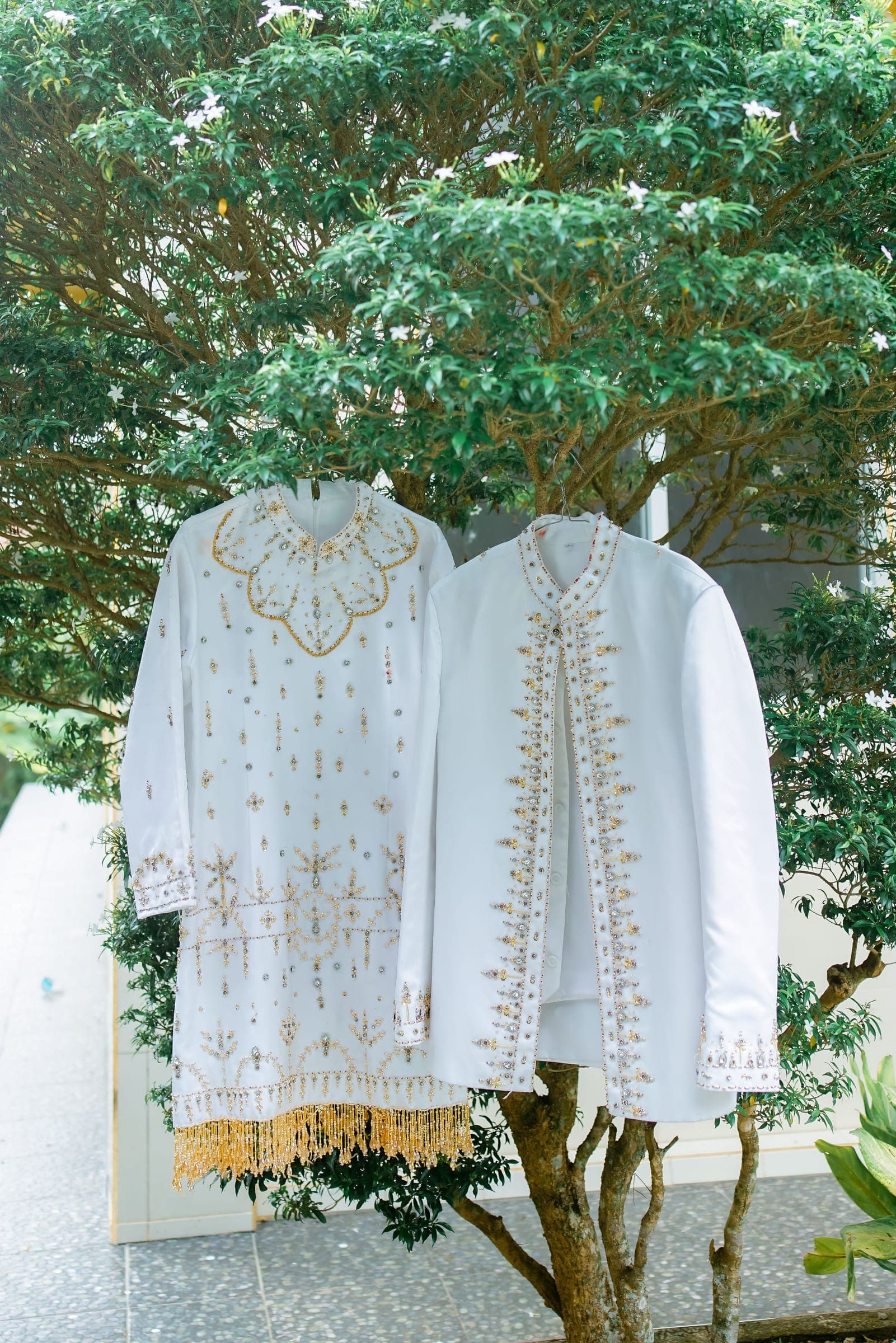
Embroidery does not make anyone look bigger on its own. What it does is draw the eye to wherever it sits. Large, shiny or contrasting work spread across a wide area makes that area the centre of attention, and horizontal bands can make it read broader. Smaller motifs, vertical lines and work kept to the edges give a calmer, longer look on any frame.
So the useful question is not “will embroidery add size?” but “where do I want people to look?”
Four things that pull the eye
Every embroidered design is a mix of these, and you can turn each one up or down.
- Scale. Large motifs announce themselves; small ones read as texture. A big motif over the bust or hips makes that area the focal point.
- Shine. Metallic thread, sequins and beads reflect light and catch attention even across a room. Matt silk or cotton thread is quieter.
- Contrast. Gold on black or white on navy stands out sharply; thread close to the fabric colour sits back.
- Coverage. Dense all-over work turns a whole panel into one block. Scattered motifs leave plain cloth around them, which looks lighter.
Lines that lead the eye up and down
Direction matters. Embroidery that runs vertically, such as a band down the front placket, a narrow panel down the centre or work tracing the edges of the side slits, carries the eye along the length of the body. A neckline worked in a V shape does the same; see the V-neck style page.
Horizontal bands do the opposite. A wide border across the hips or a straight band across the chest draws a line at that width. That is lovely if it is the area you want to highlight, and less so if it is not.
Placement ideas that work for most shapes
None of these are rules; they are ways to steer attention. Pick the area you enjoy and make that the focus. Our placement guide goes through each zone in more detail, and the curvy and plus-size fit guide covers cut and length.
- Keep one main focal point, such as the neckline or the cuffs, rather than several competing ones.
- Place a hem border where the leg is narrowest, for example just below the knee on a long kameez.
- Use tonal thread for large areas and save contrast or shine for small accents.
- Run work down the centre front or along the slits for a long, unbroken line.
- Worked cuffs bring attention to the hands and away from the middle of the body.
Telling us what you want
In your notes, say what you want to highlight and what you would rather keep quiet, for example “focus on the neckline and sleeves, plain across the hips”. A reference photo helps, and you choose the level of work. Through custom embroidery or a stitched outfit, we confirm what is possible on your fabric and design in the written quote. Start with a design quote.
Common questions
Is tonal embroidery more flattering than contrast?
It is quieter rather than more flattering. Tonal work adds texture without creating a strong focal point, which suits large areas. Contrast is great for a small, deliberate highlight.
Do large motifs suit tall women?
Scale reads relative to the body and the garment, so larger motifs often sit comfortably on a tall frame and a long kameez. On a petite frame, smaller motifs keep the proportions in balance.
Does heavy embroidery add bulk?
Physically it adds a little thickness and stiffness, so a densely worked panel stands slightly away from the body. Visually, the bigger effect comes from shine and where the work is placed.
More guides
- Choosing embroidery placement for a suit, piece by piece
- Embroidery on organza: crisp, sheer and delicate
- What is jaal embroidery? All-over patterns explained
- Types of lace for suits: names, looks and uses
- Embroidered trouser hems: what a paincha can carry
- What is kantha embroidery? Running stitch explained