
Embroidery and fancy work · 8 October 2026 · 3 min read
Embroidered sleeves with a plain kameez: does it work?
Embroidered sleeves on a plain kameez work well: the sleeves become the feature and the body stays calm. Elbow and underarm tips and the sleeve shapes that suit it.
 Inspiration
Yes, and it is one of the easiest ways to wear embroidery
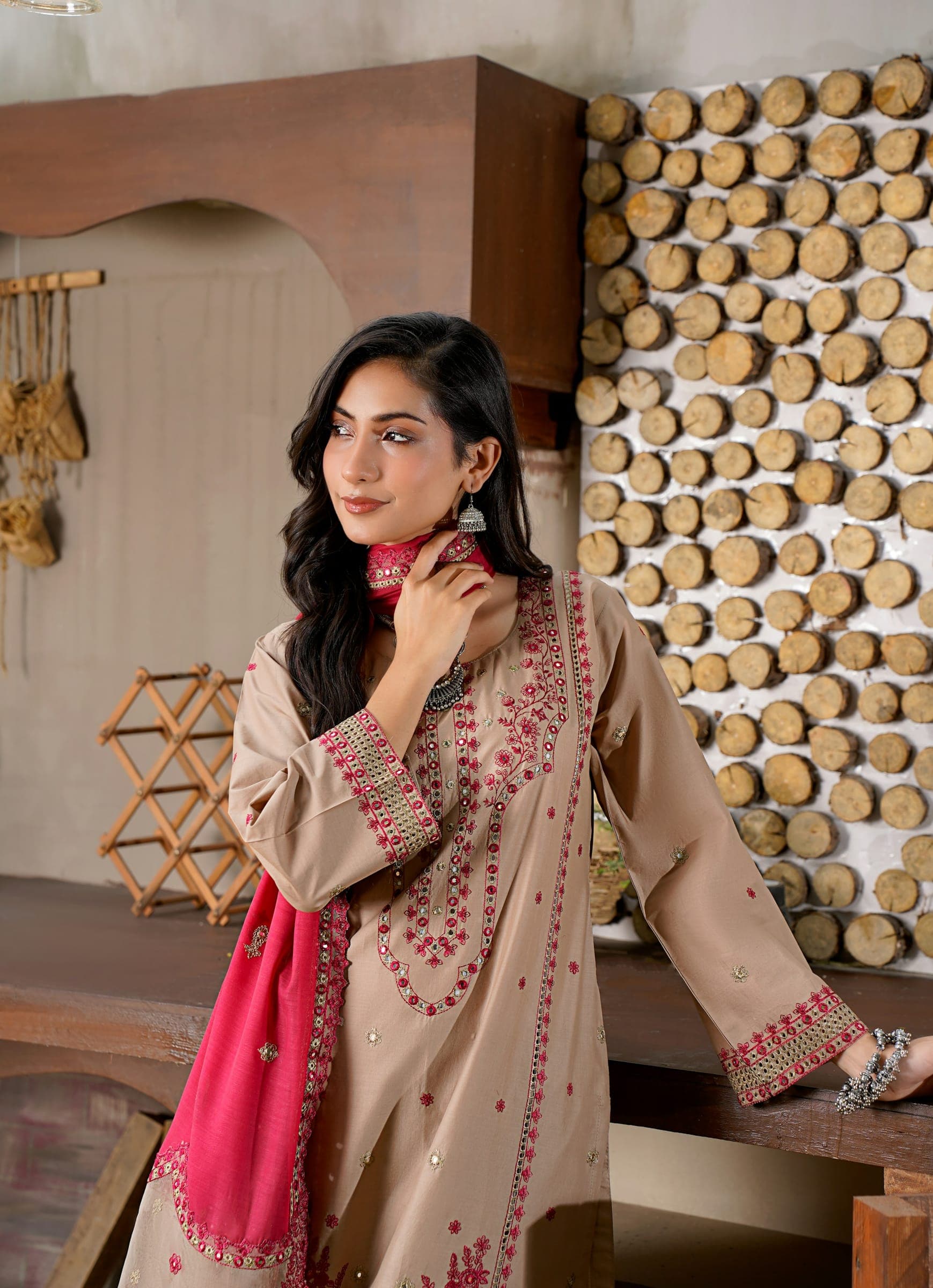
Fully embroidered sleeves on a plain kameez look balanced and deliberate. The sleeves carry all the decoration, so they frame your hands and face, while the plain body keeps the outfit calm, comfortable and easy to layer. It works for the office with light thread work and for gatherings with fuller work, and it suits anyone who wears a scarf or dupatta that covers the neckline.
Why the combination is so wearable
Sleeves are always in view, whether you are sitting at a desk, eating or talking with your hands. A plain body means no stiff panel across the chest, so the kameez moves freely and stays cool. It also lets you wear a statement piece with a plain dupatta and trousers without the outfit feeling busy. Our guide to plain suits with presence has more ideas for keeping a simple body interesting.
The elbow and the underarm
Two parts of a sleeve take most of the strain, and good design plans around them.
- The elbow. It bends hundreds of times a day. Dense or raised work there creases, pulls and wears faster. An open pattern, smaller motifs or a gap across the elbow keeps the sleeve flexible.
- The inner arm and underarm. These rub against your body. Keep the work on the outer arm and leave the inner side lighter or plain, so it does not scratch or snag.
- The cuff. Hands brush tables and bags, so a cuff band takes knocks. Flat thread work lasts longer here than beads or sequins.
- The reverse. A sleeve lining or a soft facing behind the work stops the back of the stitches rubbing.
Sleeve shapes that carry the work
Some shapes give the embroidery more room than others. Full sleeves offer the longest canvas, from shoulder to wrist. Three-quarter sleeves show off a band at the hem and leave the wrist free for bangles. Bell sleeves look lovely with work around the flared edge, where it swings as you move.
Close, narrow sleeves can still be worked, but dense embroidery takes away some give, so they may feel tighter than the same sleeve in plain cloth. Our article on how embroidery changes fit and drape explains why.
Balancing the rest of the outfit
Pick up a thread colour from the sleeves in the neckline piping, the trouser hem or the dupatta edge, so the sleeves do not look borrowed from another outfit. Keep the neckline simple to avoid two focal points. In your notes, write something like “fully worked sleeves on the outer arm, plain body, simple neckline” and add a photo. Choose the level through custom embroidery, and start a design quote; we confirm what is possible on your fabric and design in the written quote.
Common questions
Can I wear a cardigan or coat over embroidered sleeves?
Yes, if the work is flat. Raised work, beads or sequins rub against a coat lining and wear quickly, so keep sleeve work flat if you layer often.
Should embroidered sleeves be lined?
On fine fabrics, yes. A lining stops the reverse of the stitches scratching your arms and hides any thread that shows through a light cloth.
Is this look suitable for work?
Very much so. Tonal or light thread work on the sleeves of a plain kurta looks polished at a desk, and you can wear the same idea in brighter colours for an evening out.
More guides
- Choosing embroidery placement for a suit, piece by piece
- Embroidery on organza: crisp, sheer and delicate
- What is jaal embroidery? All-over patterns explained
- Types of lace for suits: names, looks and uses
- Embroidered trouser hems: what a paincha can carry
- What is kantha embroidery? Running stitch explained
