
Styles and design · 4 October 2026 · 5 min read
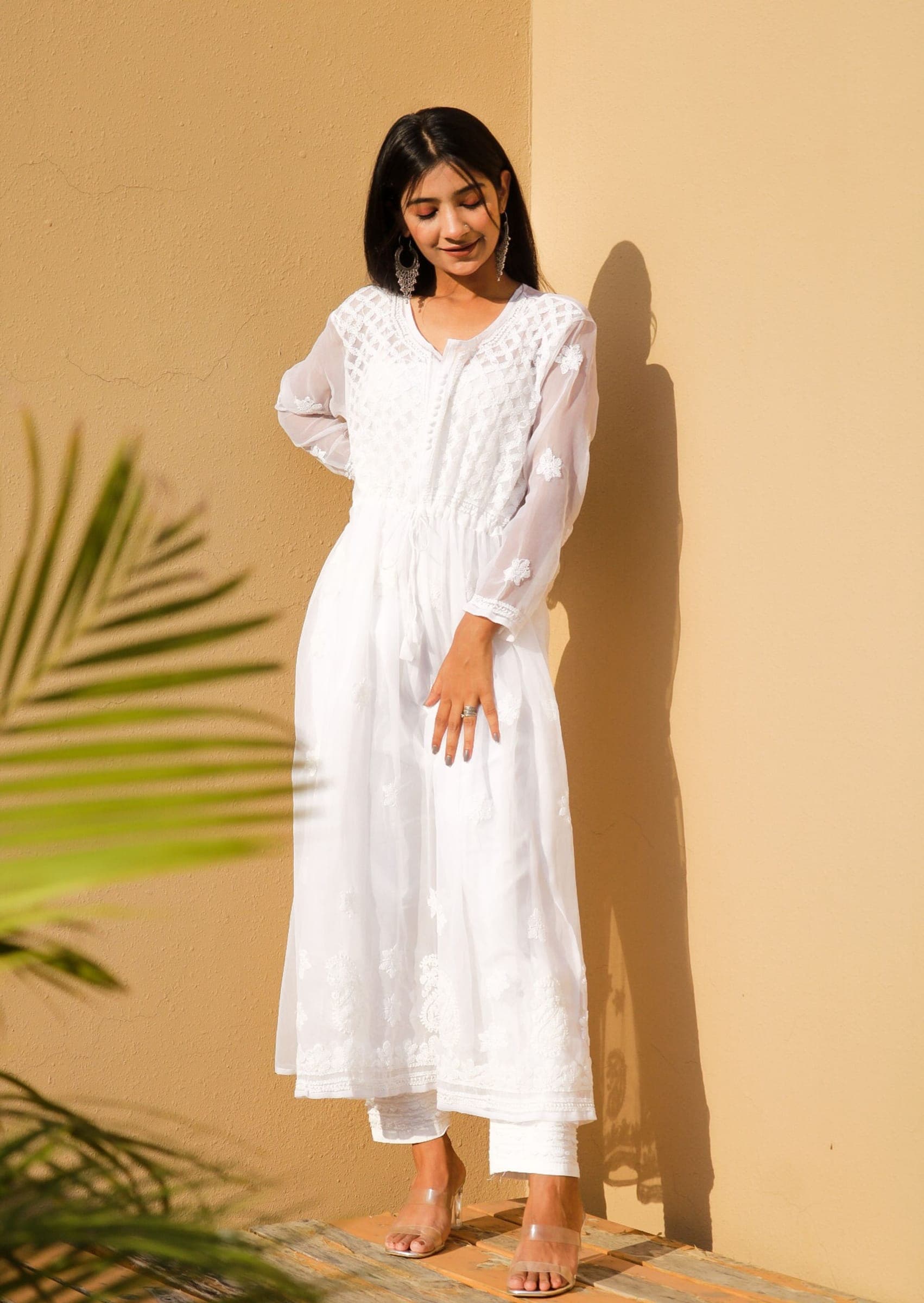
Long kameez with full sleeves: measuring for a modest cut
How to measure for a long kameez with full sleeves: sleeve length to the wrist, arm widths, kameez length, hem width for walking and the slits that suit a long cut.
 Inspiration
Why ready-made long sleeves often fall short
A long kameez with full sleeves sounds easy to buy, yet ready-made versions often stop short at the wrist and land mid-calf instead of at the ankle, especially on taller women or anyone with longer arms. Made to measure solves it by starting from your own arm and body lengths. This guide explains which measurements matter for a long, full-sleeved kameez, how to take them, and what to tell us so the finished piece covers where you want it to.
Most of the work is in two numbers: the sleeve length and the kameez length. Get those right, add sensible widths around the arm and hem, and the rest follows.
Measuring sleeve length for full coverage
Stand relaxed with your arm hanging naturally and your elbow very slightly bent. Measure from the shoulder point, where the arm meets the shoulder, over the outside of the elbow and down to the wrist bone. Then decide where you want the sleeve to finish: at the wrist bone, a little past it, or to the base of the thumb. Write the measurement and the finishing point down separately so there is no confusion.
Sleeves ride up when you reach forward, drive or carry shopping, so many women who want the wrist covered all day add a little length beyond the wrist bone. Try it with a kameez you own: reach for a high shelf and see where the cuff ends up. Our full sleeves guide shows the shapes, and the measuring help page has diagrams.
Widths around the arm
Length is only half of a comfortable sleeve. A full sleeve that is too narrow pulls at the elbow and creeps up; one that is too wide can fall back when you raise your hands. Measure these around the arm, holding the tape snug but not tight:
- Upper arm: around the fullest part, with the arm relaxed.
- Elbow: around the bent elbow, so the sleeve leaves room to fold your arm.
- Wrist: around the wrist bone, plus the opening you want: close, slightly loose, or wide enough to push up.
- Armhole: if a kameez you own pulls under the arm, say so; a deeper armhole helps longer sleeves move. Our guide to armhole and shoulder problems explains why.
Choosing the length of a long kameez
Measure kameez length from the highest point of the shoulder, next to the neck, straight down the front to where you want the hem: just below the knee, mid-calf, or long enough to reach the ankle bone. Wear the shoes you plan to wear with it, because a heel changes where an ankle-length hem falls. Our article on kameez length for your height has examples for petite and tall frames.
The longer the kameez, the more the hem width matters. A straight kameez that reaches mid-calf needs either a wide enough hem or side slits to let you walk and climb stairs. Here the modest choice and the practical choice pull in different directions: high slits make walking easy but open when you sit. A gentle A-line or a kalidar cut gives stride room through panels instead, so the slits can stay low or disappear.
Fabric, weight and lining on a long cut
Long pieces use more fabric, and heavy fabric hangs and drops a little over time, so a very long kameez in a weighty fabric can end up slightly longer than measured after wear. Light cottons and cambric hold their length well. If you are sending your own unstitched suit, check the shirt length printed on the pack against the length you want, plus seam and hem allowances; our guide to fabric for a three-piece suit explains the allowances, and we confirm quantity before you post anything.
If your fabric is sheer, decide whether the lining runs the full length or stops at the hip. A full lining adds coverage and some weight; a half lining keeps a long summer kameez cooler.
The quickest route: copy a kameez you love
If you already own a long kameez whose sleeves and length are almost right, measure it flat and tell us what to change: two centimetres longer in the sleeve, five more at the hem, a slightly wider wrist. The send a sample kameez page explains how that works.
When you are ready, use the Stitching Only quote form if you have the fabric, or the custom stitching service page to see every option. Customers in Saudi Arabia and the USA order the same way, with a written quote in dollars, euros or pounds that includes delivery and import charges. Production takes 5 to 7 working days from approval and full payment, or from your fabric reaching us for Stitching Only.
Common questions
How do I measure sleeve length for a full sleeve?
Measure from the shoulder point, over a slightly bent elbow, to the wrist bone. Then say where you want the sleeve to end, at the wrist bone or a little beyond, because sleeves ride up when you reach forward.
Do I need side slits on a long kameez?
A long straight kameez usually needs either slits or a wider hem so you can walk and climb stairs. If you want low slits or none, an A-line or kalidar cut gives the extra room through its shape instead.
Can you make a kameez longer than the shirt fabric in my unstitched suit?
Only if there is enough fabric. Send the lengths printed on the pack and the length you want, and we confirm before you post anything whether it works or whether extra fabric is needed.
