Fit, measuring and alterations · 30 September 2026 · 4 min read
Maternity kurtas and adjustable fits for a changing shape
Practical ideas for maternity kurtas and shalwar kameez: cuts that leave room, adjustable ties and waistbands, comfortable trousers, and pieces to wear afterwards.
 Inspiration
Planning for a changing shape
A kurta for pregnancy has one job an ordinary kurta does not: it has to fit a shape that keeps changing. The bust, waist and front length can all change over a few months, so the best maternity pieces build in room, or adjust, rather than fitting one moment perfectly. This guide is practical clothing advice; for anything about your health, your midwife or doctor is the person to ask.
Made to measure helps because the room can go exactly where you need it. Think about when you will wear the outfit, too. A kameez for Eid or a family gathering on a known date can be planned for that stage, while everyday kurtas worn over several months need more adjustability. Production time and shipping costs are confirmed in your written quote, and we cannot guarantee delivery dates, so leave plenty of time before a date that matters. Our Eid and everyday pages have outfit ideas.
Cuts that leave room
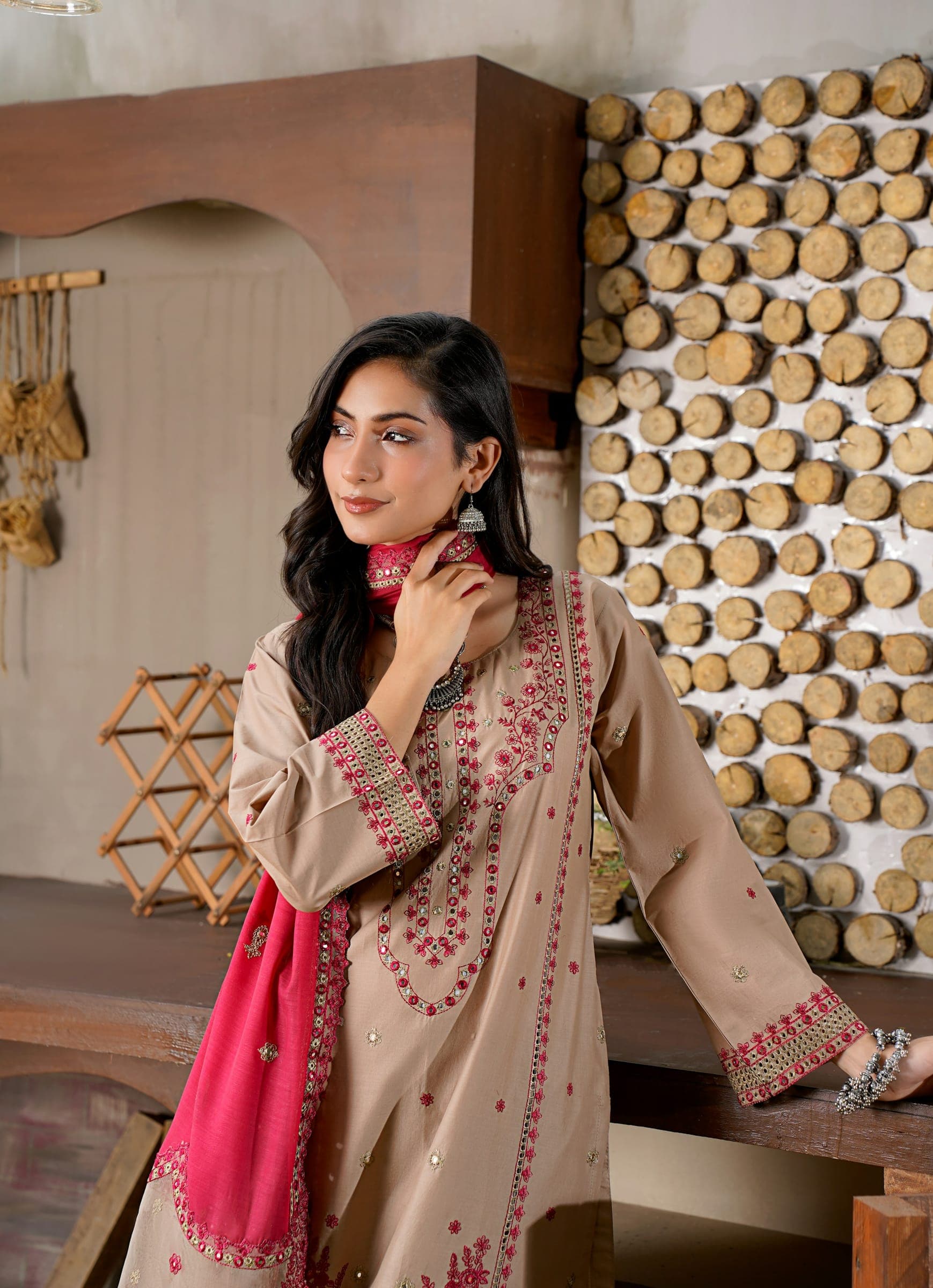
- A-line and empire-line kameez: shaped above the bump, just under the bust, then falling freely. The most adaptable shapes.
- Kaftan and loose straight kurtas: relaxed all round and easy to wear before and after. See our guide to kaftan-style kameez.
- A little extra front length: a bump lifts the front of a kameez, so a hem that is level at first can rise at the front later. Extra length at the front, or a curved hem, keeps it looking even.
- Slits that start a little higher: they give room to walk and sit without the kameez pulling across the hips.
- Gathers and pleats: soft gathers under a bust band or at a yoke release fullness exactly where it is needed.
Adjustable details
Adjustability lets one kurta work for longer. Most of these can be designed into a new kurta, and a local tailor may be able to add some to one you own.
- Side ties or lacing: a tie or dori at each side seam, or across the back waist, draws the kameez in early on and lets it out later.
- Wider seam allowances: ask for extra allowance at the side seams, so a tailor can let the kameez out as you grow and take it in afterwards. We’ll confirm in your quote what the design allows.
- Front openings: a buttoned or tied placket makes dressing easier and, placed well, works for feeding later. Our guide to nursing-friendly kurtas covers the options.
- Wrap and angrakha styles: the overlap adjusts naturally with the ties. See our angrakha style guide.
- Softer fabrics: viscose and soft cotton drape and give more easily than crisp cambric. Our viscose and rayon guide explains how they wear.
Trousers that sit comfortably
Trousers are often the first thing to stop fitting. There are two main approaches: an under-bump waist, a soft, wide band that sits below the bump, or an over-bump panel, a deep band that sits over it and needs a stretch fabric, so ask about it when you request a quote. A traditional shalwar with a drawstring is naturally adjustable, though some women find a wide, soft elastic more comfortable than a nala. Straight trousers with a full elastic waist and a little more room at the seat suit work and errands.
Our trouser fit guide explains rise and waist position, and our trouser styles guide covers the shapes.
Measuring, and wearing it afterwards
Measure at the time you order, and tell us how long you expect to wear the outfit so the room can be planned. Measure the fullest part of the bump as well as the usual points, and include your usual measurements if you want the kurta to work afterwards. Practical notes help most: “to wear from now until Eid” tells us more than a size.
Many maternity kurtas can be taken in later by a local tailor, especially A-line and straight cuts with generous side seams, so a favourite does not have to be put away. Our guide to taking in a kameez explains what is involved. Start on the stitching quote form, and see the custom stitching page for how it all works.
Common questions
Can I have a maternity shalwar kameez made to measure?
Yes. Give your current measurements, when you will wear it and how much room you want to allow, and the kameez and trousers can be planned with adjustable details such as side ties and elastic waists.
Which kameez style works best during pregnancy?
A-line, empire-line and loose straight or kaftan styles are the most adaptable, because they are shaped above the bump and fall freely below it. A little extra length at the front keeps the hem looking level as your shape changes.
Can a maternity kurta be altered to wear afterwards?
Often, yes, especially A-line and straight cuts, which a local tailor can usually take in at the side seams. Altering existing garments is not one of our services, but asking for wider side seam allowances when you order a new kurta makes that job easier later.