
Styles and design · 8 October 2026 · 4 min read
Why does a neckline facing roll to the outside?
A neckline facing rolling out is usually missing understitching, not tacked at the shoulders, or too narrow. How to settle it at home, and what to ask for next time.
 Inspiration
The short answer
A facing rolls to the outside when nothing is holding it in. The usual causes are missing understitching, a facing that is not caught to the shoulder seams, or a facing that is too narrow or too springy to stay down. A few hand stitches at the shoulders and a careful press often settle it. On your next outfit, ask for understitching, a facing tacked at the shoulders, or a lined or bias-bound neckline instead.
A facing is the shaped piece of fabric sewn to the neck edge and turned to the inside to give a clean finish. Unlike a lining, it covers only a band around the neckline, so its lower edge hangs free unless something anchors it.
What makes a facing flip
Usually more than one of these is at work at once:
- No understitching. Understitching is a row of stitches on the facing, close to the neck seam, that catches the seam allowances underneath. It makes the seam roll slightly towards the inside. Without it, the seam sits exactly on the edge and either side can show.
- Not anchored at the shoulders. A facing tacked to the shoulder seam allowances, and at the centre back, cannot lift. One that floats free will turn out every time you pull the kameez over your head.
- Too narrow. A facing only a couple of centimetres wide has little weight or grip, and it flips readily.
- Bulky seam allowances. On a curve, untrimmed and unclipped allowances push outwards and lever the facing up.
- Too stiff, or not stiff enough. Heavy interfacing springs back; none at all on a soft fabric lets the edge collapse and roll.
- The same size as the neckline. A facing cut a fraction smaller than the outer neckline pulls the seam to the inside; one cut exactly the same has no reason to stay under.
Necklines that roll most often
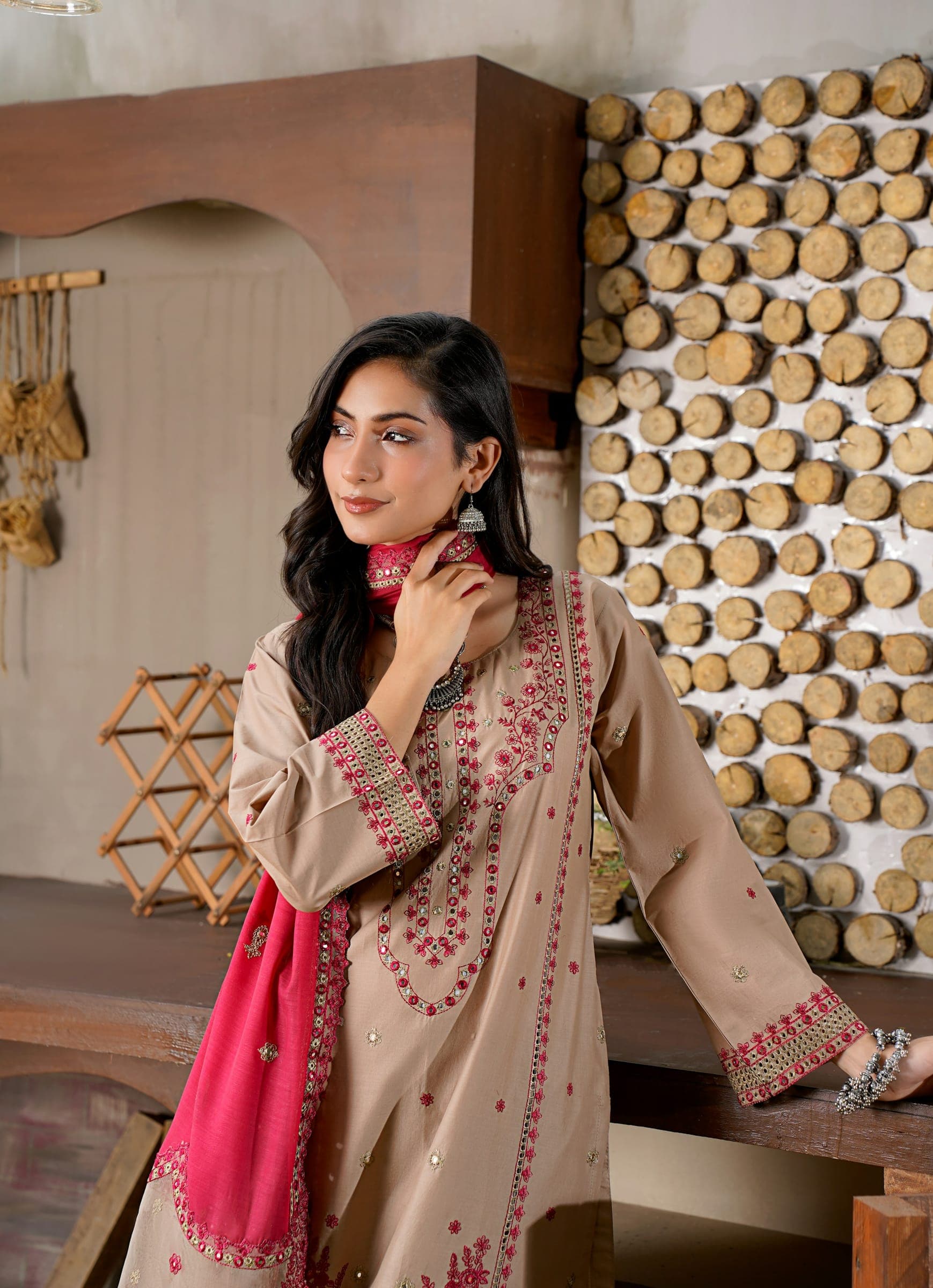
Wide and deep shapes are the most prone, because the facing is long and the edge has little to rest on. A boat neck sits across the collarbones with long, nearly straight edges; a square neck has corners that want to pop; a deep V-neck has a long bias edge that stretches. A small round neck is far more forgiving. Heavy embroidery on the outside can also tug a facing outwards, because the worked fabric is stiffer than the facing behind it.
Settling it at home
As general household sewing: start with a press. Roll the seam a millimetre or two to the inside with your fingers, hold it there and press with a cloth over the fabric, following the heat setting for the fabric in our guide to ironing and steaming kurtas. Then take a needle and matching thread and make a few small stitches joining the facing to the shoulder seam allowances only, so nothing shows on the outside. Do the same at the centre back if the facing has a seam there.
If it still rolls, a thin strip of fusible hem tape between facing and kameez can hold it, but it stiffens the edge and can show through fine lawn, so test it on a hidden area first.
What to ask for on the next outfit
Put the neckline finish in your notes. With custom stitching we confirm in the written quote what works on your fabric and neckline, and you can describe it or attach a photo when you send your design.
- Understitching on the facing, plus tacking at the shoulders and centre back.
- A wider facing on boat, square and deep necklines.
- A lined bodice, where the lining is sewn to the neck edge and does the facing’s job.
- A bias-bound or piped neckline, which has no loose facing at all.
- A row of topstitching around the neckline, which holds firmly and shows as a neat line.
Common questions
Why does my facing only roll after washing?
Washing removes the pressed set, lets the fabric relax and can shrink a fusible interfacing slightly differently from the fabric. A press usually brings it back, and tacking at the shoulders stops it happening again.
Is topstitching around the neckline a sign of rushed work?
No. It is a standard finish on shirts and casual kurtas and holds a facing very securely. It is a matter of look: on a dressy or embroidered kameez, an invisible understitched edge is usually preferred.
