
Buying guides by country · 8 October 2026 · 4 min read
Batiste, voile, popeline: lawn in European fabric shops
Is batiste the same as lawn? Nearly. The shop names for lawn and cambric in German, French, Italian, Spanish and Dutch, and what to check on the label before buying.
 Inspiration
Close, but read the label
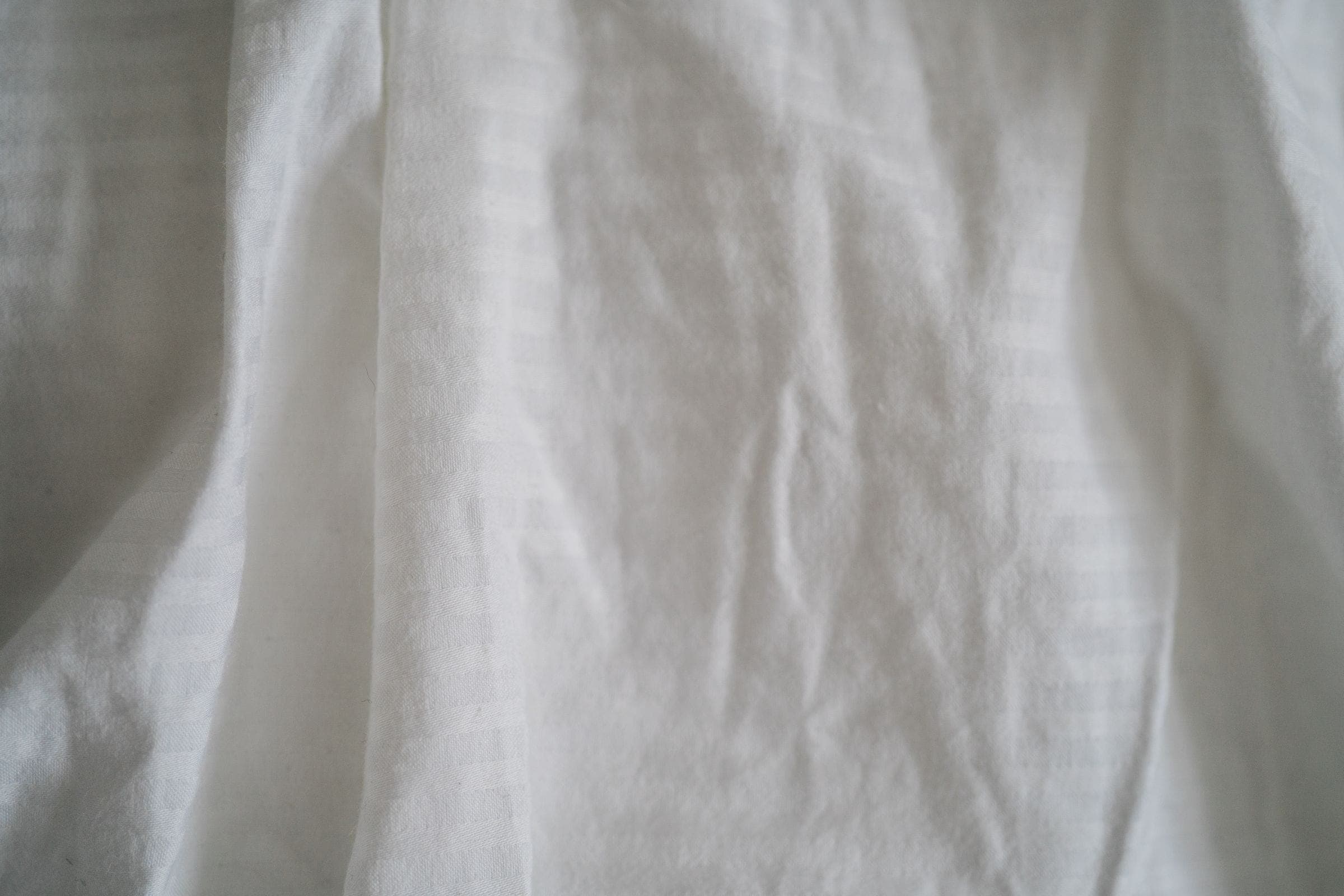
Batiste is the nearest name to lawn in most European fabric shops. Both are fine, lightweight plain weaves, usually cotton, and both suit a summer kameez. The differences are small: batiste tends to be a little softer, lawn a little crisper, and batiste is more often sold as a cotton and polyester blend. For something closer to the firmer cotton that Pakistani shops call cambric, look for popeline, which is poplin. Voile is lighter and sheerer than either.
Shop names drift, though, so treat them as a starting point. The composition, weight and width printed on the label tell you far more than the name. Our guides to lawn and cambric describe what you are trying to match.
Why batiste and cambric get confused
Both names go back to the same place. Cambric is named after Cambrai, a weaving town in northern France, and in French the same fine cloth has long been called batiste. That is why older dictionaries translate one as the other, and why a search for batiste vs cambric turns up conflicting answers.
In a modern shop the two have drifted apart. Batiste is sold as a light, soft cloth close to lawn, while cambric, as Pakistani brands use the word, is a denser, more opaque cotton with more body. If you want the second, popeline is usually the better word to look for in Europe.
The names, shop by shop
Here are the words to look for, with the word for cotton that you will see on the composition label. Spellings are the ones shops commonly use.
- Germany, Austria and German-speaking Switzerland: Batist for a lawn-like cloth, Popeline for a cambric-like one, Voile for sheer. Cotton is Baumwolle. Beware Musselin: in German shops it usually means double gauze, a crinkled two-layer cotton, not the plain muslin an English speaker might expect.
- France and French-speaking Belgium: batiste, and also linon, the French word for lawn. Popeline for the firmer cloth. Cotton is coton. Note that voilage means sheer curtains, so check you are in the dressmaking section.
- Italy: batista and popeline, with voile for sheer. Cotton is cotone.
- Spain: batista and popelín. Cotton is algodón. Plumeti is a dotted sheer that makes pretty sleeves or dupattas but needs lining as a kameez, and muselina usually means a soft, sheer fabric closer to chiffon, often polyester.
- The Netherlands and Flanders: batist, popeline and voile. Cotton is katoen.
Weight, width and fibre on the label
European shops usually give weight in grams per square metre (g/m²). As a rough guide only, lawn and batiste tend to sit at the light end, often below about 100 g/m², voile is lighter still, and poplin usually sits above that. Shops measure and round differently, so compare two fabrics from the same shop rather than across shops.
Width is easy to miss and changes how much length you need. Look for Breite in German, largeur or laize in French, ancho in Spanish and breedte in Dutch. Italian shops call it altezza, which literally means height, so do not be thrown by it. Our guide to fabric widths explains why it matters.
For a lawn-like feel, a cotton with nothing added is the safest choice. Voile in particular is often sold for curtains, very wide and in polyester, so make sure it is listed as dressmaking fabric.
Before you post it for Stitching Only
If you buy fabric in Europe and want it made up with Stitching Only, contact us before you post anything. We confirm that the fabric suits your design, that there is enough of it and how to send it to us in Pakistan. Sending it is a shipment you arrange yourself unless your quote says otherwise.
Customers in Germany, France, Italy, Spain and the Netherlands choose euros, dollars or pounds for their quote, and the Europe page covers the rest of the region. When your photos are ready, ask for a Stitching Only quote.
Photographs do most of the work, and our guide to photographing fabric for a quote covers the technique. For fabric bought by the metre, send these:
- The label or listing, showing the name, composition, weight and width.
- The full length laid out, with a tape measure across the width.
- A close-up in daylight, near enough to see the weave.
- One layer held up with a hand behind it, to show how sheer it is.
Common questions
What is batist in English?
Batiste: a fine, lightweight plain-weave fabric, usually cotton or a cotton and polyester blend. The nearest name in Pakistani shops is lawn.
Is batiste see-through?
It can be slightly sheer, especially in white and pale colours. Hold a single layer up to the light with your hand behind it; if you can see your fingers clearly, a kameez will probably need lining.
Is voile a good fabric for a kameez?
Dress-weight cotton voile makes a cool kurta and a lovely dupatta, but it is sheerer than lawn, so a kameez in voile usually needs a lining.
More guides
- Batik for a kurta or kameez: panels, lengths and prints
- Cycling in a shalwar kameez: cuts for Dutch bikes
- When is Pakistani wedding season? Pakistan, UK and US
- Brustumfang, tour de poitrine: size-chart words in English
- South African dress sizes 30 to 44 in UK sizes
- 17 May in Norway: wearing a shalwar kameez