
Buying guides by country · 5 October 2026 · 4 min read
What to wear in Pakistan as a woman: a visitor’s guide
What to wear in Pakistan as a woman: what women wear day to day, when a dupatta helps, how cities, towns and religious sites differ, and how many suits to bring.
 Inspiration
Loose, covered and with a dupatta to hand
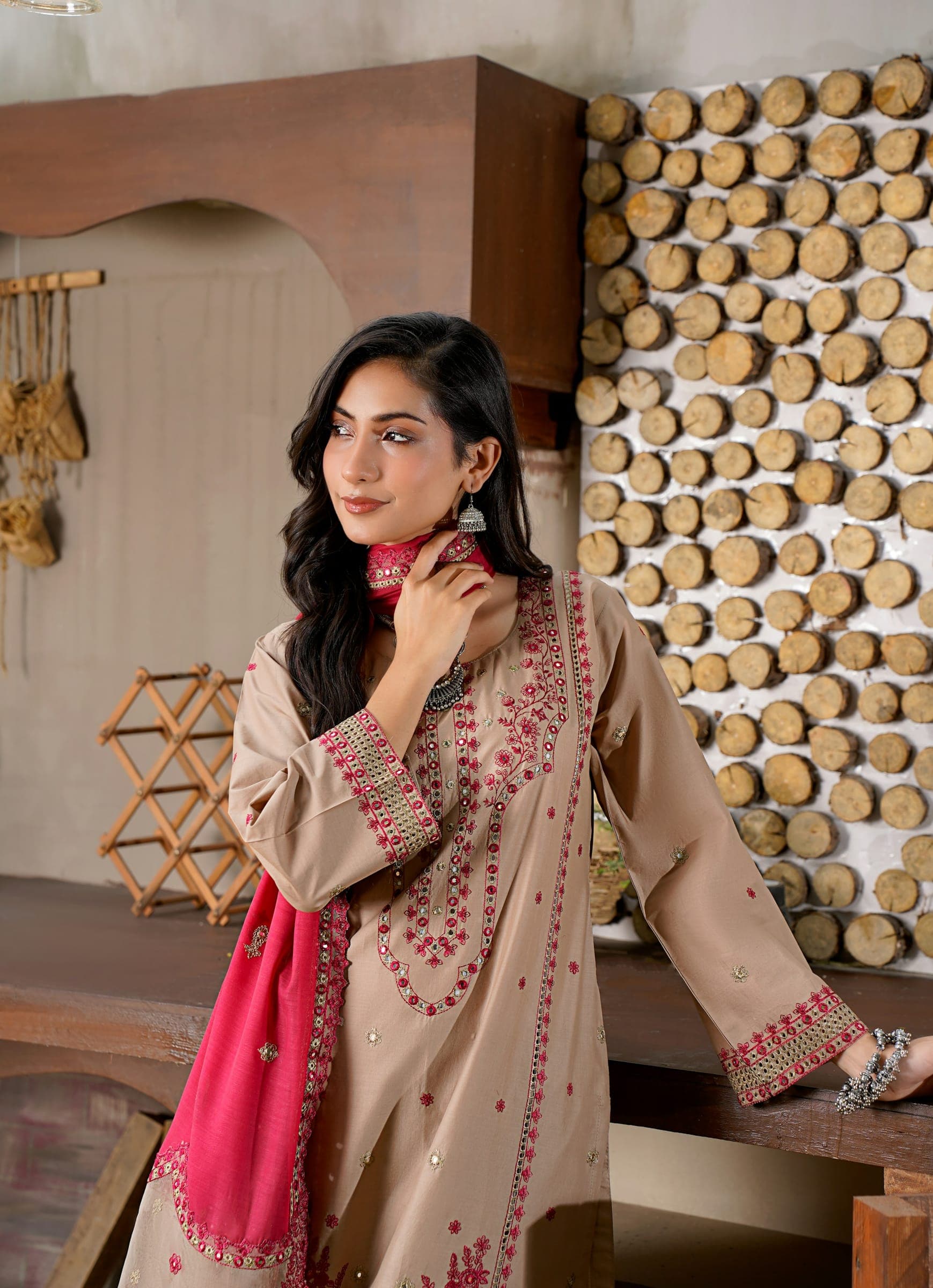
Dress loosely, cover your arms to at least the elbow and your legs to the ankle, wear a top long enough to cover your hips, and carry a long scarf. That is the whole answer for almost every situation a visitor meets in Pakistan. A shalwar kameez does all of it in one outfit, which is why it is what most women here wear. You do not have to wear one, and you do not have to cover your hair in ordinary daily life, but you will be more comfortable, in every sense, if you dress close to the way local women do.
We make clothes in Pakistan, so this is written from here. It describes custom, not rules. Nobody checks what visitors wear; what follows is simply what the people around you will be wearing.
What women usually wear day to day
The everyday outfit is the shalwar kameez: a tunic that ends somewhere between the thigh and the calf, loose trousers such as a shalwar, and a dupatta. In summer it is made of lawn or cotton, in winter of thicker cloth with a shawl. In the big cities you will also see long kurtas over jeans or straight trousers, and co-ords, especially on younger women, at universities and in offices. Abayas and chadors, the large wraps that cover the upper body, are common too, more so in some regions and families than in others.
Bright colour and bold print are normal at every age. You do not need to dress plainly to dress modestly, and our modest outfit ideas show how varied the same three pieces can be.
When the dupatta earns its place
Many Pakistani women do not cover their hair day to day, and many do; both are ordinary. What nearly everyone has is a dupatta within reach, because it is so useful.
- At mosques and shrines: women cover their hair, and everyone takes their shoes off. A dupatta over the head is all it takes.
- In crowded bazaars and older parts of town: worn across the chest, it makes you less conspicuous and more at ease.
- In sun and dust: over the head at midday, or held across the face on a dusty road.
- In family homes: some women draw it over their hair when elders arrive or at prayer times. Follow your hosts, and nobody will mind if you ask.
How expectations shift from place to place
The same outfit can feel overdressed in one street and underdressed in the next town, so pack for the most conservative place on your route.
- Newer parts of the big cities: in the cafes, malls, offices and hotels of Karachi, Lahore and Islamabad, dress is varied. A long kurta with jeans is unremarkable, sleeves can be shorter and a dupatta is optional.
- Old city quarters, smaller towns and villages: more conservative. A full shalwar kameez, a dupatta across the chest, longer sleeves and a looser cut are the comfortable choice.
- Peshawar and other parts of the north-west: generally more conservative again. Many women wear a chador outdoors, and a dupatta over the head is the easy way to fit in.
- Religious sites everywhere: covered hair, arms and legs, and shoes off, whatever the city.
- Private homes, weddings and parties: often far more glamorous than visitors expect. Ask a relative or friend what the event calls for.
How many suits to bring
For a two-week visit, four to six everyday suits and one or two dressier outfits is a comfortable number, since washing is easy to arrange and cotton dries fast for most of the year. Choose kameez that cover the hips, sleeves at three-quarter length or longer, and one dupatta for each outfit plus a plain spare. Add shoes that slip off easily, because you take them off at the door of many homes and at every mosque. Shorts, short skirts, sleeveless tops and anything tight or sheer are best left for private spaces.
The season changes the fabric, not the shape: see our guides to winter and summer in Pakistan. If a wedding is on the calendar, plan for it separately with our wedding guest guide.
Having suits made before you go
Arriving with a few suits that already fit means you are comfortable from the first day of a short trip. We cut and stitch to your measurements in Pakistan and ship to customers abroad, so outfits for a visit are ordered to your home address before you travel; our pages for the UK, the USA and Australia explain how. Custom stitching sets out the two ways to order, and it helps to say that the outfits are for a first visit and in which season. Production takes 5 to 7 working days from approval and full payment, and shipping time is extra, so start your quote well ahead of the flight.
Common questions
Do I need a shalwar kameez in Pakistan?
No, but it is the easiest choice. Long, loose tops over full-length trousers also work in the big cities. A shalwar kameez is cool, modest and right for nearly every setting, which saves thinking about it each morning.
Do women cover their hair in Pakistan?
Some do and many do not; both are ordinary in daily life. Hair is covered at mosques and shrines, and in more conservative areas many women cover their heads outdoors, so keep a dupatta or scarf with you.
Can I wear jeans in Pakistan?
Yes, in the larger cities, with a long, loose top that covers the hips. In smaller towns, old city areas and at religious sites, loose trousers or a shalwar are the more comfortable choice.
More guides
- Punjabi suit vs salwar kameez: is there a difference?
- Kameez chest 21 or 22 inches: which UK size is that?
- US dress size to UK size: what a US 12 means in inches
- Baju kurung vs shalwar kameez: how they differ
- UK cotton lawn vs Pakistani lawn: are they the same?
- Graduation hood with a kameez: how to keep it in place
