
Embroidery and fancy work · 4 October 2026 · 3 min read
Appliqué work on kameez and dupattas, explained
Appliqué work explained: shapes of one fabric stitched onto another, Sindhi ralli, modern organza and velvet appliqué, edge finishes and how to ask for it.
 Inspiration
What appliqué work is
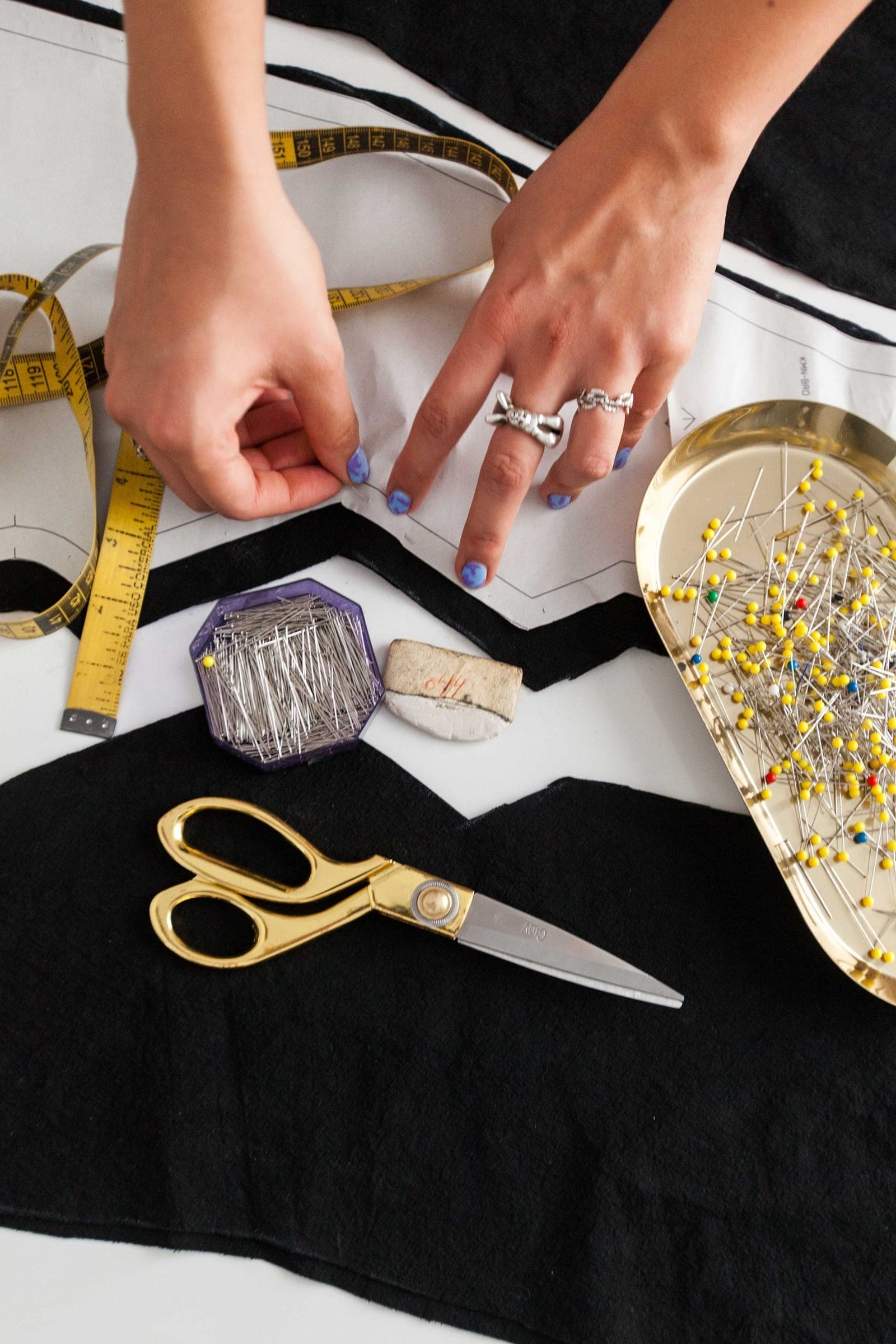
Appliqué is decoration made from fabric rather than thread: shapes cut from one cloth are laid on another and stitched down around their edges. The word comes from French and means applied. On a kameez it might be a single organza flower at the neckline, a band of velvet along a dupatta or a whole yoke of contrasting shapes. Embroidery often joins in, outlining the shapes or adding stems and veins.
Appliqué is a clever way to bring a second texture or colour into an outfit, and it can cover a large area quickly without the weight of dense stitching.
Three ways to finish the edges
How the edge is finished changes both the look and how the piece wears.
- Turned edge: the raw edge of each shape is folded under and hemmed with tiny stitches. Soft, flat and durable; this is the traditional hand method.
- Satin-stitched edge: the shape is laid flat and its raw edge is covered with a dense line of satin stitch, usually by machine. Crisp and graphic, a little stiffer.
- Reverse appliqué: layers are stacked and the top one is cut away inside a stitched outline to reveal the colour beneath.
- Raw edge: stitched just inside the edge and left to soften. Casual and textured, but it frays more with washing.
Appliqué in South Asian tradition
The best-known appliqué from Pakistan is found in Sindhi ralli, the traditional quilts of Sindh and the surrounding region. The appliqué style of ralli, often called tuk, uses folded and cut geometric shapes in bold reds, yellows, blacks and whites, held with rows of tiny running stitches. Its strong, repeating geometry turns up in modern fashion on kurta yokes, dupatta borders and bags.
In contemporary Pakistani clothing, appliqué is more often subtle: organza or tissue flowers outlined in tilla on a chiffon dupatta, a velvet border on a khaddar shawl, or printed motifs cut from the suit’s own fabric and placed on a plain sleeve.
Pairing the fabrics
The two fabrics need to behave well together. If the appliqué shrinks more than the base in the wash, the shapes pucker; if its dye runs, it stains the cloth around it. Pre-washing both fabrics and doing a quick colour test avoids most problems; our guides to pre-washing fabric and the colour-fastness test show how. Similar weights sit best: lawn on lawn or organza on chiffon looks natural, while heavy velvet on fine lawn tends to drag.
Sheer appliqué is especially pretty. Our article on organza in everyday outfits shows how a light layer of organza can lift a simple kurta.
A neat idea: using your leftover fabric
Unstitched suits often include more printed fabric than the kameez needs, or a border you are not planning to use. Motifs cut from that fabric can be appliquéd onto a plain dupatta, a sleeve or the trousers so the whole outfit ties together. If you would like to try this, mention it in your enquiry and send photos of every piece; whether there is enough fabric, and whether the idea works for your design, is confirmed in the written quote.
Caring for appliqué and asking about it
Wash appliqué pieces inside out on a gentle cycle or by hand, and avoid tumble drying, which can lift edges. Press from the back. Turned-edge work lasts longest; raw-edge work will soften and fray a little each time, which is part of its look.
Send a photo of the appliqué you like and say where it should go. What is possible on your fabric and design is confirmed in your written quote; our custom embroidery page explains the process, and the Germany fancy work page covers German orders. When you are ready, start a design quote.
Common questions
What is the difference between appliqué and embroidery?
Embroidery makes the design from thread, while appliqué makes it from shapes of fabric stitched onto the base. The two are often combined, with embroidery outlining or decorating the appliqué shapes.
Will appliqué peel off in the wash?
Well-stitched appliqué should not. Turned and satin-stitched edges are secure; raw edges fray gradually. Wash gently, inside out, and avoid the tumble dryer to keep the edges flat.
Can leftover fabric from my suit be used for appliqué?
Often, yes. Send photos of all the pieces with your enquiry. Whether there is enough fabric and whether the idea suits your design is confirmed in your written quote.
