
Fabrics and care · 4 October 2026 · 5 min read
Fabrics for humid weather: what stays comfortable
Which fabrics stay comfortable in humid weather: how cotton, linen, viscose and polyester handle damp air, plus weaves, cuts and colours that stop clothes clinging.
 Inspiration
Choosing fabrics for humid weather
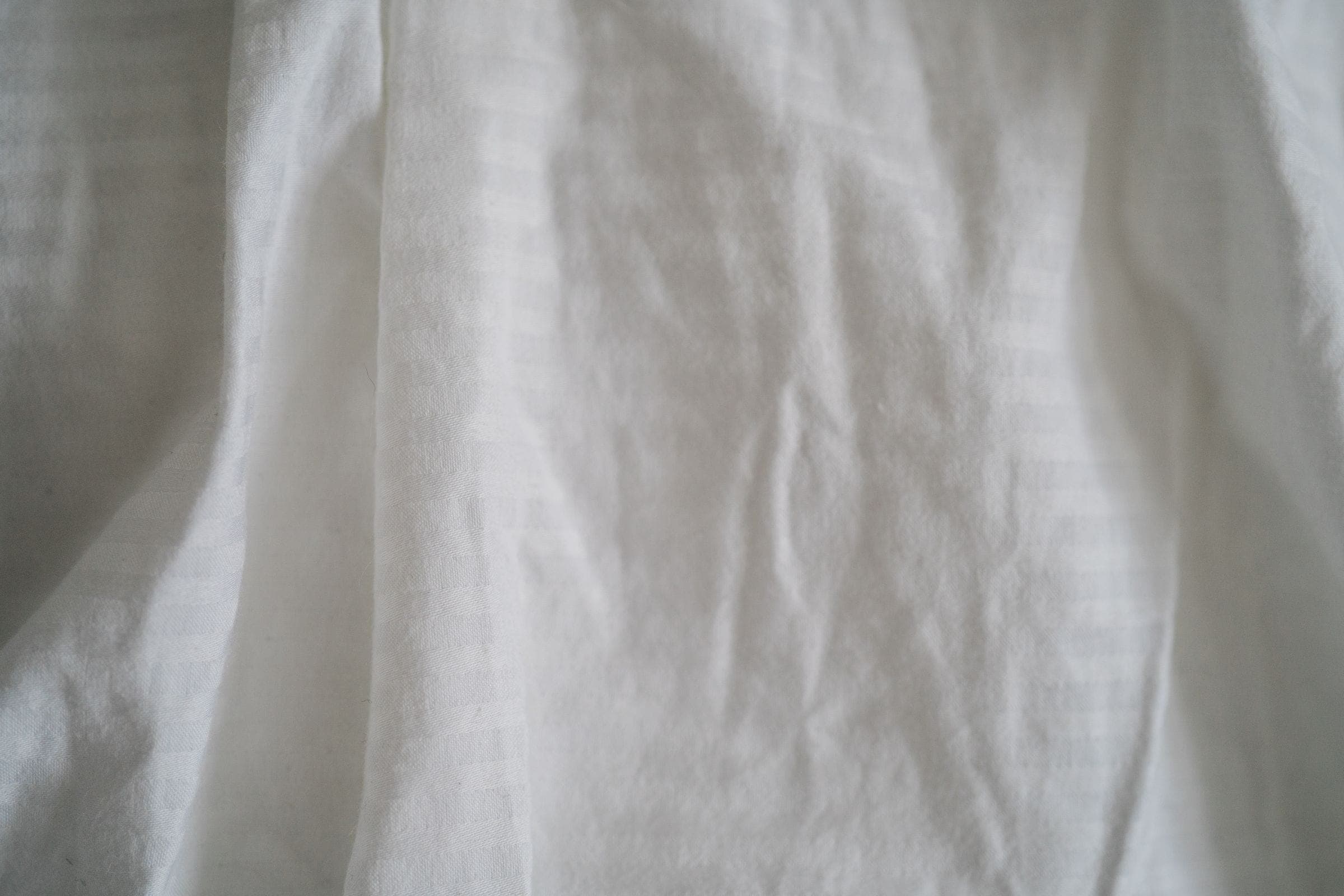
In humid weather the most comfortable fabrics are absorbent natural fibres in an open weave: lawn, voile and slub cotton, and linen, which dries faster than any of them. Polyester feels clammy because it does not soak up sweat, and soft viscose can cling once it is damp. Pair the right fabric with a cut that stands away from the skin and you will stay noticeably fresher.
Humidity is a different problem from dry heat. When the air is already full of moisture, sweat cannot evaporate easily, so your body loses its main way of cooling down. A fabric’s job becomes holding moisture away from the skin and letting what air there is move through.
How each fibre handles damp air
- Cotton: absorbs a great deal of moisture and feels pleasant against the skin, though thick cotton dries slowly. Fine cotton such as lawn is the classic humid-weather fabric.
- Linen: absorbs well and dries quickly, so it rarely feels soggy. It creases readily, and in humidity the creases set fast. More in our linen guide.
- Viscose and rayon: cool and absorbent, but they lose body when damp and can stick to the skin. Our viscose guide covers their quirks.
- Polyester: absorbs almost nothing, so sweat sits on the skin. Fine for an evening dupatta, hard work as a full suit on a sticky afternoon.
- Blends: behave somewhere in between. A cotton-rich blend feels mostly like cotton; a polyester-rich one mostly like polyester. The label tells you which.
Weave matters as much as fibre
Two cottons can feel completely different in the same weather. Lawn and voile are woven from fine yarn with tiny gaps that let air through. Cambric and jacquard are denser and feel warmer. Textured cottons, such as slub and dobby, hold the fabric slightly off the skin, which helps more than you would expect; see our guide to dobby, slub and textured cotton.
Hold a fabric up to a window. If you can see light through the weave, it will breathe. If you also see your hand clearly, plan a lining for the bodice.
Cuts that stop clothes clinging
Cling is the enemy in humidity. A kameez cut with a little extra ease at the back and underarms keeps fabric away from the places that get damp first. Generous side slits let air in when you walk and sit. Sleeves that are slightly wider at the elbow are cooler than narrow ones, and a straight or wide trouser is far more comfortable than a churidar on a sticky day.
Avoid full linings where you can. A lining doubles the layers and traps damp air between them. If coverage is needed, a half lining or a separate cotton slip that you wash on its own is the lighter option.
Colour and print in the damp
Busy prints and mid tones hide damp patches and the creases that humidity sets into fabric. Plain pale grey, pastel blue and some greens are the colours that show sweat most clearly. Very dark plain colours show salt marks once they dry. If you prefer plain fabric, a textured weave disguises both better than a smooth one.
Caring for clothes in a humid home
In places such as Singapore, Kuala Lumpur and Mombasa, the challenge continues after you take your clothes off. Damp clothes left in a heap can develop mildew spots within days. Wash sweaty clothes soon, dry them where air moves, and let everything dry completely before it goes into a wardrobe. Leave wardrobe doors open for a while each day, and store special pieces in breathable cotton bags rather than plastic. Our guide to storing dupattas and embroidered suits covers the rest.
Ordering for a humid climate
If you already have lawn or cotton suits waiting to be made up, our Stitching Only service cuts and stitches your own fabric to your measurements. Send us photos of each piece and the label first; we confirm the fabric suits your design before you post it to us in Pakistan. Tell us in your notes that you live somewhere humid, and ask for the ease, slits and lining that keep air moving.
Production takes 5 to 7 working days after the fabric arrives and the quote is approved and paid. Start a Stitching Only quote, or choose your own country on the form.
Common questions
Is cotton or linen better in humidity?
Both are good. Fine cotton such as lawn feels softer and is easier to keep neat, while linen dries faster and rarely feels soggy, though it creases quickly in damp air.
Why does polyester feel so hot in humid weather?
Polyester absorbs almost no moisture, so sweat stays on your skin instead of being drawn into the fabric. In humid air that sweat cannot evaporate easily either, so you feel clammy.
How do I stop a kurta sticking to my back?
Choose an absorbent, open-weave fabric, ask for a little more ease across the back, avoid full linings, and pick a textured cotton that holds the fabric slightly away from the skin.