
Embroidery and fancy work · 4 October 2026 · 3 min read
Kashida embroidery: Kashmiri thread work explained
Kashida embroidery explained: what the word means, Kashmiri sozni and chain stitch, chinar and paisley motifs, the winter fabrics it suits and how to care for it.
 Inspiration
Two meanings of kashida
In everyday Urdu, kashida (or kashidakari) simply means embroidery, so a relative might call any embroidered neckline kashida. In fashion, though, kashida work usually means something more specific: Kashmiri-style thread embroidery of flowers, leaves and vines, worked in wool or silk thread on shawls, pherans, dupattas and kameez. That is the meaning this guide follows.
Kashida is soft and painterly rather than shiny or raised. Its beauty is in the fine stitches, the gentle colours and the way a vine winds naturally across the cloth.
The stitches
Kashmiri embroidery uses a few key stitches, and the names are useful when you read product descriptions.
- Sozni: very fine needlework in satin and stem stitch, traditionally on pashmina shawls. The finest pieces are do-rukha, embroidered so the design looks the same on both sides.
- Chain stitch: bold lines and fills, often worked with a hooked aari needle on wool, as in crewel-style furnishings and coats.
- Stem and satin stitch: stalks, outlines and solid petals in everyday kashida on cotton and wool.
- Herringbone and darning: fills for leaves and borders.
- Tilla: metallic thread couched along the neckline and cuffs of pherans, often combined with kashida florals. See our guide to tilla work.
Motifs and colours
Kashida draws on the landscape of the valley: the five-pointed chinar leaf, the almond or paisley shape (the boteh), lotus and iris flowers, vines, and birds such as the bulbul. Colours tend to be muted and harmonious, with rust, moss, sage, plum, ochre and cream on ivory, black, grey or deep red grounds. A single-colour kashida, for example ivory thread on camel wool, is especially elegant.
Look for motifs that flow. In good kashida a vine changes direction naturally, leaves turn to show their undersides, and flowers vary slightly in size, so the design feels drawn rather than stamped. Even in machine versions, that sense of movement is what separates a thoughtful design from a repeated block.
Fabrics and outfits that suit kashida
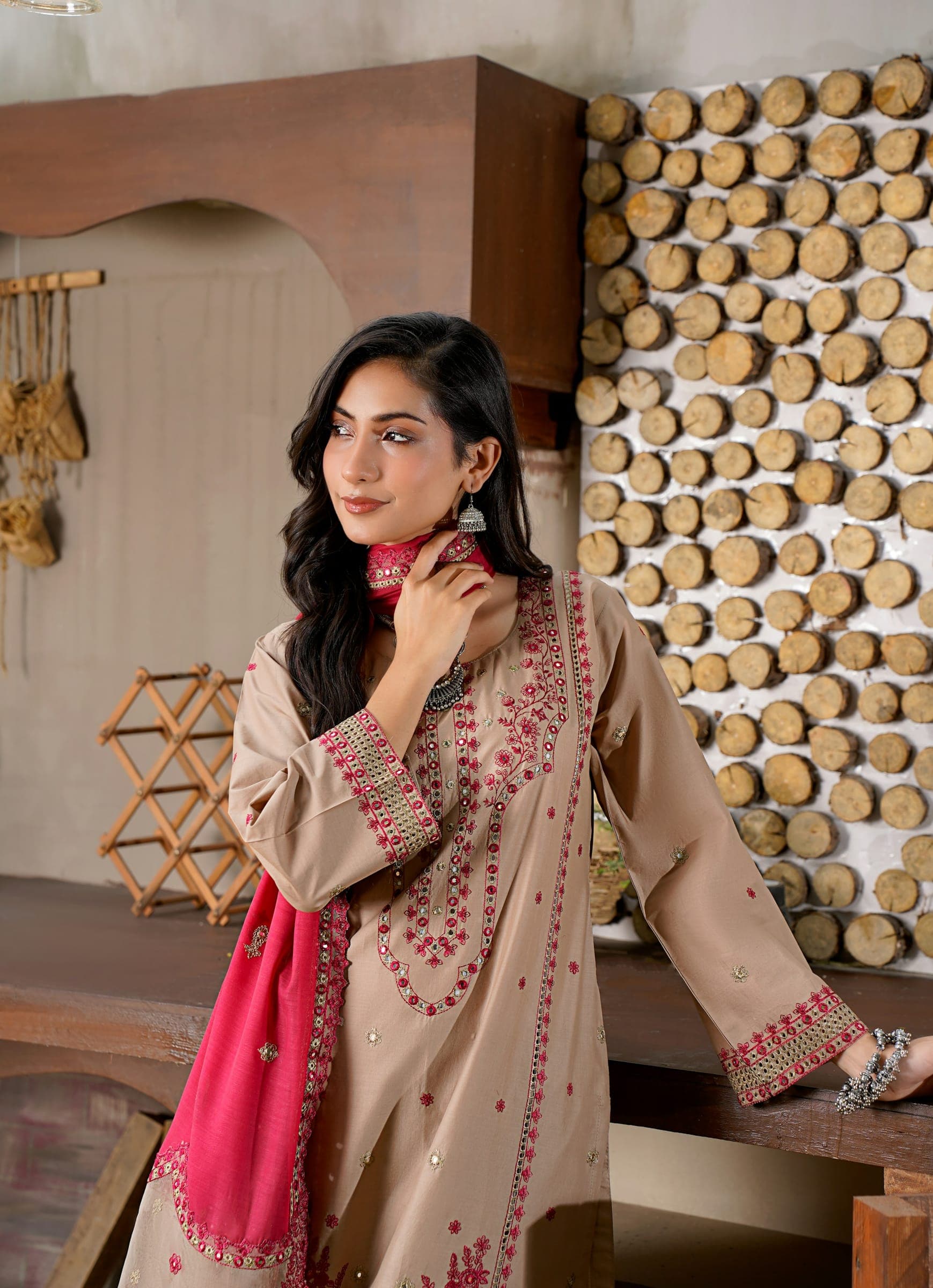
Kashida is a natural partner for winter fabrics. Wool and fine wool blends, karandi, khaddar, marina and cotton silk all carry it well, and our guide to winter fabrics compares them for cold weather. A kashida border on a shawl over a plain kurta is the classic look; a kashida jaal across a front panel or a vine at the cuffs and neckline works well on a kameez. Our embroidered karandi suit shows how floral embroidery at the neckline, cuffs and hem can sit on a winter fabric.
Kashida-style florals also appear in machine embroidery on summer lawn, where they bring an autumnal palette to lighter fabrics.
Caring for kashida
Wool and silk thread on wool fabric should be dry cleaned or very gently hand washed in cool water with a wool detergent, then dried flat. The bigger risk is moths: store kashida shawls and suits clean, folded in cotton, with a natural moth deterrent such as cedar, and air them now and then. Our article on storing embroidered suits covers this in more detail. Press from the back on a towel so the stitches stay raised.
How to ask about kashida-style embroidery
Send a photo of the kashida you love and tell us whether you want it at the neckline, the cuffs, the hem or across the front, and which colours you have in mind. What is possible on your fabric and design is confirmed in your written quote rather than promised before we have seen the design. Our custom embroidery page explains the process. For cold-weather orders, the Norway page covers ordering from Scandinavia. Start your quote whenever you are ready.
Common questions
Is kashida the same as sozni?
Not quite. Kashida is the broader name for Kashmiri thread embroidery, while sozni is its finest form, worked in tiny satin and stem stitches, traditionally on pashmina shawls.
Which fabrics suit kashida embroidery?
Wool, fine wool blends, karandi, khaddar, marina and cotton silk suit it best, because their soft surface shows the stitches and their weight suits winter. Machine kashida-style work also appears on lawn.
Is kashida always done by hand?
Traditional kashida is hand embroidery. Many modern pieces use machines to recreate the look, which is quicker and more even but lacks the slight irregularity of hand stitches.
